Working With a Loss Adjuster? Five Things to Confirm, Starting With Who Endorses the Check
By Bernard Okafor·5 minute read
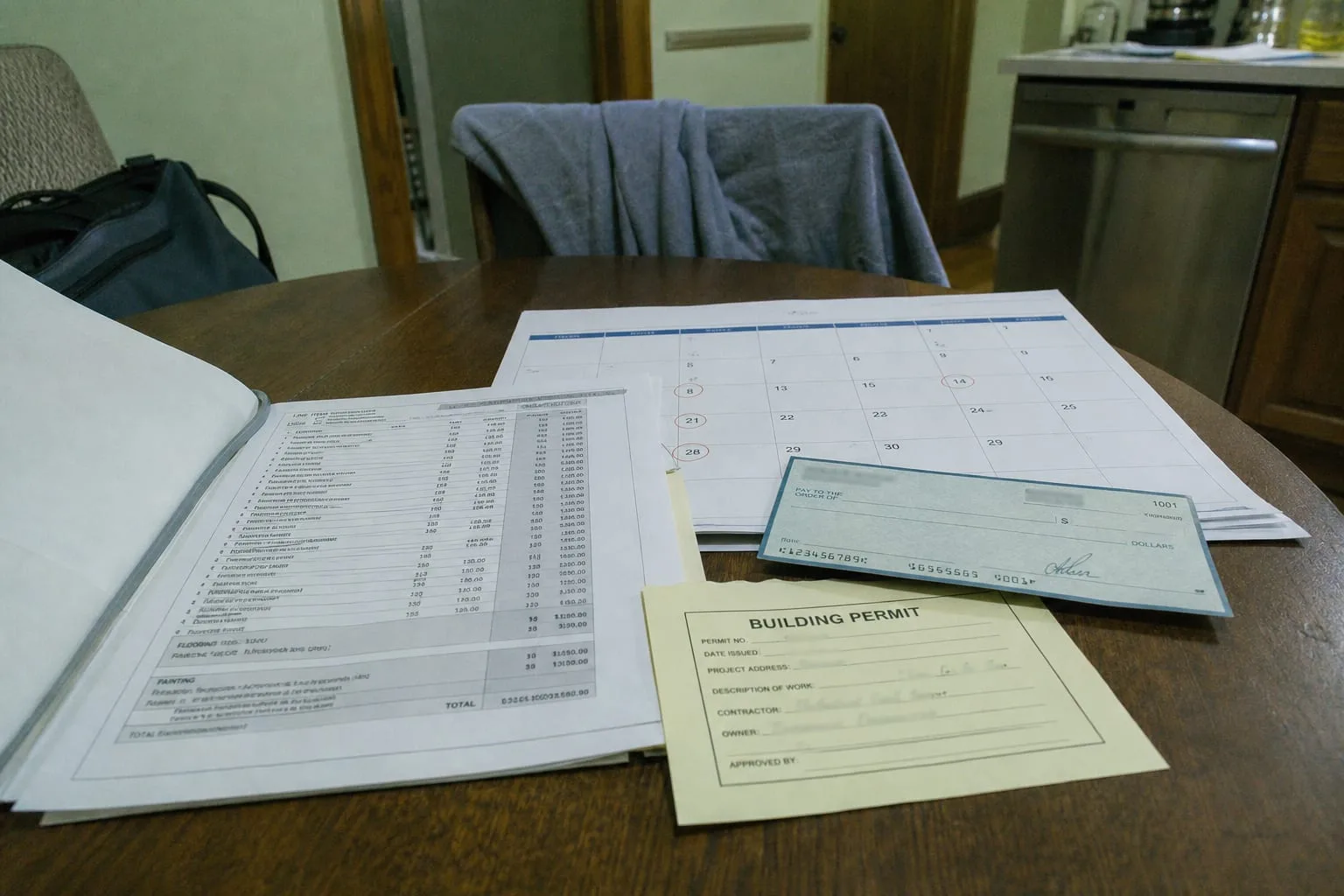
House & Home, August 17, 2026: Freeze losses reported in January reach their awkward stage around now, when the emergency dry-out is billed, the adjuster's estimate has landed, and the homeowner discovers that agreeing a number is not the same thing as being paid one. Late winter and early spring are the heaviest weeks of the year for this particular disappointment, because burst supply lines, ice dams and roof leaks all mature into scopes of repair at the same time. The difference between a claim that closes cleanly and one that drags into summer is rarely the adjuster's competence. It is usually a third party nobody thought to call.
One. Confirm who has to endorse the check before the first one is issued
If there is a mortgage on the house, the servicer is named on the policy as a loss payee, and any building payment above the servicer's threshold will be issued to the homeowner and the lender jointly. That means the check arrives, cannot be deposited, and travels to a department most borrowers have never heard of, the loss draft or claims department, which holds the money in escrow and releases it against inspections. Ask the adjuster in the first week whether the lender is being named, and ask the servicer what its threshold, its inspection schedule and its documentation packet require. The consent you need is not the adjuster's.
The servicer's rules are their own and they do not adjust to your contractor's payment terms. Typically there is an initial disbursement on receipt of the signed contract and the adjuster's worksheet, a second at a verified percentage of completion, and a final release once an inspector confirms the work is finished. Contractors who have worked in the area for a while know this and price their draw schedule around it. Contractors who have not will ask for half up front and then wait, unpaid, while you learn the process on their time. Sorting the sequence in March keeps the crew on site in May.
Two. Confirm whether the scope carries permits, and what the code upgrade line says
An estimate written in claims software will itemize drywall, insulation, cabinetry and paint down to the square foot, and may or may not carry a line for permits and inspections. It should. Reconstruction that opens walls, moves plumbing, replaces a panel or rebuilds structure needs a permit from the local building department, and that department is the other party in this transaction that almost nobody accounts for. Its plan reviewer decides what the repair must include, not the adjuster and not the insurer. Getting the permit line into the scope early costs a phone call; getting it added later costs a supplement and three weeks.
Then there is the upgrade question, which is separate. Current code may require arc fault protection, a different insulation value, tempered glass, or a backflow preventer that the original construction never had, and the policy will pay for that only to the extent it carries ordinance or law coverage, usually as a percentage of the dwelling limit. Ask the adjuster to state the limit in writing and ask the building official what the jurisdiction will actually enforce on a repair of this size. Two answers, two sources, one number you can plan around. That comparison is the single most useful hour in the whole claim.
Three. Confirm what happens to work that was already done without consent
Two versions of this come up every spring. The first is emergency mitigation: water extraction, board-up, a tarp, a temporary heat source, all done before anyone reported the loss. Policies require reasonable steps to prevent further damage, so that work is generally payable, but it needs an invoice, moisture logs, dated photographs and a clear line between mitigation and repair. Keep the receipts from the weekend you were panicking. They are evidence, not clutter, and adjusters pay them readily when the paperwork exists.
The second version is older and more interesting. Opening a wall reveals a finished basement, a bathroom addition or a subpanel that was never permitted by anyone. The insurer does not automatically deny the claim for that, but the building department will not sign off on a repair that leaves unpermitted work in place, which is how a straightforward water loss turns into a retroactive permit application with a fee schedule of its own. Handled early, with the inspector told before he finds it, this becomes a scheduling item and a modest cost. Handled late, it stops the job.
Four. Confirm which adjuster you are actually dealing with, and what he can approve
The person walking your kitchen with a laser measure may be a staff adjuster employed by the carrier, an independent adjuster working a catastrophe assignment under contract, or a public adjuster you hired yourself and who is paid a percentage of the settlement. All three are licensed by the state insurance department, and all three write scopes, but their authority differs sharply. An independent handling storm volume often has a dollar ceiling above which a desk examiner must approve, and that examiner is the one who decides your supplement. Ask, politely and early, who signs off above what figure.
Ask also how long the assignment runs. Catastrophe adjusters rotate out, files reassign, and a scope agreed verbally in February can evaporate when a new name appears on the correspondence in April. Everything material should exist as a written estimate, a revised estimate, or an email confirming a specific line item. Where flood is involved, the program adjuster is working under the National Flood Insurance Program, which the Federal Emergency Management Agency oversees, and the documentation requirements there are stricter and more literal than on a standard homeowners file. Write it down as you go and reassignment becomes an inconvenience rather than a restart.
Five. Confirm the dates that are already running against you
Several clocks start at the date of loss, not at the date you noticed. A sworn proof of loss is commonly due within sixty days of the insurer's request. The contractual limitation on filing suit is frequently one year from the loss, shorter than most state statutes for contract disputes. Recoverable depreciation, the holdback between actual cash value and replacement cost, is usually payable only after the work is genuinely complete and invoiced, within a window measured in months. Building permits expire too, generally within six months of issue unless an inspection has been called.
Put every one of those dates on a single calendar page at the outset, with the source next to each: the policy declarations, the servicer's letter, the permit card. Spring is when the trades book out, so a job that needs a roofer, an electrician and a cabinet installer in sequence should be scheduled backward from the depreciation deadline rather than forward from today. Homeowners who do this recover the full replacement cost as a matter of routine. Those who do not tend to find the holdback still sitting there in November, technically payable, practically stranded.
A good claim and a barely adequate one often begin identically, with the same policy, the same damage and the same competent adjuster. What separates them is whether the homeowner treated the adjuster as the whole transaction or as one of four parties whose consent matters: the carrier, the servicer holding the escrow, the building official issuing the permit, and the contractor who has to work within all three. Call the other three in the first fortnight. The adjuster will tell you, if asked, exactly who they are.