One Furnace, One October Service Call, and Which Checklist Items Earned Their Keep
By Callum Fitzgerald·4 minute read
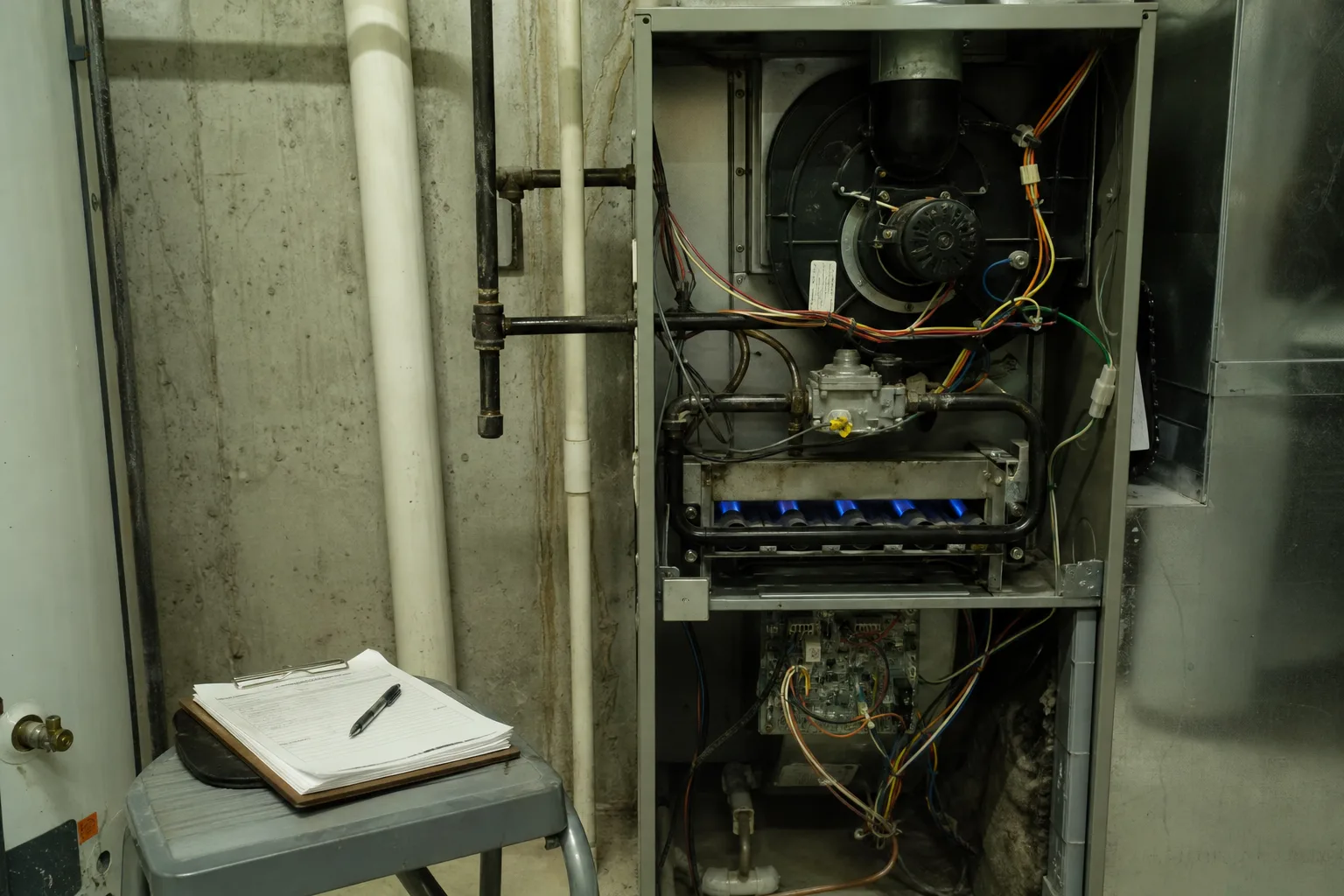
Vehicles, October 17, 2026: The Hartleys called in the first week of October, which was the single most consequential decision in the whole episode, though nobody framed it that way at the time. Their furnace, an induced-draft gas unit installed with the house in the late nineties, had run through the previous winter without complaint, and the prior year's service had been skipped on the reasoning that nothing was wrong. The appointment they were offered was nine days out, at a standard daytime rate, with no premium attached. Had they called on the first genuinely cold morning in November, both of those terms would have been different, and the second one by a wide margin.
What the first call establishes, before anyone drives out
The booking conversation settled three things that later showed up on the invoice. First, whether the visit was a diagnostic, billed to find a fault, or a scheduled maintenance, billed as a flat tune-up with a defined scope. The Hartleys asked for maintenance, which meant a fixed price for the visit and a separate conversation about anything found. Second, whether parts would be quoted before installation or fitted and billed afterward. They asked for the former, in writing on the work order. Third, the hourly rate that would apply if the technician moved from the tune-up into actual repair work, and whether the first increment was billed in full or prorated.
Those three answers are the structure of nearly every residential service bill, and they are easier to negotiate on a Tuesday in October than on a Saturday in January. The flat-rate tune-up covers a set list of checks and a set amount of time. Everything beyond it is labor, parts, and in some markets a trip charge that may or may not be credited back against the repair. The Hartleys wrote the rate down. When the invoice arrived three weeks later, that note was the reason the conversation about it lasted four minutes rather than forty.
The checks that carried weight
The technician spent the bulk of his time on four things, and they were not the four the Hartleys would have guessed. He pulled and cleaned the flame sensor, a thin metal rod that develops an oxide film and eventually stops confirming that the burners have lit, which produces a furnace that fires for six seconds and shuts down. He inspected the heat exchanger for cracking, which is the safety item that governs whether a unit stays in service at all. He tested the pressure switch and the inducer motor, the assembly that proves draft before the gas valve opens. And he ran a combustion analysis at the flue, which is the only step that tells you what the burner is actually doing rather than what it appears to be doing.
The inducer motor was drawing high and running loud. That finding is the whole argument for an annual visit, because an inducer that fails in service takes the furnace down completely, usually on the coldest night, at an after-hours rate with a part that may not be on the truck. Quoted in October, the replacement was a scheduled return visit the following week at daytime labor, with the part ordered rather than sourced in a hurry. The Department of Energy oversees efficiency standards for residential heating equipment, and the practical version of that oversight, at the household level, is a combustion reading and a motor that is still drawing what it should.
The items that mattered less than the sales sheet suggested
The same visit produced three recommendations the Hartleys declined, and declining them was correct. Duct cleaning was offered, as it almost always is, and nothing in the inspection indicated a reason for it beyond general principle. A chemical coil treatment was suggested for the air conditioning side, in October, four months before the coil would run again. A surge protector for the control board was presented as near-mandatory, which it is not, though it is cheap and defensible in an area with frequent outages. None of these were improper to offer. They simply sat outside the question of whether the furnace would run through February.
The filter was a different matter, and it was the cheapest line on the whole job. A restricted filter raises temperature rise across the exchanger, shortens burner cycles, and loads the blower motor, and it is the one maintenance item a homeowner performs without a technician. The Hartleys had been running a high-MERV pleated filter rated for a year and changing it accordingly. They were told, correctly, to change it every three months in heating season and to write the date on the frame in marker. That instruction cost nothing and did more for the equipment than two of the declined upsells combined.
What the final invoice was made of
Two visits, one invoice. The tune-up came in at the flat rate quoted on the phone. The inducer motor appeared as a part at the company's standard markup, with the manufacturer's number listed, which is the detail that lets a homeowner verify the price afterward rather than take it on faith. Labor for the return visit was billed at the daytime rate, in the increments described during the booking call, with no trip charge because the visit was scheduled rather than dispatched. The combustion readings, before and after, were printed on the work order. That page is the document worth keeping, because next October it turns a fresh inspection into a comparison.
The savings were not in any discount. They were in the calendar. An inducer motor replaced on a weekday in October and the same motor replaced at nine at night in January are the same part and a materially different bill, and the gap is labor rate, emergency dispatch, and whatever the household spends staying warm while the part is located.
Book the heating service before the first hard freeze, ask for the flat-rate scope and the hourly rate in the same phone call, and keep the combustion printout. Next fall, the technician who reads it will spend his time where it counts.