The Furnace Call in October, the Heat Pump That Never Rests, and What Your Service Year Should Look Like Now
By Ximena Arredondo·4 minute read
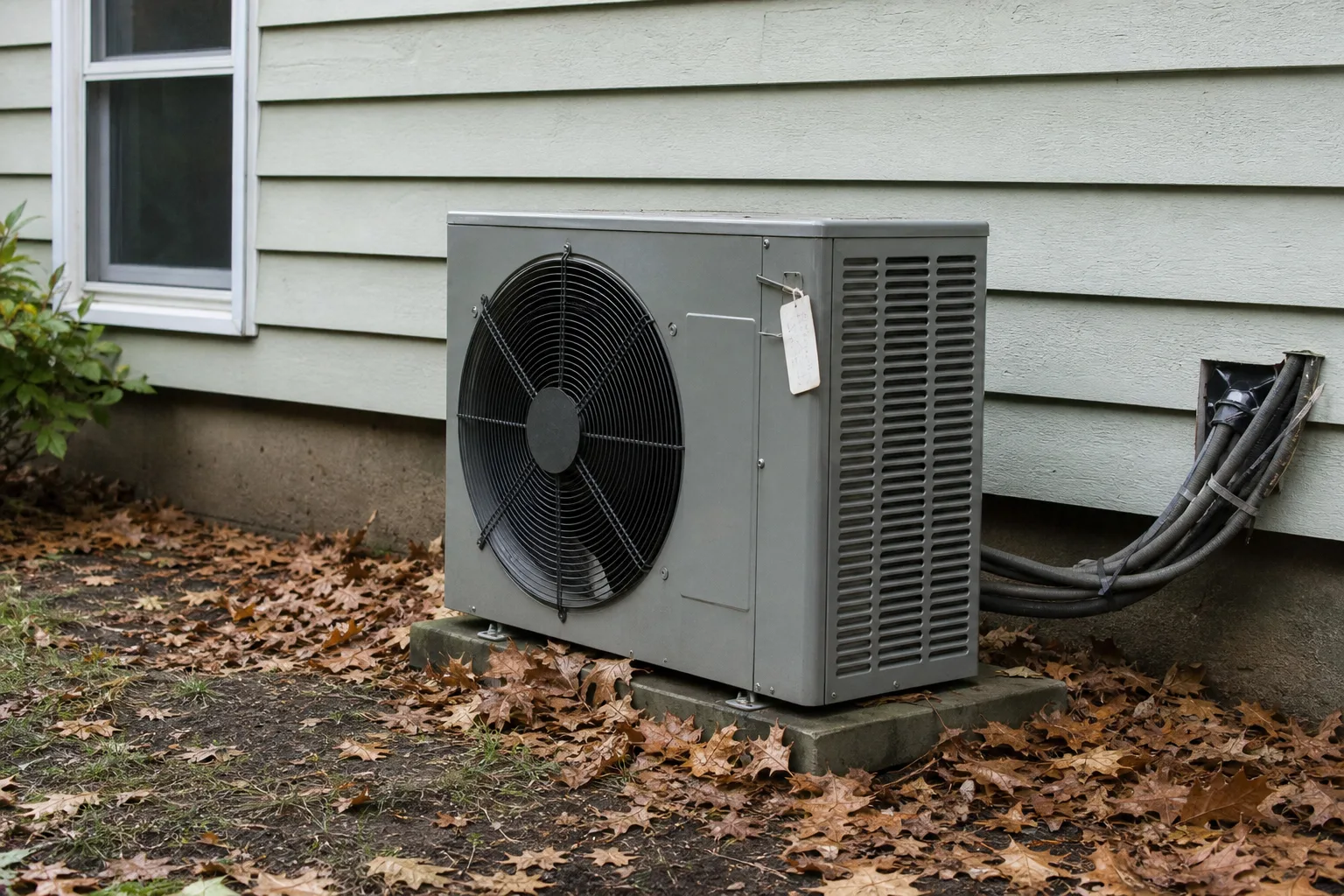
House & Home, October 10, 2026: Every year, somewhere between the first frost warning and the first genuinely cold Sunday, the calls arrive in a block. The furnace smells like dust, the thermostat calls for heat and nothing answers, the pilot will not hold. None of these are surprises, and almost all of them were visible in September to anyone who looked. What interests me, after years of taking those calls, is not that people forget. It is that the maintenance calendar most households are working from was assembled by other parties, for other reasons, decades ago, and parts of it no longer describe the equipment in the basement.
The two-visit year was written by warranty departments, not by homeowners
The spring-and-fall rhythm did not come from research into what households can sustain. It came from three directions at once: manufacturers who wrote annual inspection into the conditions of a parts warranty, utilities that ran seasonal readiness campaigns because they wanted load behavior they could predict, and contractors who needed work in the shoulder months when nothing was breaking. The maintenance agreement, billed annually and performed in two visits, solved a scheduling problem for the trade before it solved anything for the customer. It survived because it happened to be roughly right. Heating equipment did want attention before heating season, and cooling equipment before cooling season.
That logic held as long as a house had two separate machines with two separate idle periods. The furnace sat untouched from April to October, which meant a fall visit caught a season's worth of dust, a cracked igniter, a blocked flue, a rodent nest in a cold air return. The condenser sat untouched all winter under a cover nobody should have put there. Two machines, two off seasons, two visits. Clean arithmetic. The trade built its pricing, its staffing, and its slow weeks around it, and the language of the spring tune-up entered general circulation.
What the heat pump did to the off season
The arithmetic broke when the same outdoor unit started running in January. A heat pump has no idle period, which means it accumulates runtime hours continuously and never gets the long rest during which a technician can work on a cold coil at leisure. The content of a service visit changed accordingly. Refrigerant charge, which was forgiving on a cooling-only system, now determines whether the house stays warm at twenty degrees. Defrost controls, outdoor coil cleanliness, and the backup heat strips matter in ways they did not. The Department of Energy oversees the efficiency standards that pushed this equipment into ordinary houses, and the installed base has shifted faster than the household habits around it.
Practically, that moves the useful visit earlier and makes the second one less about cleaning than about verification. A fall appointment on a heat pump is checking that the machine can do a job it has never been asked to do in that house yet. I would rather see one in early September, with the cooling season fresh in the data and six weeks of margin before anyone needs heat, than in the third week of October with forty other people ahead of them. Customers who move their appointment forward by a month tend to get the same technician, unhurried, and a parts order that arrives before it is urgent.
The filter stopped being a date and became a signal
The second real change is that equipment now reports on itself. Connected thermostats track runtime and flag pressure changes across the filter, filter subscriptions arrive at the door on a cadence tied to actual use rather than to a calendar square, and inexpensive water sensors under the heater and behind the washing machine have quietly removed a whole category of discovered-too-late damage. This matters for a reason that has nothing to do with the technology itself. Schedules fail because they ask people to remember something on a date when nothing else is happening. A schedule that waits for a trigger survives a busy month.
The households that keep a maintenance routine, in my experience, are not more disciplined than the ones that do not. They have simply attached each task to something already fixed in their year. Gutters get cleared the weekend after the last tree on the street drops, not on a chosen date in November. Smoke alarm batteries go in when the clocks change. The dryer vent gets pulled when the heating system is serviced, because the technician is already in the utility room and will do it for a modest addition to the invoice. Nothing on that list requires willpower.
Booking windows moved, and the price moved with them
The scheduling calendar has shifted earlier over the past several years, driven by a smaller pool of licensed technicians and longer lead times on components. Companies that once filled their fall book in late September are now committing weeks in August, and the difference between a planned appointment and an emergency call on the first cold night is not a modest premium. It is a different rate, often after hours, frequently with a diagnostic fee and a return trip for parts. Booking in the quiet weeks buys the same labor at the ordinary price, with the technician choosing the appointment length rather than the weather choosing it.
Keep one page somewhere findable with the model and serial numbers of the furnace, the air handler, the water heater, and the outdoor unit, photographed off the data plates, along with the install dates and the service invoices. Warranty claims turn on documented maintenance more often than people expect, and the paperwork is worth more than the memory of having had someone out.
Call in the week the leaves finish, not the week the cold arrives. That one change in timing does more for a household's upkeep than any list ever posted on a refrigerator.