Unpermitted Basement Found Three Weeks Before Closing? What the Legal Bill Is Quoted Against
By Bernard Okafor·5 minute read
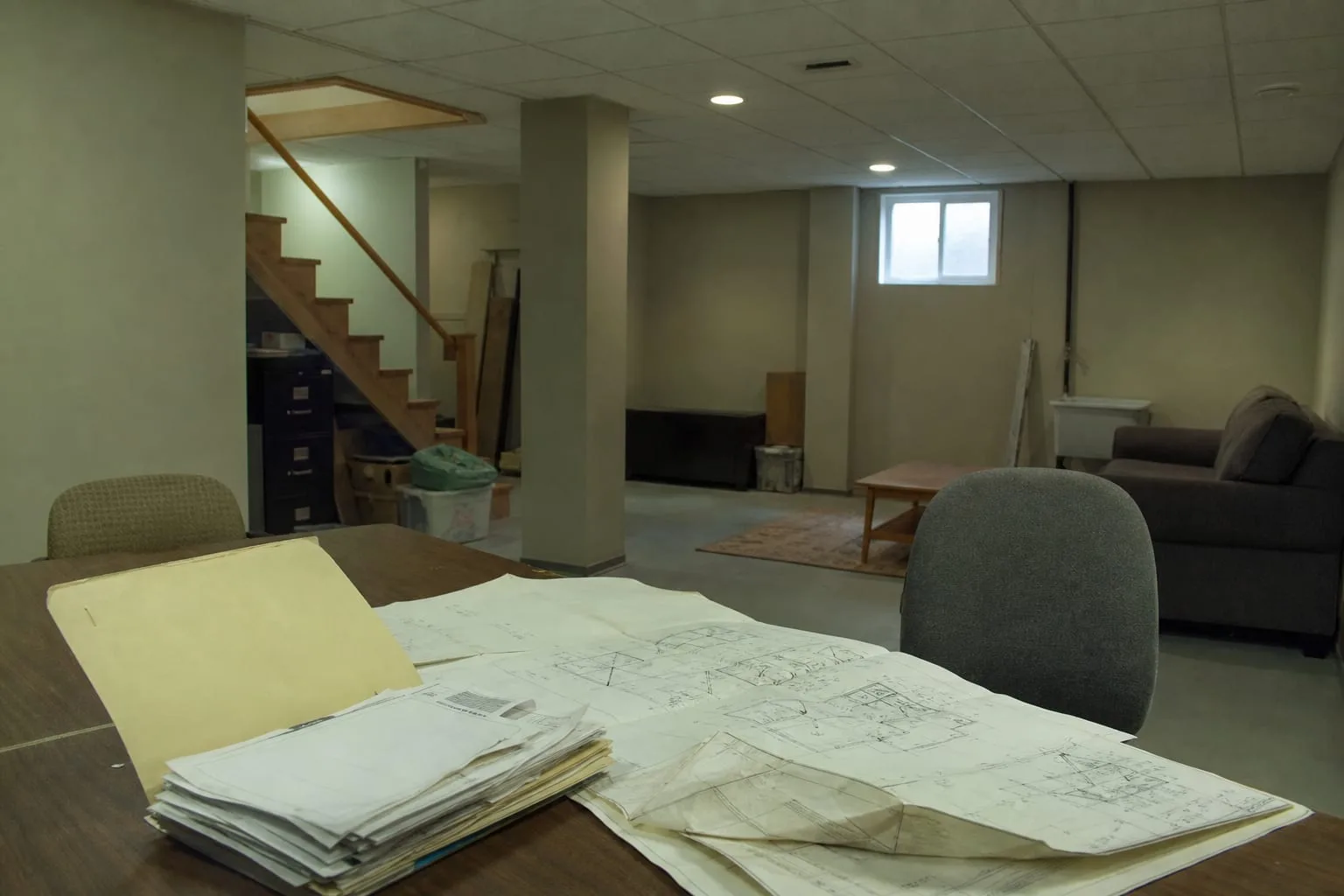
Law, June 8, 2026: A contract signed in October and set to close the week before Christmas leaves about sixty days of working calendar, and considerably less once the building department's holiday schedule is subtracted. Into that window arrives the appraiser's note, or the buyer's inspector's note, or a line in the municipal search: the lower level is finished, and the file shows no permit for it. The seller has lived with that basement for eleven years. The lender will not fund against square footage the town has never inspected. Somebody now needs an attorney, quickly, and the first question is what the quoted number is actually attached to.
The unit, the scope, and the boundary where both stop
A fee quote has three parts, and only one of them is the number people repeat afterward. The unit comes first: an hourly rate billed in tenths, a flat fee for a defined piece of work, or a flat fee with an hourly overflow once a stated ceiling is passed. The scope comes second, and it is the part worth reading twice, because a flat fee for handling a permit issue and a flat fee for obtaining a certificate of completion describe two different obligations. The boundary comes third. Every engagement letter names a point past which the work becomes a new matter at a new price, and on a compressed closing that point tends to arrive faster than anyone expects.
In the basement case, the honest version of the scope reads narrowly. Reviewing the permit history and the recorded plans, determining whether the municipality offers a retroactive or as-built permit path, corresponding with the building official, and drafting whatever contract amendment carries the parties past the closing date. That is a describable list, which is why it can carry a flat fee. What cannot carry a flat fee is the outcome, because the outcome belongs to an inspector who has not yet stood in the room.
What the clock adds, and what it does not
Urgency does not usually inflate the hourly rate. It inflates the number of hours, and it introduces third-party costs that arrive on the settlement statement looking like legal fees without being any such thing. Expedited plan review, where a jurisdiction offers it, carries its own posted charge. A licensed engineer's letter certifying that the framing, egress window and ceiling height meet code carries a separate charge, and in December that professional's schedule is the constraint rather than the fee. Records retrieval from the county has a per-page or per-request cost. Reinspection after a correction is billed by the town, again, at whatever the fee schedule says.
Attorneys who work these files regularly will separate the two categories on the first call, and it is reasonable to ask for that separation in writing before anything is signed. The Consumer Financial Protection Bureau oversees how closing costs are disclosed to a borrower, which is why the buyer's side of the table will insist that every one of these charges land on the statement in a recognizable place rather than as a lump sum with a vague label. Ask which line each item will occupy. The answer tells you who is expected to pay it.
Where the hours actually accumulate
Very little of the billable time in a permit problem is spent on law. It is spent on retrieval and on waiting: pulling the original 1970s plans, establishing whether the basement was finished before or after an ordinance change, identifying which of three overlapping departments has jurisdiction over the electrical work, and calling back the plan examiner who was out on Tuesday. Then it is spent on drafting, which is fast, and on negotiation, which is not. Every hour of that is real work, and every hour of it is billed, and a good portion of it is work the seller could have done in September for nothing.
That is the practical lever on the number. An attorney handed a folder containing the closing statement from the original purchase, any invoices from the contractor who did the work, photographs taken during construction if they exist, and the current tax card showing what the assessor believes the square footage to be, starts three or four hours ahead of an attorney handed a phone number. Where the work was done by a licensed contractor who simply never filed, the permit history sometimes turns out to be less empty than the search suggested, and the whole matter collapses into a records correction rather than a retroactive approval.
The two structures the money can take, and which one closes on time
Once the shape of the problem is known, the file usually resolves along one of two routes, and they price differently. The first is the retroactive permit itself, applied for before closing, inspected, and signed off, which produces a clean file and a lender with nothing left to object to. It is the better outcome and the slower one, and in a December window it frequently requires the parties to agree to a short extension of the closing date, which is itself a drafted document and a billable half hour.
The second route is an escrow holdback. A sum sufficient to cover permit fees, engineering, corrections and a margin is withheld from the seller's proceeds at closing, held by the title company or the attorney under a written agreement, and released when the certificate issues. This closes on the original date. It also generates a separate escrow agreement, a defined release condition, a deadline for performance and a consequence if the deadline passes, all of which are drafted rather than borrowed, and all of which sit outside a flat fee quoted for the permit work alone. Ask specifically whether the escrow agreement is included. It is the single most common place where a quoted number turns out to have described something smaller than the job.
What to establish on the first call
Four things, and they take about ten minutes. Whether the fee is flat, hourly or capped, and what the cap is measured against. What the scope includes and, stated plainly, what it excludes. Which third-party costs are anticipated and roughly what each jurisdiction charges for them. And whether the attorney has taken a retroactive permit through this particular building department before, because a working relationship with the plan examiner is worth more on a sixty-day clock than any rate difference between two candidates.
The work that was done without consent eleven years ago is now a scheduling problem with a price attached, and both the schedule and the price respond to preparation. A seller who assembles the file in the same week the contract is signed, rather than the week the appraisal lands, buys back most of the hours that make these matters expensive.