Ten Years on One Appraisal, Then a Claim. What the Renewal Notice Was Really Asking For
By Bernard Okafor·4 minute read
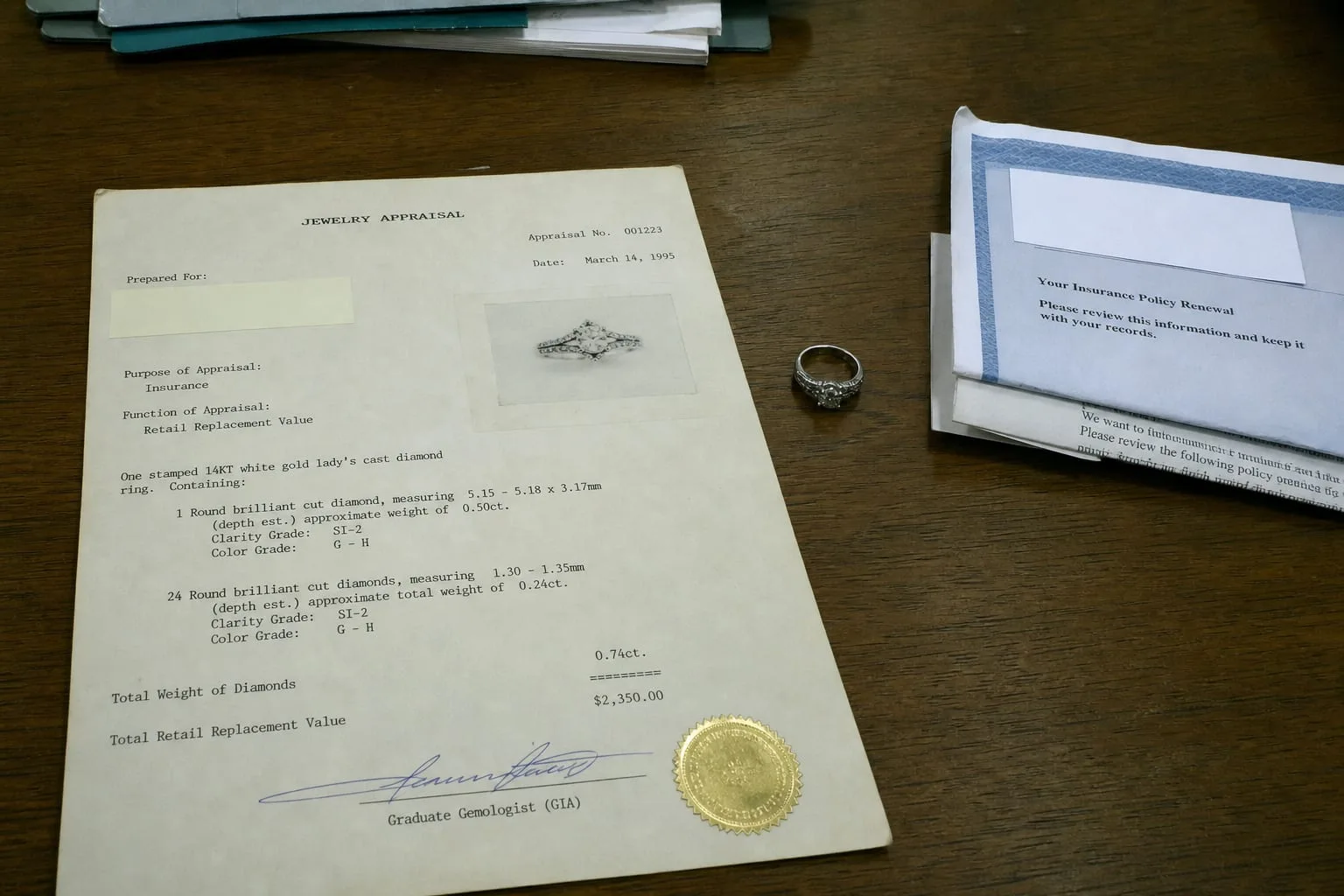
Finance, January 21, 2026: The renewal notices for personal articles coverage tend to land in the same weeks as the holiday receipts, which is the only accidental piece of good timing in this whole subject. A household that added a piece in December is looking at a document in January that asks, in small type near the schedule, when each listed item was last valued and by whom. Ten years ago that line was largely decorative. It is not decorative now, and the difference between those two states is best seen in a single claim.
The 2014 schedule, and what it quietly assumed
The item was a ring, appraised in the spring of 2014 by the jeweler who sold it, on a one-page document with a stone weight, a color and clarity grade, a metal description and a retail replacement figure. The agent scheduled it at that figure. The endorsement described the coverage as replacement cost, subject to the amount shown. Nobody in the transaction was doing anything wrong. The working assumption of that era was that a scheduled figure drifted slowly, that annual inflation adjustments on the policy would absorb the drift, and that a document from the selling jeweler was documentation enough.
What the schedule assumed, more precisely, was that the market for replacing that specific ring would look in ten years roughly the way it looked that spring. Two things had to hold for that to be true: the metal had to stay near its 2014 range, and the stone had to remain the kind of thing a retailer sourced and priced the same way. The Bureau of Labor Statistics tracks jewelry as part of the broader consumer price picture, and anyone following those categories over the decade saw that neither condition held steady for long.
The claim, and the sentence about the valuation date
The loss was ordinary. The ring came off at a sink in a rental over Thanksgiving weekend and was gone by the time anyone went back for it. The claim was accepted without argument, which is worth saying plainly, because scheduled personal articles coverage generally does what it says: no deductible on many forms, mysterious disappearance included, no depreciation applied. The adjuster asked for the appraisal, the purchase record and a description, and the household supplied all three within a week. The dispute, such as it was, arrived later and concerned one number.
Replacement cost on a scheduled item is measured at the time of loss, not at the time of appraisal, but it is also capped by the amount on the schedule. The carrier authorized replacement through its own vendor and the quotes came back above the scheduled figure, mostly on the metal and the setting labor rather than the stone. The check paid the schedule. The household paid the balance out of pocket. Had the appraisal been refreshed at any renewal in the previous three years, the schedule would have moved with it and the gap would have closed.
Why carriers rewrote the re-appraisal requirement
The change over the past few years has been specific rather than general. Precious metal prices moved far enough that the melt-and-labor component of a mounting stopped being a rounding error, and the arrival of lab-grown stones at volume split the replacement market into two tracks that price and appraise differently. Carriers responded by tightening the language: many now state a maximum appraisal age, commonly in the three to five year range, require that the appraiser hold a recognized credential rather than simply sell jewelry, and require that the report identify the valuation basis it is using.
That last requirement is the one that most often catches an older document. A 2014 appraisal frequently gave a single figure without saying whether it represented retail replacement, comparable resale or fair market value, three numbers that can sit far apart for the same ring. A current report has to say. The practical effect for a household is that the newer paperwork is more useful, not merely more demanded, because it tells an adjuster what the number means before there is any argument about it.
Whose consent a schedule change actually needs
An appraisal on its own changes nothing. The value on the schedule is a term of the contract, and moving it requires the carrier's underwriting to accept the new figure and issue an amended endorsement, which is why the sequence matters more than the speed. The order that works is to get the report first, send it to the agent with a written request to increase the scheduled amount, and then read the amended endorsement when it arrives to confirm that the new figure and the item description both appear correctly. Until that document exists, the old number is still the number.
Renewal season is the natural moment to run this, because the carrier is already touching the file and the request rides along without a mid-term change fee in most cases. Items received over the holidays belong in the same pass, since coverage for a newly acquired piece often runs on a limited automatic-addition window measured in days after acquisition.
The ring was replaced in February. The new report, dated and credentialed, went to the agent before the replacement was finished, and the schedule now carries a figure that means something specific.