Ring Going in for Resizing This Month? Who Signs Off, and What Changed in Ten Years
By Bernard Okafor·5 minute read
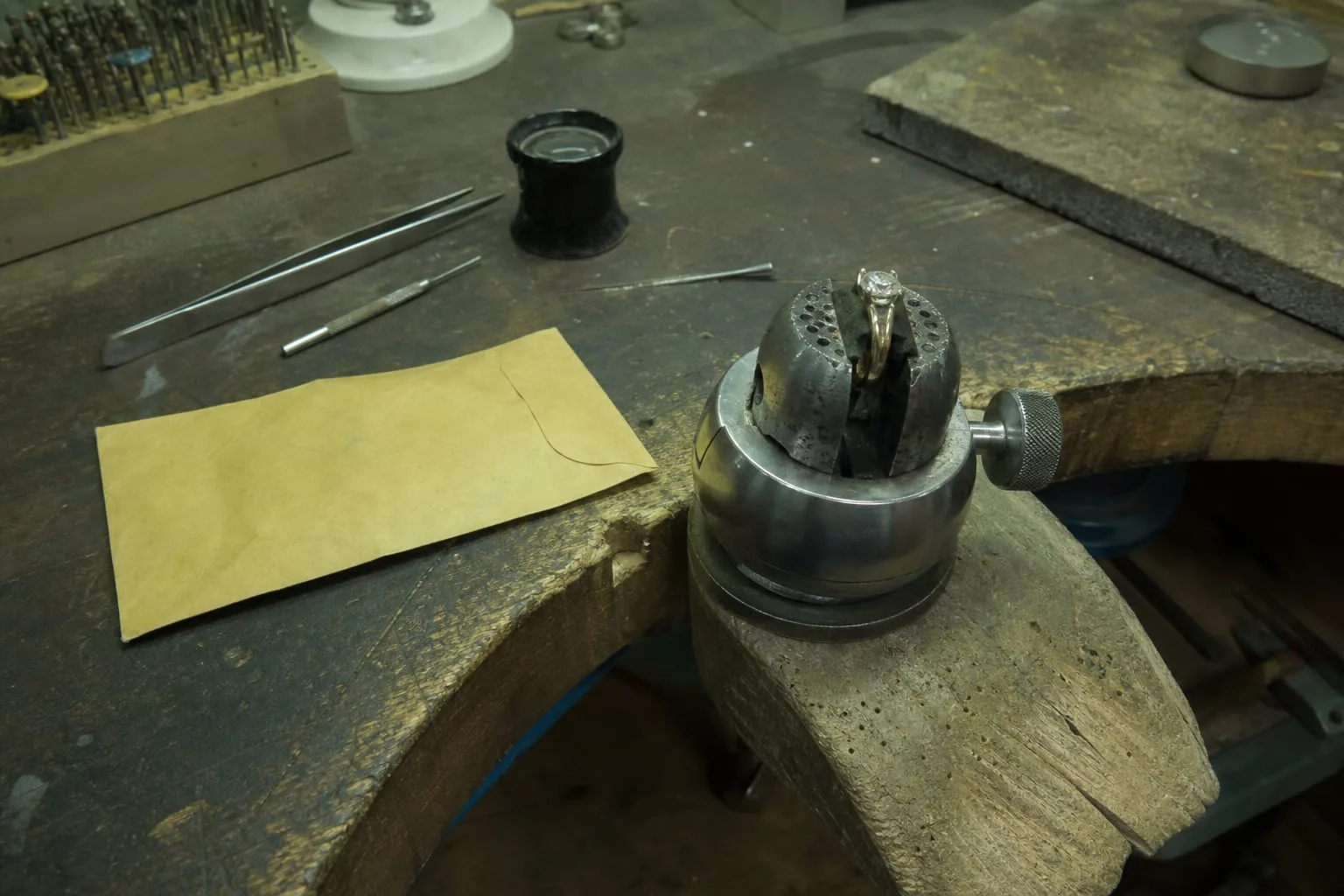
Finance, November 3, 2025: The counter at a bench jeweler fills up twice a year in a way it does not fill up the rest of the time: the weeks before the holidays, when rings are being sized to be given, and the weeks after Memorial Day, when wedding parties discover that a band ordered in February no longer fits a hand in June. If you are standing at that counter now, the piece you hand over is going into a queue that is longer than it will be in February, and the paper you sign is going to decide more than the price. Most of what goes wrong in jewelry repair is a permissions problem before it is a craft problem.
The envelope you sign is the whole contract
Almost every take-in still runs through a small paper envelope with your name, a description of the piece, a rough weight and a line for what you are asking to have done. That envelope is the authorization. It is also, in practice, the only written record of the item's condition when it left your hand, which is why the shops that photograph intake now (nearly all of them, on a phone, in front of you) have quietly removed the most common source of argument. Read the description before you initial it. A ring written up as a white gold solitaire when it is platinum with a worn head is a ring that will come back sized by the wrong method, and the disagreement that follows will be settled by the words on the envelope rather than by memory.
The second thing on that envelope matters just as much: the limit of what you have consented to. A jeweler who opens a shank and finds a cracked prong, a chipped girdle or a stone that is not what the last appraisal said it was has to stop and call you, because setting work you did not ask for is work you did not authorize and did not price. Ten years ago that call happened at the end of the week. Now it happens the same afternoon, usually with a photograph attached, and the approval comes back by text. That single change has cut the number of pieces that sit in a drawer waiting for a decision, and it has made partial approvals ordinary: fix the prong, leave the rhodium for spring.
What the laser welder changed about the answer
A decade ago, sizing and repair meant a torch, which meant heat across the whole piece, which meant unsetting stones that could not take it. Emeralds, opals, pearls, tanzanite and anything fracture-filled or heavily included came out first and went back afterward, and that removal and resetting was often more than half the bill. Laser welding put a controlled joint within a couple of millimeters of a stone without cooking it. The practical consequence, week to week, is that repairs a jeweler once declined outright are now quoted routinely: a broken shank on a ring with a channel of small stones, a snapped chain at a soldered link, a worn prong on an antique setting that would not have survived a full heating.
The same shift moved the line on what is worth fixing at all. Casting a new half shank from a scanned model, rather than filing and fitting stock wire, means the replacement matches the original profile, and it means the work is repeatable if the other side wears through in five years. Against that, the price of gold has kept climbing, so the metal in a broken chain is worth more against a trade-in than it was, and a thin, worn, machine-made chain is now more often replaced than repaired. The judgment has not gotten harder. It has gotten more specific, and a competent bench will tell you which side of the line your piece sits on before it takes your deposit.
Consent you do not hold yourself
Some pieces are not yours to alter, and the moment to find that out is not after the shank has been cut. An engagement ring before the wedding, a piece held in a trust, a ring that came out of an estate still working its way through probate, a family item on loan from a parent who is very much alive: in each case the person who can authorize an irreversible change is not necessarily the person carrying it into the store. Jewelers ask about this more than they used to, and the good ones will note on the envelope who gave the instruction. Resizing is not always reversible, engraving never is, and a piece cut down two sizes for one wearer is a piece that has been decided for everyone after them.
Insurance is the other consent that people forget to seek in the right order. If the damage came from an event rather than from wear, and the piece is scheduled on a rider, the carrier generally wants to see it before the repair rather than after, and a shop that repairs first can leave you holding the bill. Wear and tear is normally your own problem and rarely covered, which is a reason to separate the two conversations cleanly: the prong that wore down over eleven years is maintenance, and the ring that was crushed in a car door is a claim. Tell the jeweler which one you think you have.
Marks, stamps and what a repair is allowed to change
A repair can change what a piece legally says about itself. Solder a lower-karat alloy into a 14 karat ring and the stamp on the inside of the shank is describing something that is no longer entirely true, which is why reputable benches match the alloy and why some will refuse to work at a lower karat even when the customer asks for the cheaper option. The Federal Trade Commission is responsible for how precious metal and gemstone claims are made to consumers, and the marking conventions a jeweler follows exist inside that framework. The same logic covers rhodium plating on white gold, which is a finish rather than a repair, wears off on a working ring in about a year and comes back only when you pay for it again.
What to get in writing before you let go of it
Ask for the weight at intake and the weight at pickup, particularly on gold, because that pair of numbers settles nearly every dispute about material. Ask whether the work goes to an outside trade shop, since a piece that leaves the premises should be covered while it is off site, and the store should say so plainly. Ask what warranty attaches to the repair itself and for how long, and whether the original retailer's warranty survives third party work, because on branded pieces it frequently does not. Then photograph the item yourself, from both sides, before you hand it across the counter. That takes a minute and it is the cheapest insurance in the transaction.
The holiday queue clears in January, and a repair booked in the third week of the month typically comes back faster and with more of the jeweler's attention than the same repair booked in December. If the piece is not needed for a specific date, waiting a few weeks buys you an unhurried bench, a proper condition report and the time to make the one call that establishes whose permission the work actually requires.