Reminders Everywhere and Nothing Done? Build the Maintenance Schedule Around Dates You Already Keep
By Ximena Arredondo·4 minute read
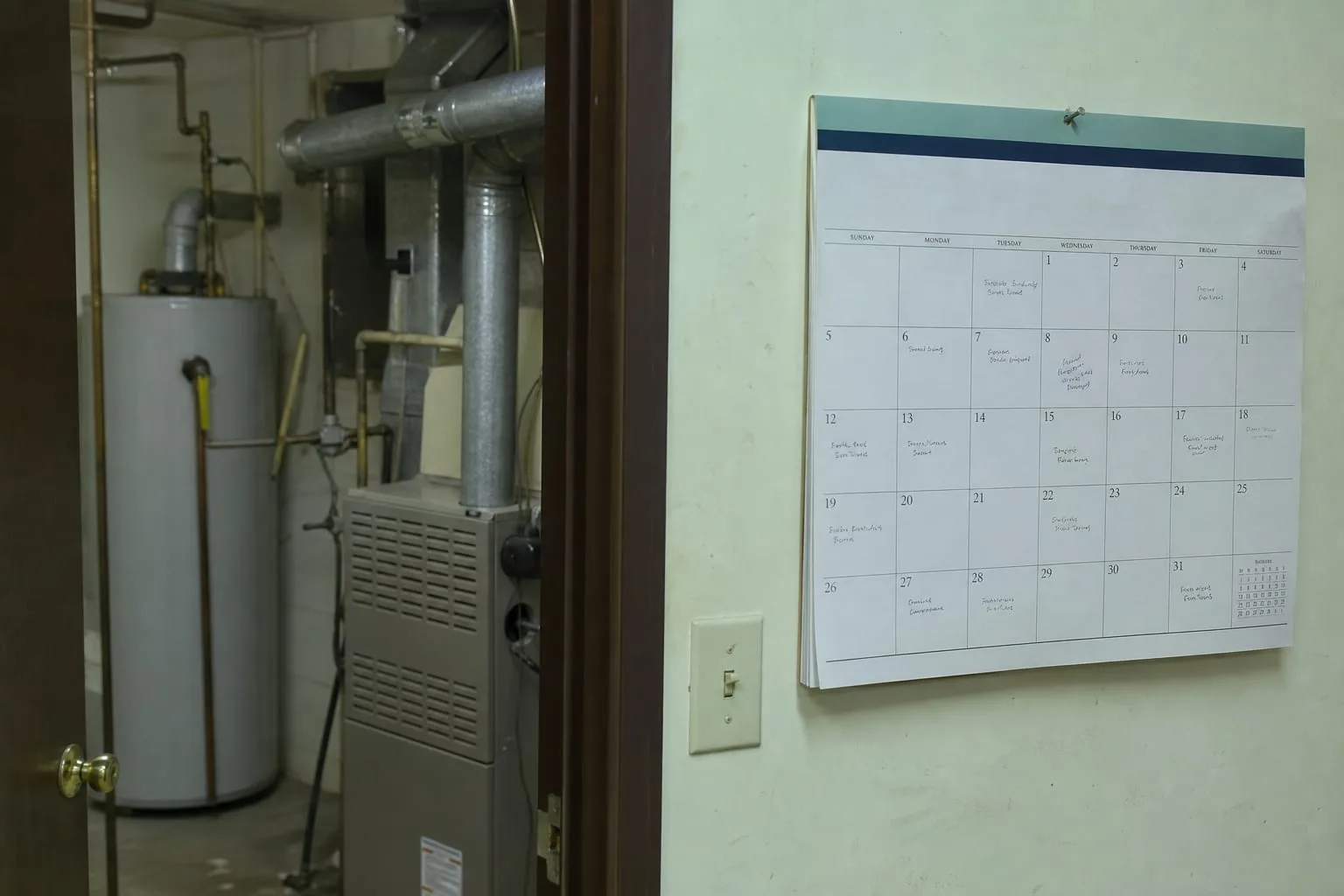
House & Home, June 22, 2026: Late fall is when the year's neglect arrives all at once, and I spend most of November and December driving to houses where three separate small things have become one expensive afternoon. The gutters were never cleared, so the downspout froze, so the fascia went soft. Nobody was careless. The homeowner had reminders set, an app from the furnace manufacturer, a folder of PDFs, and a vague intention going back to August. What they did not have was a schedule tied to anything real, which is the difference between a plan and a wish.
Ten years ago the schedule lived on the refrigerator, and it worked better than it should have
The old version was a paper grid, usually from an insurance agent or a hardware store, stuck up with a magnet and marked in pen. It was crude, it ignored half the equipment in the house, and it was seen forty times a day by everyone who opened the door for milk. The current version is better information delivered worse: push notifications from a thermostat, an email from a filter subscription, a text from the company that installed the water heater, each arriving alone and each dismissible in under a second. Ten years of improvement in the reminders produced no improvement in the follow-through, because the constraint was never knowing.
What genuinely did change is that more of the record now exists somewhere you can retrieve it. Model numbers, install dates, filter sizes, warranty registration, and permit history are searchable in a way they were not when everything lived in a drawer with the appliance manuals. That matters at two moments: when a part fails and the manufacturer wants proof of annual service, and when you sell and a buyer's inspector asks what has been done. Use the modern tools for storage, where they are excellent. Do not rely on them for prompting, where they are weak.
Hang the work on dates the household already observes
Every household keeps a handful of dates without effort: the clock change in spring and fall, the insurance renewal, the April filing deadline, a birthday, the week the trash schedule shifts for a holiday. Those dates already have your attention, so attach the maintenance to them rather than inventing new ones. The fall clock change is smoke and carbon monoxide detectors, batteries, and the dryer vent. The insurance renewal, whenever yours lands, is roof, gutters, and a walk of the perimeter with a phone camera, since that is also when the carrier's expectations are freshest in your mind. Two anchors covering a dozen tasks beats twelve alerts covering none.
The second habit worth building is a single annual afternoon, ideally in the shoulder season before the first hard freeze, when you do the noticing rather than the fixing. Walk the exterior, open the crawlspace hatch, look at the water heater's base, check the sump discharge, photograph the electrical panel and the furnace label. You are producing a list, not a repair. Then you book what needs booking while contractors still have open weeks, which in most markets means October rather than the first cold snap, when the same job costs more and waits longer.
Half your schedule is already written, in ordinances you have not read
This is where general advice falls apart, because maintenance intervals are strongly regional and increasingly set by someone other than you. If you are on a septic system, your county health department, not the tank, decides how often it is pumped and inspected, and the Environmental Protection Agency oversees decentralized wastewater standards that many of those local rules are built on. In much of the interior West, defensible space around the structure is defined in zones with specific clearance distances, verified by inspection, and tied to insurance availability. On the Gulf and southeast coasts, shutter hardware and roof strap condition get checked ahead of a season with an actual start date. In freeze country, backflow preventer testing and irrigation blowout are calendar items with municipal deadlines attached.
Two houses of identical age and construction, one in Sacramento County and one outside Buffalo, produce almost entirely different annual task lists, and the schedule that fits one is close to useless for the other. So build yours locally. Call the county or check the municipal website for septic intervals, sewer lateral requirements at point of sale, chimney and wood stove rules, and any irrigation testing your water district requires. If you are in an association, the covenants add their own dates, usually around exterior appearance and often with a fine schedule. Copy those deadlines into your own calendar once, and a meaningful share of the year fills itself in without further thought.
What the contractor sees, and why the disorganized customer pays more
From my side of the estimate, a maintained house announces itself in the first ten minutes. The panel is labeled, the shutoffs are reachable, the crawlspace hatch is not behind a freezer, and somebody can tell me the water heater is eleven years old rather than guessing. That house gets a tighter number, because I am not pricing the unknown. The house where nothing has been touched since purchase gets contingency built into the bid, not out of opportunism but because I have been wrong often enough about what is behind the drywall. Access, records, and a known service history are worth real money on every quote you will ever receive.
The other thing worth doing is keeping the same trades. A plumber who has been to your house twice knows the layout, spots the change since last visit, and will often tell you what can wait a year, which is advice a stranger cannot give you responsibly. That relationship is built by booking the annual visit in the quiet season, paying promptly, and being present for fifteen minutes at the start.
Pick your two anchor dates before the year turns, pull the local requirements once, and let the ordinances and the clock change do the remembering for you.