Ready to Escalate a Complaint? What Each Rung Costs and Why the Order Changed
By Bernard Okafor·6 minute read
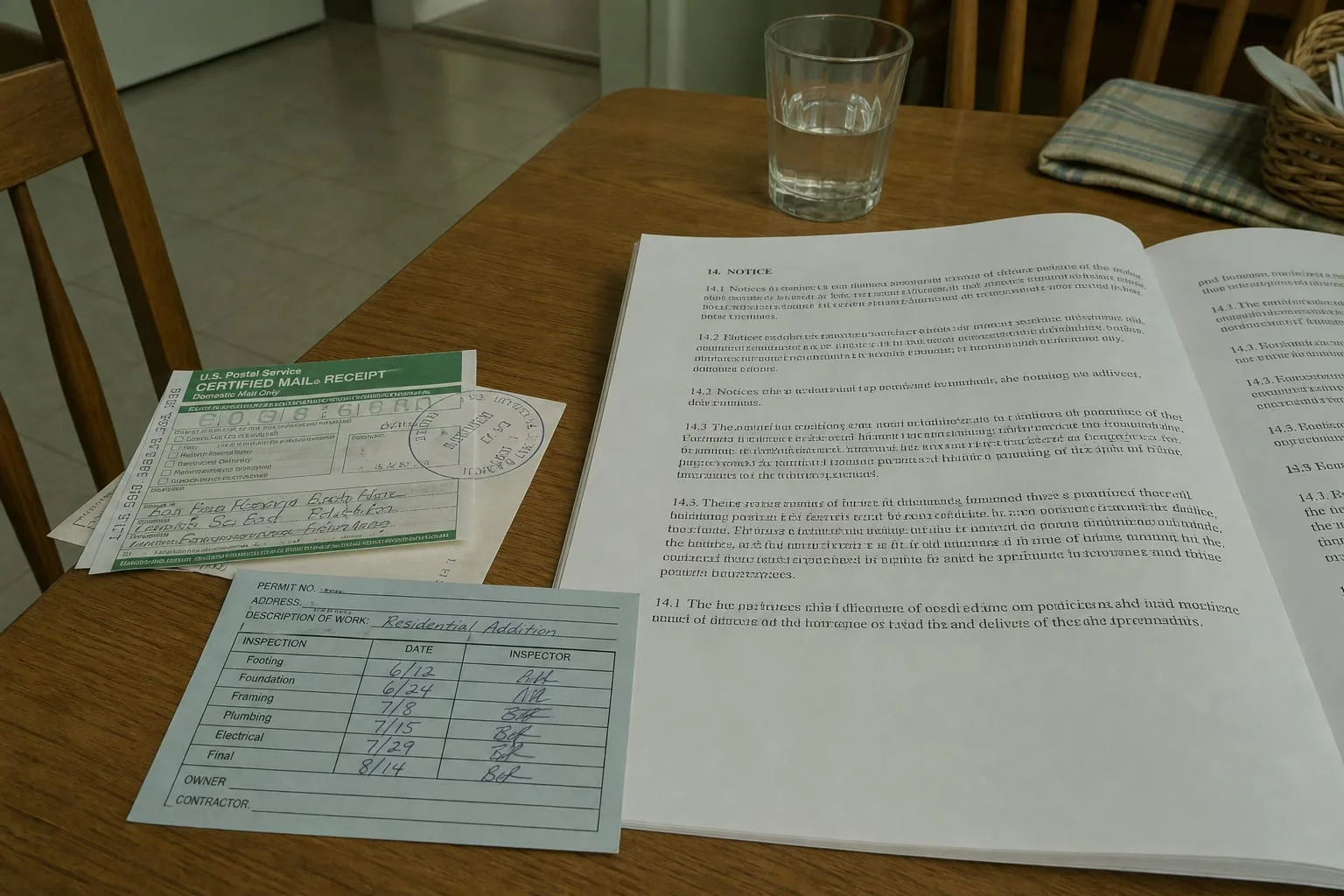
Law, August 14, 2026: December is when unfinished work goes quiet. The crew stops answering, the permit that was pulled in August is drifting toward its expiration date, and the homeowner who has been patient since Labor Day starts drafting something angry. That draft is usually the most expensive document in the file, not because of what it says, but because of where it gets sent. Complaints have rungs, and each one costs more than the one below it. Sending the first message to the wrong rung does not just waste a stamp; it can forfeit a step you were contractually required to take first.
The order is already written down, and it is not in your favor by accident
Before deciding where to complain, read the contract you signed, specifically the paragraphs near the signature block that nobody reads at the kitchen table. Most residential contracts, service agreements, and warranties contain a notice provision: a requirement that you tell the other side, in writing, what is wrong, and give them a defined window to fix it. Thirty days is common. Ten is not unusual. That window is a permission structure, and it works the same way a permit does, because it decides who is allowed to act and when.
What changed in recent years is how seriously that first step is treated. Arbitration clauses, which had already spread through home improvement contracts, solar agreements, home warranty plans, and moving contracts, increasingly carry a pre-dispute informal resolution requirement layered on top of them. The consumer must send a specific notice, wait out a set period, and sometimes attend a phone conference before filing anything. Companies added that layer for their own reasons, after waves of mass filings made the arbitration forum expensive for them. The practical effect on a household is simple. Skip the notice, and the expensive rung you climbed to gets kicked out from under you.
So the first cost driver is not legal fees. It is sequence. A complaint filed in the right order costs postage and an afternoon. The same complaint filed out of order can cost a filing fee, a few hours of an attorney's time to unwind, and several months, because you end up back at the notice letter you could have sent in October with the clock already running against you.
The free rungs, and how much record they can build
Three or four rungs of most escalations cost nothing but your own time. The written notice to the company is first, sent by a method that produces proof of delivery, dated, factual, and specific about what was promised and what was delivered. Second is the company's own escalation path, which now almost always runs through a portal that issues a case number and timestamps every message. That timestamping is worth more than it looks, since the file it creates is the same file you will attach to everything above it.
Third is the regulator or licensing body with jurisdiction over the trade. State contractor licensing boards, insurance departments, and attorney general consumer divisions accept complaints without charge, and the Federal Trade Commission is responsible for consumer protection reporting at the national level. Most of these bodies moved their intake online over the past several years, which shortened the lag between filing and the first letter going out to the business. Fourth, and most overlooked in Bernard's corner of the subject, is the building department, which has authority over whether the work was permitted and inspected at all.
When the work was never permitted, the cheapest lever is a municipal one
A significant share of contractor disputes turn out to have a permissions problem sitting underneath the workmanship problem. The deck was built without a permit. The panel was upgraded without an electrical inspection. The bathroom moved a drain line and no plumbing permit was ever pulled. Homeowners discover this in one of three ways: a refinance, a sale, or a complaint that prompts someone at the counter to look. The discovery is unwelcome, and it is also leverage, because a licensed contractor who performed permit-required work without a permit has a problem with the jurisdiction that is separate from and larger than the problem with you.
The cost of resolving it splits into two lines. There is the retroactive permit itself, which many jurisdictions issue at a multiple of the ordinary fee, sometimes with an investigation charge attached. Then there is the exposure work: opening a wall, a ceiling, or a section of slab so an inspector can see what is behind it. That second line is the one that moves the number, and it depends entirely on how much finish was installed over the unpermitted work before anyone asked. A complaint raised in the fall, while the crew is still mobilized and the drywall is still an option rather than a demolition, costs a fraction of the same complaint raised at closing.
What the paid rungs actually cost, and what drives each number
Above the free rungs, three things generate cost: expert opinion, filing fees, and hourly time. An engineer's or independent inspector's written report is the most common first paid item, and it is billed as a site visit plus a report, with a separate and higher rate if that person later has to testify. Filing fees are the most predictable expense in the whole sequence, published by the court or the arbitration provider, tiered by the amount in dispute, and often waivable on a hardship showing. Small claims sits at the bottom of that tier for a reason, and in most states it handles the sums that residential disputes actually involve.
Hourly time is where the variance lives. An attorney working from an organized file with dated notices, a permit history, photographs tied to dates, and a clean paper trail spends most of that first hour reading. An attorney working from a shoebox and a memory spends it reconstructing. The single largest cost driver in escalating a complaint is not the rate; it is how much of the record you built for free while the events were fresh. That is also why the contractor recovery or guaranty fund some states maintain is worth checking early, since those programs generally require a judgment or a board finding first, which means the order you chose months earlier determines whether the fund is available at all.
The calendar decides more of this than the merits do
Several clocks run at once, and they do not start on the same day. The contract's notice window starts when you send the letter. The warranty period, whether the one-year workmanship term common in residential contracts or a manufacturer's longer coverage, starts at substantial completion or delivery. The statute of limitations for breach of contract runs in years and varies by state and by whether the contract was written or oral. Permits expire on their own schedule, typically tied to the last inspection, and a lapsed permit can force a reapplication at current fees under current code.
Year end concentrates all of it. License renewal cycles fall at the turn of the year in many states, which means a pending board complaint reaches a licensee at the moment they most want a clean file. Insurance policies renew, and a claim adjacent to a dispute is easier to raise before the term closes than after. Contractors settle open jobs before their own books close. A written notice sent in the first week of January, with the record already assembled through the fall, lands during the exact stretch when the other side has the strongest reason to resolve it cheaply.
Work the rungs from the bottom, keep the dates, and let the free ones do what they are good at, which is producing an official record somebody else wrote down. By the time a complaint genuinely needs a filing fee, the file that supports it should already exist, built out of letters you sent, portal messages that timestamped themselves, and a permit history you pulled from the counter for the cost of a copy.