Quoted by the Hour, by the Phase or by the Outcome? What Each Number Is Measuring
By Ximena Arredondo·4 minute read
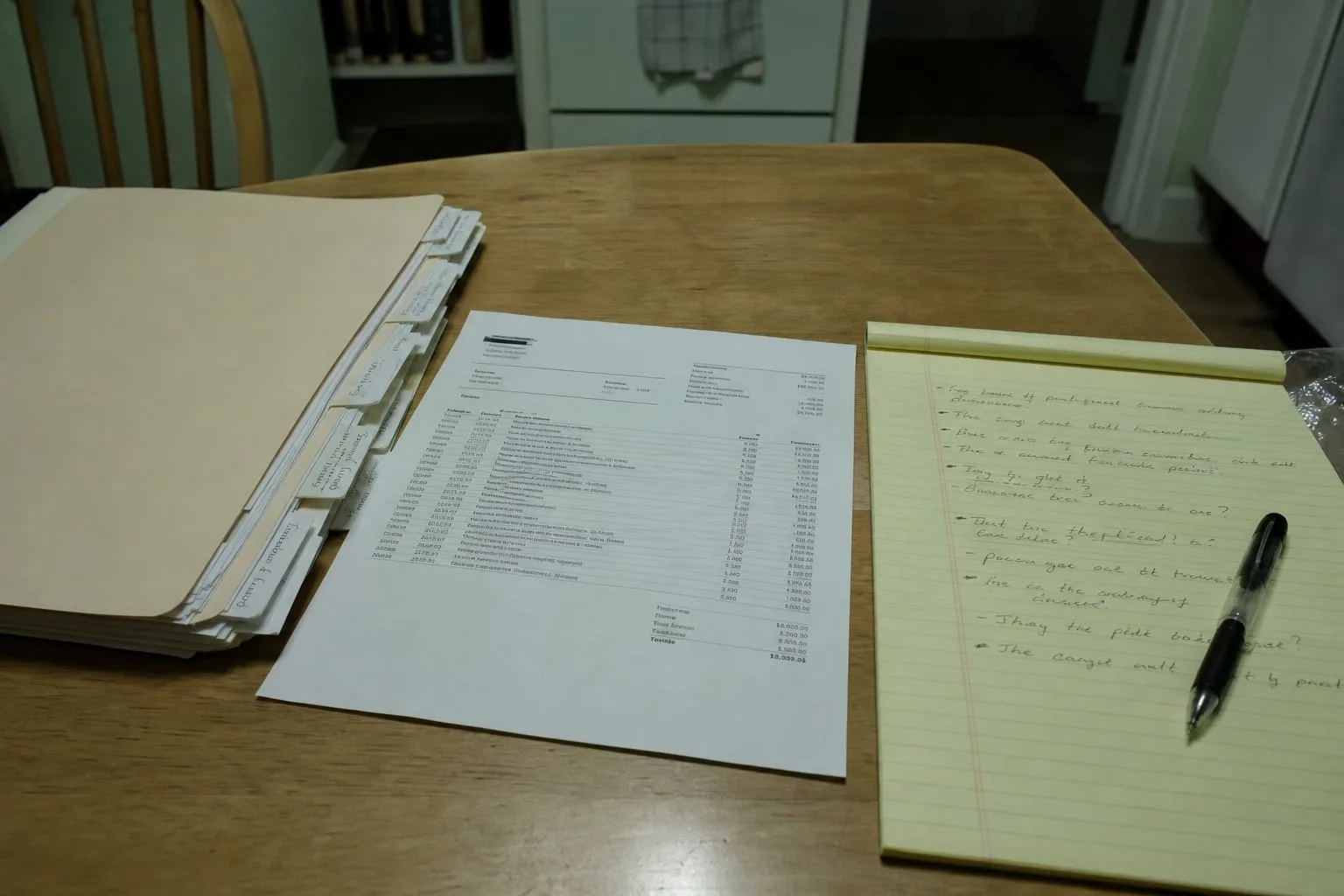
Law, October 22, 2025: An hourly rate and a flat fee for the same matter are not two prices for one thing; they are two different descriptions of what is being sold, and the difference shows up in the third month rather than at signing. In the weeks after the new year, when the matters people set down in November get picked back up, this is the question that decides whether the bill lands roughly where you expected. I come at it from the contractor's side of the table, where the same confusion runs: a customer hears a number and assumes it covers the job, when it covers a defined scope of the job and nothing beyond it.
The unit under the number, and why it matters more than the rate
Every fee quote is attached to a unit of work: an hour, a stage, a filing, a result, or a block of availability. An hourly rate buys attention measured in increments, usually a tenth of an hour, and it moves with how much the matter demands. A flat fee buys a defined piece of work, an operating agreement, an uncontested filing, a review and revision of a lease, and it stops where the definition stops. A contingency fee buys a share of an outcome and pays nothing when there is no recovery. A retainer, in most agreements, is a deposit against future billing rather than a price. Comparing rates across those units tells you almost nothing.
What a billed hour is actually made of
Clients picture the hour as time in a conference room, and it is mostly not that. It is the eleven minutes spent reading and answering your email, the call to opposing counsel that ran nine minutes, the twenty minutes locating a document you sent as a photograph of a screen, the drafting, the review of the draft by someone more senior at a higher rate. Ask who else touches the file and at what rate, because a paralegal doing intake and records requests at a third of the attorney's rate is usually good news rather than a downgrade. Ask what a quiet month on a matter like yours looks like in hours. A firm that handles your kind of work regularly can answer that within a range.
Fees and costs are two separate lines, and the second one surprises people
The fee is what the firm charges for its work. Costs are what the firm pays out on your behalf and passes through: court filing fees, service of process, certified copies, records retrieval, court reporters for depositions, expert witnesses, mediator time, sometimes travel. A flat fee for an uncontested filing very often excludes the filing fee itself, which is set by the court and is not the attorney's to discount. Ask which costs are anticipated, which are unlikely but possible, and whether the firm advances them or bills them as they arrive. If the matter is business-related, ask how the invoices will be itemized, because the IRS is responsible for how business expenses are treated on a return and a clean line between fees, costs, and anything personal is easier to defend a year later than to reconstruct.
The ordinary week is where the total is decided
On a job site, the customer who costs the most is rarely the one with the hard house. It is the one who changes the plan on Tuesday, calls three times about a question already answered in writing, and cannot find the paperwork when the inspector asks. Legal work runs the same way, and the meter is more honest about it. Sending documents once, complete, named and in order, saves real money. Batching questions into one email a week instead of five saves more. Deciding what you actually want before the drafting starts saves the most, because redrafting is billed at the same rate as drafting and it happens twice. The client who is organized in the ordinary week ends up with a lower number and, usually, a better result, because the attorney's hours went into the substance rather than into administration.
Testing a quote before you sign the engagement letter
Read the engagement letter for its boundaries rather than its rate. Find the sentence that says what happens when the matter changes shape, when an uncontested case becomes contested, when a negotiation becomes a filing, when a second party joins. Find how often you will be billed, monthly is standard and quarterly leaves you blind too long, and what the invoice will show: date, timekeeper, description, increment. Ask for a written estimate that names a phase and a trigger, something like a figure through the initial pleadings and a fresh estimate before discovery, rather than a single number for the whole thing. Ask what would make the estimate wrong. A candid answer to that last question is the strongest signal you will get.
Matching the unit to the matter you actually have
Predictable, bounded work suits a flat fee, and you should push for one where the work is genuinely routine: a straightforward entity formation, a will and the documents around it, a demand letter, a lease review. Work whose length depends on someone else's behavior rarely prices flat, and an attorney who quotes it flat has either priced in the worst case or will come back to renegotiate. Contingency fits where there is money to recover and you cannot fund the fight, and the number to interrogate there is the percentage after costs, not before. Hourly with a phased estimate and monthly invoices is the honest default for everything in between, and it rewards a client who keeps the file tidy.
The judgement you are building is narrow and it transfers to every quote you will ever receive: identify the unit, find the edge of what it covers, and price the gap yourself. Do that before the retainer clears, while you still have the leverage of not having signed, and the rest of the engagement is arithmetic you can follow line by line.