Peak Season Damage? Who Signed, Who Packed and Who Actually Carries the Loss
By Bernard Okafor·5 minute read
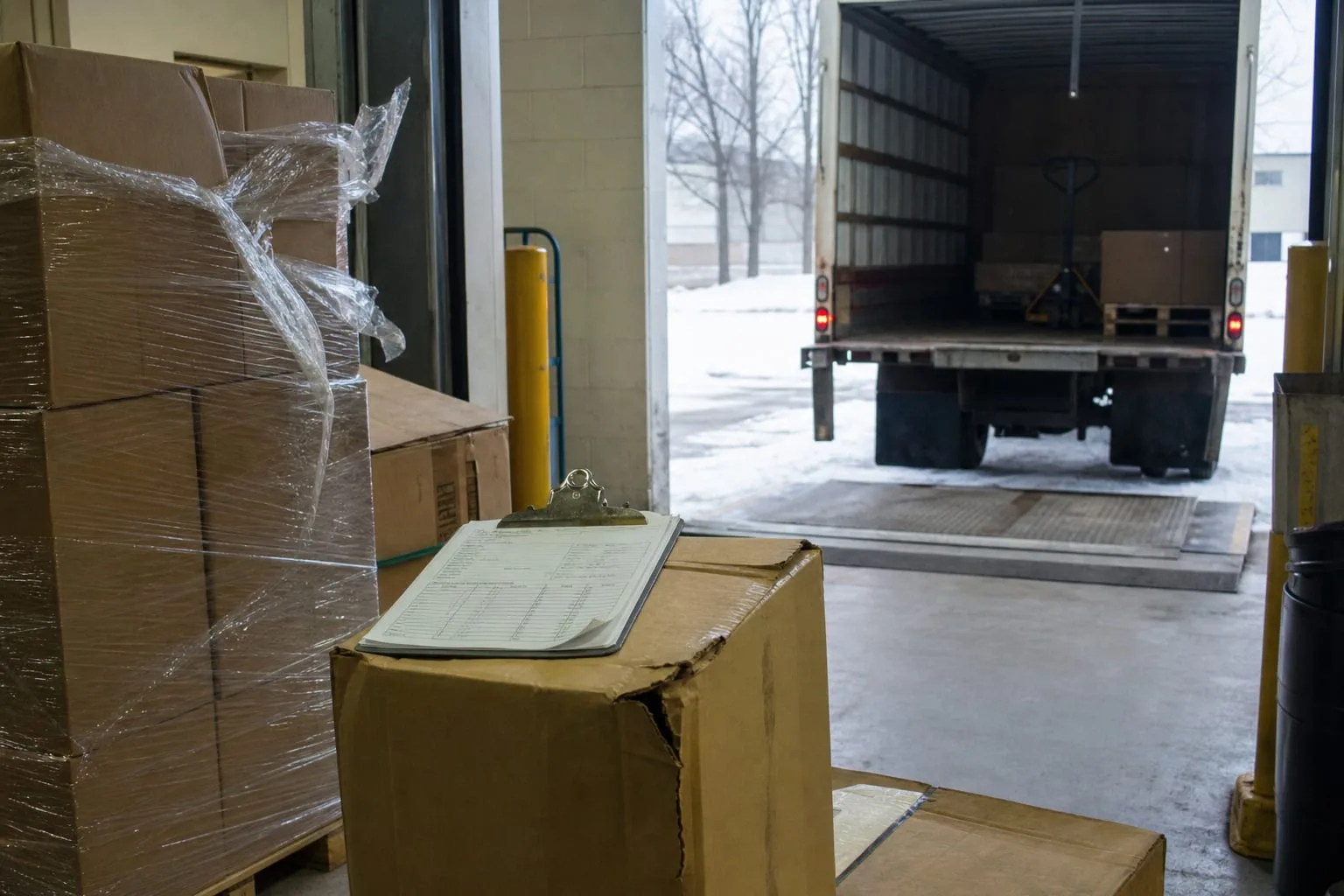
Business, April 26, 2026: January is when the damage from December shows up. Returns come back in crushed cartons, a retailer's chargeback notice lands for cases that arrived scuffed, and somebody in accounts payable finally reads the freight bill for a pallet that went out the week before Thanksgiving. By then the decisions that determine who absorbs the loss have all been made, most of them silently, several of them by people who did not know they were making a decision at all. The packing method, the valuation box on the bill of lading, and the signature at the receiving door are the three that matter.
The liability limit is chosen before anything is packed
A carrier's exposure for a damaged shipment is not the value of the goods. It is whatever the governing tariff and the bill of lading say it is, and for most interstate motor freight that means a released rate expressed in cents per pound, or a class-based limit tied to the commodity description. Declared value costs extra and has to be requested, in writing, before pickup. Nobody at the dock will volunteer it. The Federal Motor Carrier Safety Administration oversees interstate household goods and motor carrier operations, and the valuation choices offered on a household goods move follow the same logic: a minimum protection level applies by default, and full value protection is an election the shipper makes and pays for.
The practical consequence is arithmetic. A pallet of lightweight electronics moving under a weight-based released rate may be worth thirty times what the carrier's limit will pay, while a pallet of tile is nearly covered by the same limit because it is heavy. Two shipments, one liability formula, wildly different outcomes. This is the single largest driver of who carries a loss, and it is settled at booking rather than at delivery.
What packing costs, and what the money is actually buying
Packing cost splits into materials, labor minutes and cube. Materials are the visible part: corrugated grade, whether the box is rated by edge crush or bursting strength, the void fill, the corner boards, the stretch wrap gauge, the pallet itself. Labor is the part that gets underestimated, because every additional step is measured in seconds multiplied by unit volume, and a fulfilment operation that adds fifteen seconds of protective wrapping to an item shipping thousands of times a month has added a real payroll line. Cube is the quiet third cost, since parcel carriers bill on dimensional weight and a generously padded box pays freight on air.
Against those costs sits the damage rate. Underpacking is cheap per unit and expensive in aggregate, once returns processing, replacement inventory, expedited reshipment and the customer service time are counted. Overpacking is expensive per unit and buys certainty. The line between them moves with the value density of the product, and most operations find it by testing rather than by argument: pack the item three ways, ship it through the actual lane in the actual season, and count what comes back.
Who packed it decides whether the claim survives
Carriers and their insurers separate shipper-packed freight from carrier-packed freight, and the distinction runs through both freight claims and household goods claims. Cartons a customer packed themselves are marked as such on the inventory, and damage inside a sealed carton that shows no external harm is very difficult to pin on the carrier. The same idea appears in commercial freight as insufficient packaging, an affirmative defense a carrier can raise when a shipment fails because the packaging was not adequate for ordinary handling. That is why the National Motor Freight Classification packaging requirements matter beyond the rate quote: meeting them is evidence, and missing them is a defense handed over for free.
Consent is embedded in all of it. Nobody can consolidate, repack, or relabel your freight for their own convenience without that being visible somewhere, and when a third-party warehouse repacks inbound goods into its own cartons, the packing responsibility has quietly transferred with the labor. Read the fulfilment agreement for the paragraph that says who owns the packaging standard, because the party that owns the standard usually owns the loss when the standard fails.
Where the local rule changes the number
Interstate moves run on federal law and the carrier's tariff. Moves that begin and end inside one state do not. Intrastate household goods carriers are regulated state by state, by a public utilities commission in some places, a department of transportation or consumer affairs agency in others, and a handful of states impose their own mandatory valuation levels, required written estimate formats, and complaint procedures that differ meaningfully from the federal pattern. A mover crossing a state line and a mover crossing a county line are operating under different rulebooks, with different default liability, and the same box of dishes can be worth two different amounts depending on which side of that line it started.
Municipal rules add another layer, and this is where costs appear that no quote anticipated. Dense cities require permits to occupy curb space with a truck, issued by the transportation department and priced by the linear foot and the day, with lead times that stretch during construction season. Many high-rise buildings will not let a crew past the lobby without a certificate of insurance naming the building, an elevator reservation booked in advance, and masonite laid on the floors. Historic districts restrict where a truck can stand. Coastal humidity weakens corrugated, and winter cold makes tape adhesive let go, so the same carton specification performs differently in Phoenix in July and Buffalo in February.
The signature at the door, and the calendar that follows it
A delivery receipt signed clean is a written statement that the freight arrived in good order, and it is the most expensive signature in the chain. Whoever signs it needs actual authority and actual instructions: count the pieces, look at the wrap, note shortage or visible damage on the paper before the driver leaves, and photograph the pallet on the truck rather than after it has been broken down. Concealed damage discovered later is still claimable, but the window is short and measured in days, and the carrier will ask why nothing was noted.
The outer deadlines run longer and are unforgiving. The standard interstate bill of lading sets a claim filing period measured in months, commonly nine from delivery, and a further period, typically two years and a day from claim denial, to bring suit. Peak season shipments delivered in late November and December therefore begin expiring in the following summer, which is why the productive time to reconcile December's damage is now, in the quiet weeks when receiving paperwork is still findable.
Pull the bills of lading for the last quarter, check which valuation was elected, and confirm who signed for what. The operations that recover the most are not the ones with the best packaging. They are the ones that decided, in writing and in advance, who was permitted to accept a shipment on their behalf.