One House, Two Owners, Eleven Years. The Upkeep Paperwork That Actually Held Up
By Ximena Arredondo·5 minute read
House & Home, May 18, 2026: I have been in and out of the same house since 2014, first for the couple who built the addition and then for the family who bought it from them in March. Same furnace, same water heater until last spring, same crawlspace I still resent. What makes it useful is that I watched two households try to keep the same property on schedule using completely different paperwork, and only one of those systems was still working when it was tested. November is when the test usually arrives, because that is when the heat runs hard and the first bill lands and somebody starts looking for a receipt.
What the first owners kept, and where it failed
The original owners kept a binder in the laundry room, and I want to be fair to it, because for about six years it was better than what most clients have. Manuals, my invoices, a hand-drawn shutoff map, the roof warranty. What killed it was that nothing in the binder ever told anyone that a date had arrived. It recorded the past and predicted nothing, so the humidifier pad went four winters without a change and the water heater was never flushed, and when the tank finally went the manufacturer asked, politely, for evidence of annual maintenance. There was none. That conversation ended with a partial credit and an invoice.
The binder also moved. It went to the new house in a box labeled kitchen, which is the ordinary fate of every binder I have ever seen. At closing the buyers got a stack of appliance manuals and nothing else, which meant that in April I was standing in a mechanical room reconstructing the service history of a house I had personally serviced, from my own records, at my hourly rate. That is the awkward-client tax in its purest form, and it was nobody's fault except the filing.
What changed in the last few years, and why it matters now
Two things shifted, and they pushed in the same direction. Manufacturers moved warranty registration and claims onto portals that want a model number, a serial number, an install date and, increasingly, some proof that the annual service in the warranty terms actually happened. At the same time, insurers got much more pointed about water and roof documentation at renewal, because those are the losses that hurt them, and asking a policyholder for photos costs an adjuster nothing. Documentation used to be a courtesy you produced if you happened to have it. It is now a condition attached to money you have already paid for.
The other change is on your side of the table, and it is the reason any of this is manageable. Your phone reads a serial plate legibly in a dark closet, timestamps it, and files it somewhere you can search by room name. Filter and pad manufacturers will ship on a schedule you set once. Utility rebate programs, and the efficiency labeling that Energy Star oversees, have trained everybody to photograph the old unit before it leaves. The tools got good at the same moment the verification got strict, which is lucky, and mostly accidental.
The system the second owners landed on
They tried an app first, one of the whole-home maintenance products with a hundred and forty tasks preloaded. It lasted five weeks. Too many notifications about gutters they do not have and a deck they tore off, and once you start dismissing alerts you dismiss all of them. What replaced it has three parts and no subscription. A shared calendar with four recurring entries, a photo album on the phone called House with subfolders by system, and a single email folder where every invoice and confirmation gets dragged the day it arrives. That is the whole thing.
The calendar entries are deliberately few, because a schedule with twenty items is a schedule you will abandon by February. Theirs are late September for heating service and a battery in every detector, late March for cooling and the dryer vent, June for the water heater flush and anode check, and a floating one on the first of each month that just says filter and hose bibs. Each entry has my number and the model number in the notes, so the person who opens the reminder can book the work without going to look for anything. Friction is what kills schedules, not laziness.
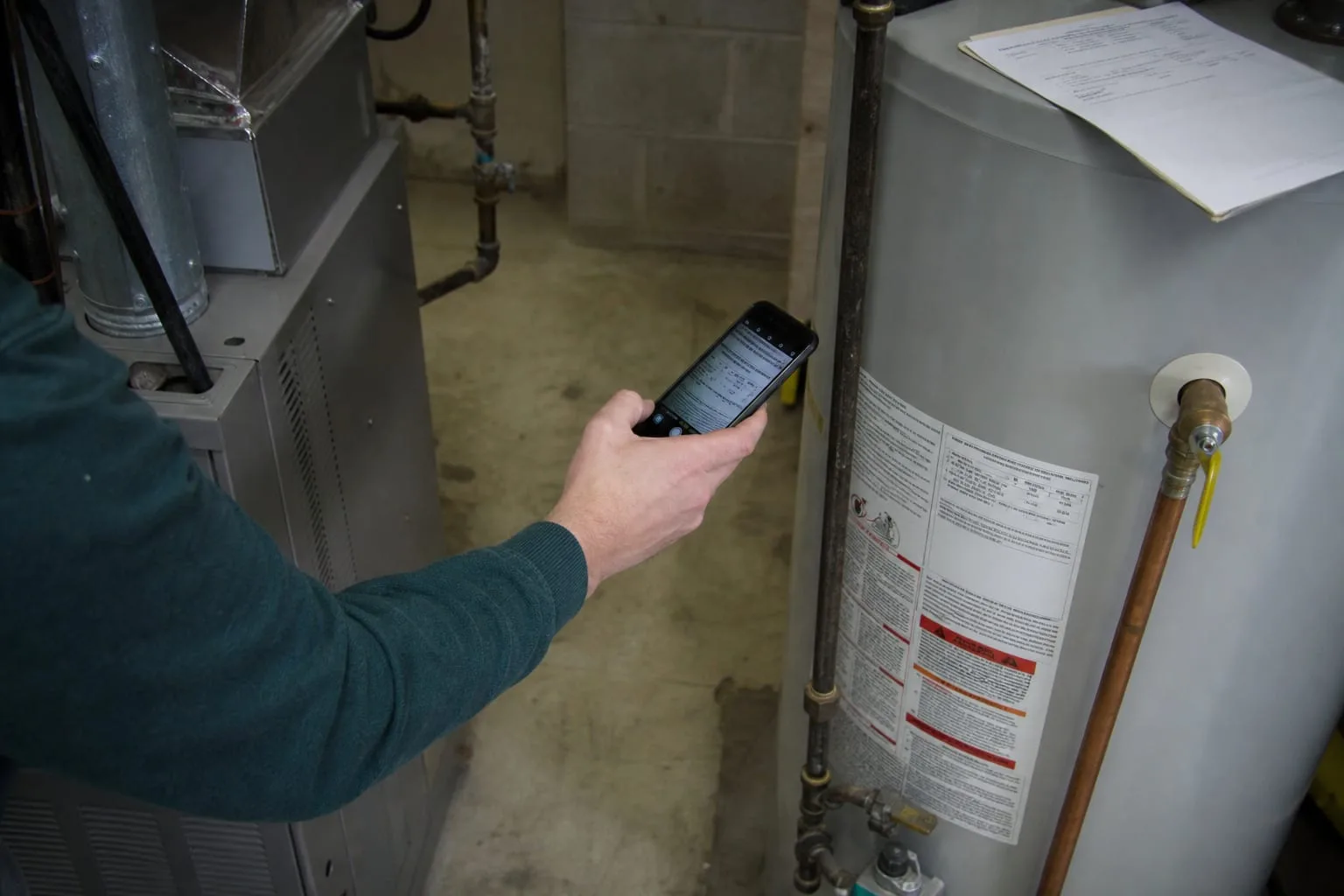
The photo album is the part I wish more clients copied. When the water heater went in last spring, they shot the old tank, the drain pan, the new data plate, the expansion tank, and the shutoff, all in one pass, four minutes of work. Those five pictures established install date, capacity, model and serial, and the condition of everything nearby. In August, when a supply line at the washer let go while they were at a wedding, the same habit gave the adjuster a before picture of a dry floor with a visible pan and a labeled valve. The claim was not argued.
What the paperwork saved, in dollars and in arguments
The registered warranty on the new heater covered a failed thermostat in October at no cost, because the portal already had the install date and the June flush was in the email folder as a paid invoice with a line item naming the task. The gas utility's rebate on the heating service went through on the first submission because the photos existed. And when they refinanced, the underwriter's question about roof age was answered with a permit record pulled from the county in about ten minutes, which is the other thing that changed recently: inspection and permit history that used to require a counter visit is now searchable from the couch in most jurisdictions.
None of that required discipline in the way people mean when they say discipline. It required four calendar entries, a phone habit, and a place to drag an email. The first owners were more organized people than the second owners, honestly, and they came out worse, because their system asked them to remember and the new one asks them to answer.
If you want to copy one piece of this before the heating season is fully underway, copy the photo pass. Go stand in front of the furnace, the water heater and the main shutoff, shoot the data plates, and give the album a name you will guess correctly in three years. It is the cheapest hour of record-keeping available to a homeowner, and it is the one that pays when somebody asks you to prove it.