One Failed Inspection, Four People Who Get a Say. How a Repair Call Actually Gets Decided
By Callum Fitzgerald·6 minute read
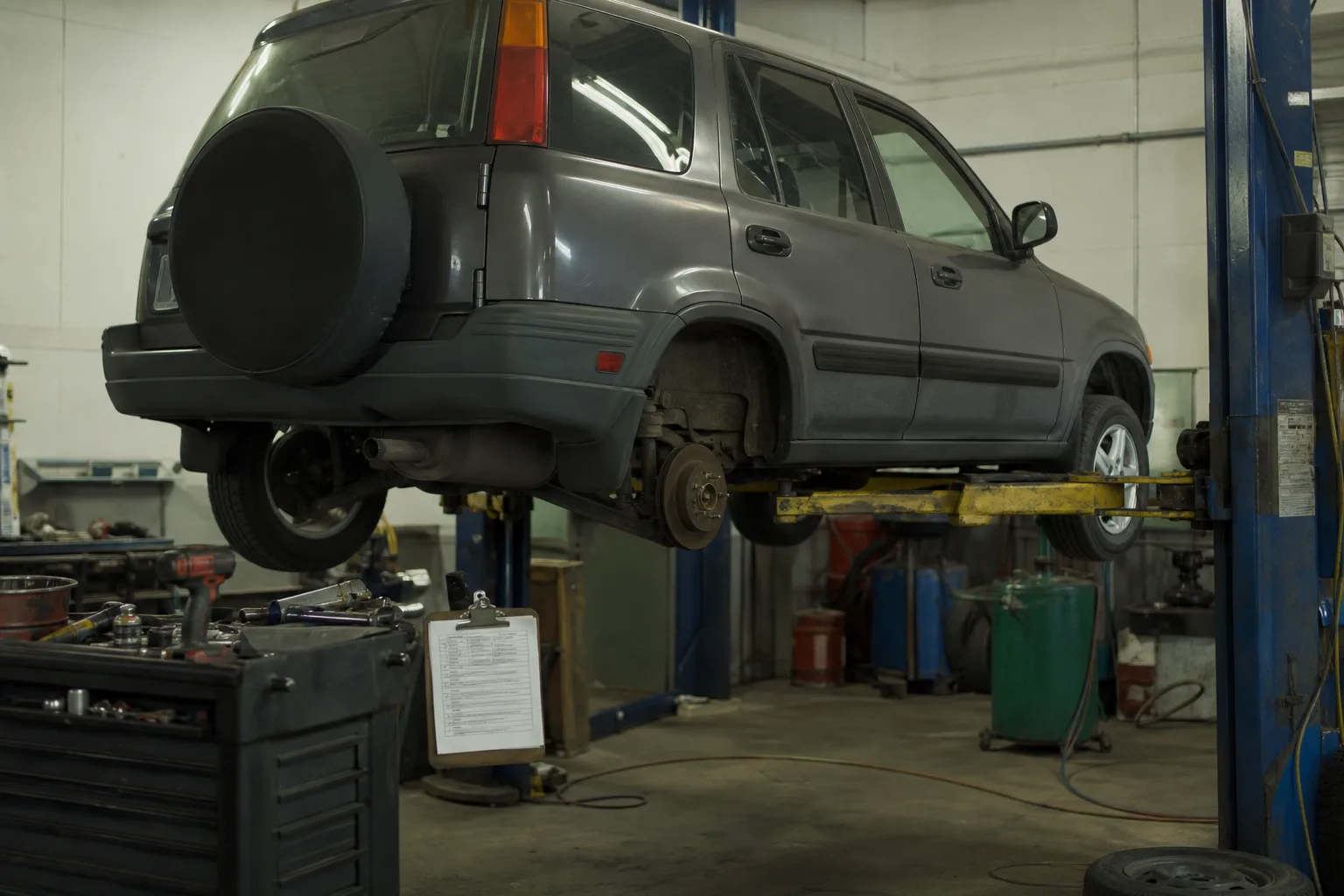
Vehicles, January 30, 2026: The Escape failed inspection on a Tuesday in the second week of February, five weeks before the sticker on the windshield was due to expire. Dana and Marcus Whitfield had owned it since 2016, bought used with a little over sixty thousand miles on it, and it had carried two kids through elementary school and one parent through a job change. The garage called before noon with three items, and the first of the three was a corroded brake line. That single line turned a routine appointment into a decision about whether the car had a future.
The person who signs the sticker is not free to be generous
Pennsylvania runs annual safety inspection, and the mechanic who puts the sticker on is signing his own name to the condition of the vehicle. He is a licensed inspector working under a state program, and the criteria for brake lines, frame corrosion and suspension components are written down, not left to sympathy. Ray, who has run the shop for nineteen years, could not wave through a brake line weeping at a fitting even if he wanted to. Understanding that changed how the Whitfields heard the call. He was not upselling. He was reporting what a written standard had already decided on his behalf.
That matters because the same car, parked in a different state, produces a different conversation. Several states have no periodic safety inspection at all, so a corroded line stays a private matter between the owner and the road until something fails. Others inspect only on transfer of title, or only in certain counties, or run an emissions program that is separate from safety and keyed to the county of registration rather than the address on the driver's license. The National Highway Traffic Safety Administration oversees federal vehicle safety standards, but the inspection regime the reader actually meets is a state creation, and it varies by a wide margin across state lines.
The estimate and the order the lines were written in
The Whitfields asked for the estimate in writing, which is the single most useful thing a household can do at this stage. What came back had three groups, and the grouping was the real information. Brake lines and one rear caliper sat under must pass. A leaking strut and a pair of bushings sat under advisable within the year. A slow oil seep and a failing door actuator sat at the bottom, noted and priced but not urgent. The service advisor's triage is a professional judgment the customer is paying for whether or not they notice it.
The part that surprised them was the labor split. Replacing brake lines on a vehicle that has spent eleven winters on salted roads is not the same job as replacing them on a coastal car, because fittings seize, and what should be a clean unthread becomes cut, chase and fabricate. Ray quoted the job with coated replacement lines rather than plain steel, which costs more at the parts counter and buys years on the back end. The second shop the Whitfields called quoted plain lines and a shorter labor figure. Those two estimates were not describing the same repair.
They went back to Ray with a specific question: if only the brake lines and caliper were done now, what does the car need in twelve months, and what is the chance of a surprise between the two dates. He answered in ranges and named the parts he would expect to see fail, which is what a competent answer to that question sounds like. Nobody can promise a number. A shop that has had the vehicle on the lift can tell you which corner of the car it is worried about, and that is enough to plan around.
Two households, two ZIP codes, two different answers
Marcus has a brother outside Mobile, Alabama, driving a vehicle of roughly the same year and mileage. They compared notes over a weekend, and the comparison was more instructive than either expected. The brother's underbody is intact because nobody salts the roads, so his repair list skews toward heat, rubber and air conditioning rather than rust. He also faces no annual safety inspection, which means his decision about when the car stops being worth repairing is made by his own tolerance and his mechanic's advice, with no external date forcing the issue. The Whitfields' decision had a deadline printed on the windshield.
The other person standing next to this decision is the insurance adjuster, and only some households ever meet her. If the car is damaged in a collision rather than simply worn out, the question of repair or retire moves out of the owner's hands and into a total loss calculation, and the rules for that calculation are set at the state level. Some states define a total loss by a fixed percentage of the vehicle's actual cash value, some use a formula that weighs repair cost plus salvage value against value, and some leave it substantially to the insurer's judgment subject to state insurance regulation. The same damage, the same car, can be a repair in one state and a branded title in the next.
That branding is the part households underestimate. Once a vehicle takes a salvage or rebuilt designation from a state motor vehicle agency, it carries that designation across state lines for the rest of its life, and it changes what the car can be insured for, what a lender will accept and what a private buyer will pay. The clerk who processes that title is not exercising discretion. She is applying a statute. Knowing which statute applies where you register is worth an afternoon before, rather than after, you authorize a large collision repair on an older vehicle.
What the calendar did to the arithmetic
February is a bad month to be forced into this decision and a good month to make it deliberately, and the Whitfields got the benefit of the second only because they moved fast on the first. The sticker ran to the end of March, which gave them roughly six weeks of legal driving to gather quotes, price a replacement and look at what the car would actually fetch in a private sale. Used vehicle prices move seasonally, and so does the market for the kind of car a household buys in a hurry. A decision made with five weeks of runway is a different decision from one made in a parking lot on the day the sticker dies.
They also checked the other dates that were about to land, because repair decisions do not sit alone on the calendar. Registration renewal fell in May, the insurance policy renewed in June, and the couple knew roughly when a federal refund would arrive. Lining those up told them something simple: a large repair in February and a vehicle purchase in June would land two big outflows in the same four months, while doing the safety work now and reassessing in the fall spread them out. That is not a mechanical judgment. It is a household cash flow judgment, and it belongs to the owner rather than the shop.
The final invoice, and the date they wrote down
They authorized the brake lines with coated replacements, the rear caliper and a fluid flush, and declined the strut and the actuator in writing on the same estimate. The car passed inspection on the Friday. Ray noted the declined items on the invoice, which is standard practice and also useful documentation if the household later sells the car and wants to show a buyer what was known and when. The invoice ran meaningfully above what the Escape would bring in a private sale, and the Whitfields decided that anyway, because the alternative was a replacement vehicle bought under time pressure in the worst month for it.
What they did next is the part worth copying. They put a date in September on the calendar, four weeks before the strut work would become urgent and well before next February's inspection, and they agreed that at that appointment they would ask Ray the same question again and treat the answer as binding. The decision about when a car stops being worth repairing is rarely one conversation. It is a sequence of them, each with a date attached, and each one easier when the people who set the standards, write the estimates and issue the titles have already been identified by name.