Inherited a Ring and Booked a Resizing? Who Signs Off Before the Torch Comes Out
By Bernard Okafor·4 minute read
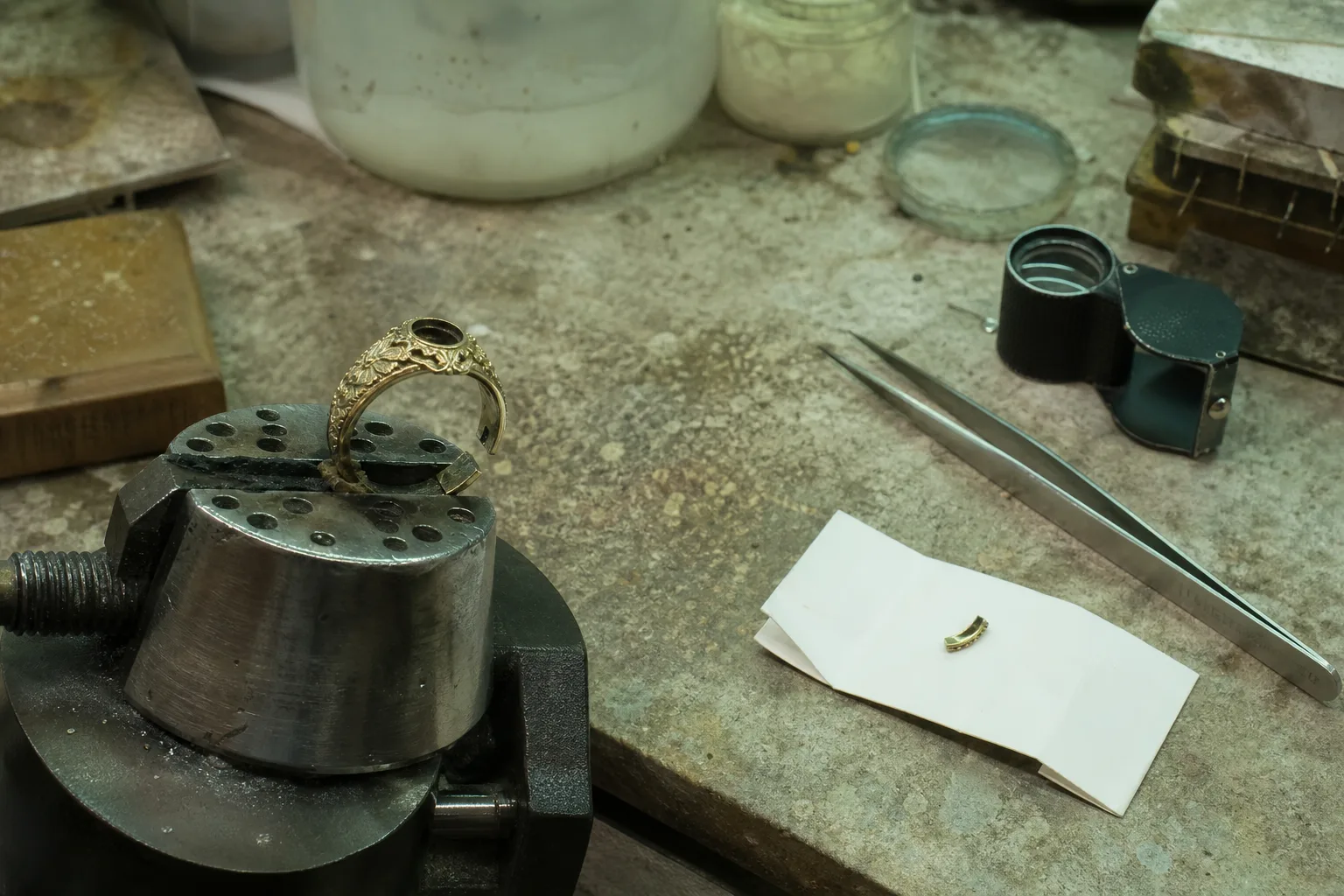
Finance, September 23, 2026: Bench work has a season, and it runs from the first week of December through the middle of February, when engagement rings, inherited pieces pulled out of safe deposit boxes after a fall funeral, and anniversary repairs all arrive at once. A first-time client walked into that queue in early December with her grandmother's ring, a size four and a half that needed to be a seven, and a prong she could catch on a sweater. She expected a two-week turnaround and a flat price. What she got instead was a phone call on day four, and the terms of that call had been set, without her quite realizing it, by the ticket she signed at the counter.
The intake ticket is the permission document, not a receipt
She read the front of the envelope, which described the ring, the stone count, and the quoted range for sizing up two and a half sizes. She did not read the back, which is where most shops put the language that matters: what the bench may do without calling, what requires a second authorization, and what happens to the piece if she cannot be reached. That back panel is the consent form. It is the difference between a jeweler who stops and dials and a jeweler who proceeds, in good faith, on work she never priced. Shops vary enormously in how much latitude they take, and the only way to know which kind you are standing in front of is to ask them to point at the clause.
What the bench found, and why it triggered a second conversation
Sizing up two and a half sizes is not a small adjustment. The shank had to be cut and new gold added, matched to an alloy that was never documented, and when the bencher cleaned the underside he found a seam from an earlier repair, done with a low-karat solder that would not take heat the same way the surrounding metal would. Somebody had sized that ring before, probably decades ago, probably cheaply. The original owner may have authorized it. Nobody alive could say. That old seam converted a routine job into a decision about whether to cut out the previous work entirely and replace the lower half of the shank, which costs more, lasts longer, and cannot be undone.
The call she received was the shop asking for permission it did not already have. She had authorized sizing. She had not authorized reconstruction. A bench that treats those as the same instruction is a bench that will hand back a ring she did not order and an invoice she did not expect, and the argument afterward is unwinnable because the metal is already cut. The Federal Trade Commission oversees how precious metals are described and marked in commerce, which is the reason a shop cares whether new gold added to an old shank is the karat the stamp inside claims. Authorizing the repair is also authorizing the piece to keep being accurately described.
The consents that cannot be walked back
Three things on that ring were irreversible, and a first-timer has no reason to know which three. Removing the center stone to protect it from heat is routine, but if the stone is chipped at the girdle, as hers was, removal and resetting risks widening the chip, and a shop will want that risk acknowledged in writing before it touches the prongs. Refinishing is the second. A high polish removes metal permanently and takes the soft wear pattern of eighty years with it, which some owners want and others mourn. Rhodium plating over white gold is the third, cosmetic, cheap, and due again every year or two once you start.
She approved the stone removal and the shank replacement, declined the full polish in favor of a light touch on the new metal only, and asked for the removed section to come back to her in the envelope. That last request costs nothing and settles a surprising number of later disputes, because it is physical proof of what was taken out and what was put back. It also, in her case, gave a later appraiser something to look at when the question of the old unauthorized solder came up again.
Deciding what damage is actually worth fixing
The chipped girdle was the interesting question, because repolishing the stone would have cost more than the entire metal repair and would have dropped the carat weight below what her grandmother's old appraisal recorded. A chip hidden under a prong is a cosmetic problem and a structural one only if it sits where pressure lands. Hers did not. She left it, had the setting rebuilt so the chip stayed covered, and put the savings toward a current written appraisal, which is what her homeowners insurer needed before it would schedule the ring as a separate item rather than lumping it under a jewelry sublimit that would not have covered half of it.
The ring came back on the third week, sized, resoldered in matching alloy, with a new appraisal and photographs of the work in progress. She paid roughly a third more than the counter quote, all of it authorized on a recorded call, none of it a surprise. The phrase worth repeating from that job is the one the bencher used before he started: tell me what you want me to call you about, and I will call you about it.