Inherited a Ring Over the Holidays? The Appraisal in the Envelope Is Probably Too Old to Use
By Callum Fitzgerald·5 minute read
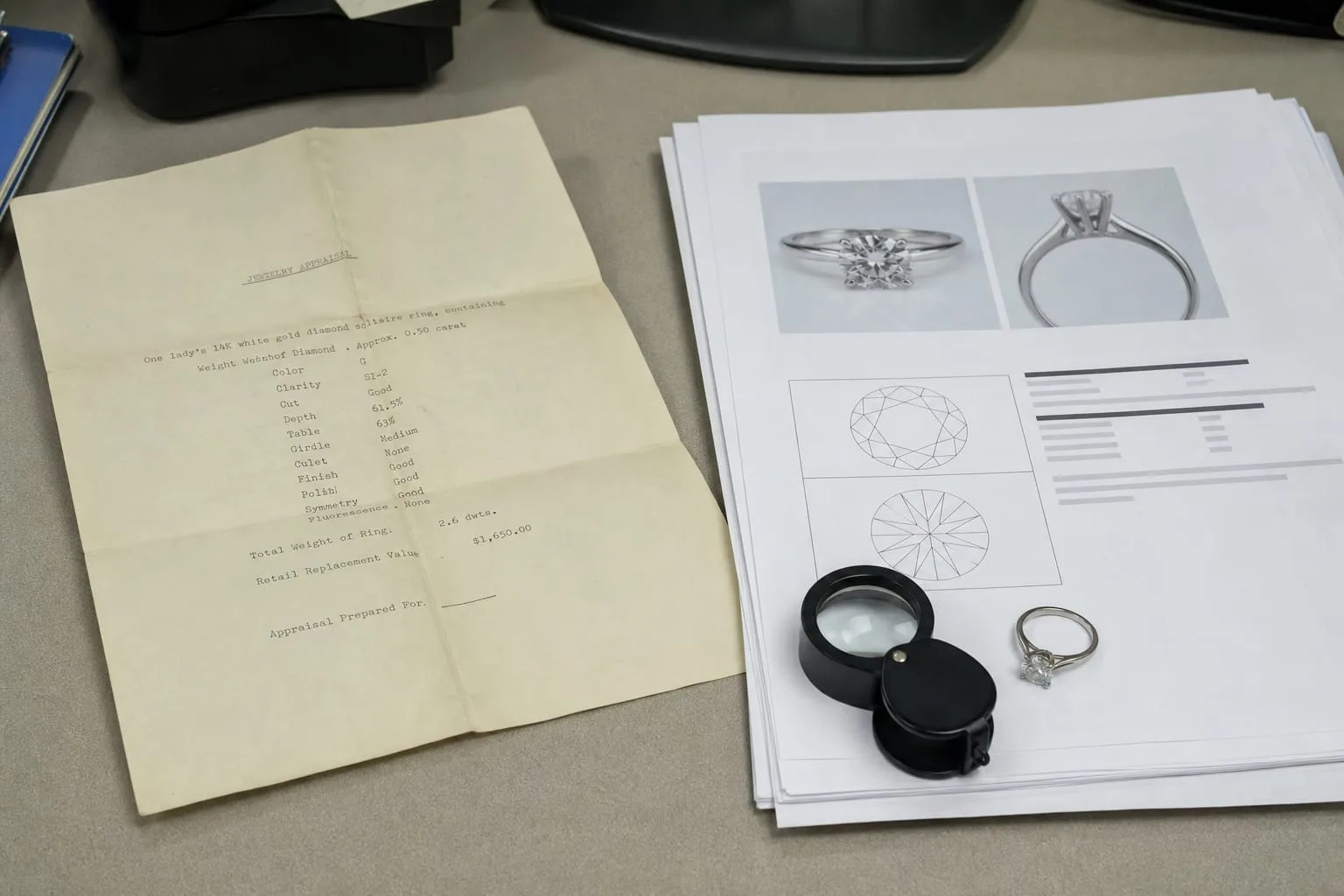
Finance, June 17, 2026: The ring left the safe-deposit box on the day after Christmas, along with a folded appraisal typed on letterhead from a store that closed years ago. The family had always known the ring was insured, in the loose way households know such things, and the January call to their agent was meant to take ten minutes. It took three weeks, two appointments and a fee, and the version of the coverage that came out at the end bore very little resemblance to what they thought they already had. The particulars are worth following, because they repeat in almost every household that inherits something valuable.
The call that revealed what was actually on the policy
Their agent had been writing personal lines for close to thirty years, and she asked the questions in an order that told you she had done this several hundred times. First, whether the ring had ever been listed by itself anywhere on the policy, which it had not. Second, what the homeowners policy said about jewelry theft, which was a sublimit measured in the low thousands and applied to all jewelry in the house combined. Third, whether the loss they feared was theft, fire, or the ring simply coming off in a parking lot. That third question changed everything, because the sublimit answered only one of the three.
This is the piece of judgement that takes people longest to build. An unscheduled item sitting inside a homeowners policy is covered for the perils the policy names, at the cap the policy sets, with the policy deductible in front of it. A scheduled item, listed on its own with its own value, is usually covered far more broadly, including the mysterious disappearance that accounts for a great many real jewelry losses, and often with no deductible at all. The family had assumed the safe-deposit box was the protection. What the box actually did was make the ring cheap to insure once someone finally listed it.
Why the appraisal in the envelope could not be used
The old document failed on three counts, and each one is worth recognizing on sight. It was more than a decade old, which alone would have been enough, because a valuation is a snapshot of a market and gold, platinum and colored stones have all moved since. It gave a single number with no stated purpose, so nobody could tell whether it was a retail replacement figure, an estate value for probate, or a resale estimate, and those three answers for the same ring can sit very far apart. And it described the center stone in a sentence, without measurements, weight, cut grade or a note on the setting.
An insurer that pays a claim on a vague description is guessing, and so is the household. The agent explained the practical consequence plainly: at a loss, the carrier replaces with an item of like kind and quality, and the appraisal is the only record of what the quality was. Descriptions in the trade are regulated, and the Federal Trade Commission is the body responsible for how gemstones, precious metals and treatment disclosures may be described in commerce, which is why a serious appraisal reads like a specification rather than a compliment. The family needed a new document, written for insurance and dated this year.
Choosing the appraiser, and the questions that sorted them
They called four places. Two were retail jewelers who offered a free appraisal with any purchase, which the agent had warned about, not because such appraisals are dishonest but because a valuation produced to support a sale is doing a different job than a valuation produced to price risk. The third would not commit to examining the ring on the premises. The fourth was an independent appraiser who held a credential from a recognized professional body, carried no retail inventory, charged by the hour rather than as a percentage of the value, and said the ring would not leave the room while it was being examined. That answer decided it.
The fee ran to a few hundred dollars, billed for roughly ninety minutes of bench time plus the written report, and the family paid it directly rather than through the agent, which matters for independence. What came back was six pages: stone measurements, estimated weight, color and clarity assessments with the method stated, metal testing results, a description of the mounting and its condition, photographs, and a stated replacement value in the current retail market with the date and the appraiser's basis for it. The number was meaningfully higher than the old one. Nobody was surprised except the family.
What went on the policy, and what it cost
The agent scheduled the ring at the appraised replacement value, on a rider written as agreed value, meaning the stated figure is what the carrier pays rather than a ceiling to argue beneath. Premium for scheduled jewelry is quoted per hundred dollars of value and varies with where you live and how the item is stored, and in this case the annual cost came out to less than the family spent on the appraisal, which is the usual shape of the answer. The carrier asked two questions before binding: whether the ring would be worn regularly, and whether the house had a safe. Both answers affected the rate.
Two details on the final documents deserved a second look, and got one. The rider covered the ring worldwide, which mattered because the family travels, and it did not require a police report for a loss that could not be explained. The declarations page listed the ring by description, and the appraisal date appeared alongside it. That date is the quiet mechanism in the whole arrangement, because it is the thing that ages, and it is the thing an adjuster looks at first when a claim arrives years later on a document nobody refreshed.
The renewal calendar, once you know what triggers a new valuation
The agent's rule, refined over decades of watching claims settle badly, was to revisit scheduled items every three to five years, and sooner when something specific happens. A sharp move in metal or stone prices is one trigger. A repair or a re-set is another, because the item on the policy is no longer the item in the report. So is a change in who wears it, where it is kept, or which state it lives in. The family put a reminder on the same January week they now use for reviewing the whole policy, and clipped the appraisal, the photographs and the receipt for the fee into one folder.
January is the right month for this work for reasons that have nothing to do with resolutions. Holiday gifts and inheritances land in late December, renewal notices tend to arrive in the first quarter, and appraisers are quieter in winter than they are in the run-up to engagement season. A household that does the appraisal in the second week of January generally has the rider in force before spring travel, which is exactly the order the agent recommends and the order this family, having once assumed a bank vault was a policy, now follows without being asked.