Hiring Out the Fall Upkeep? What Needed Nobody's Permission Ten Years Ago and Does Now
By Bernard Okafor·4 minute read
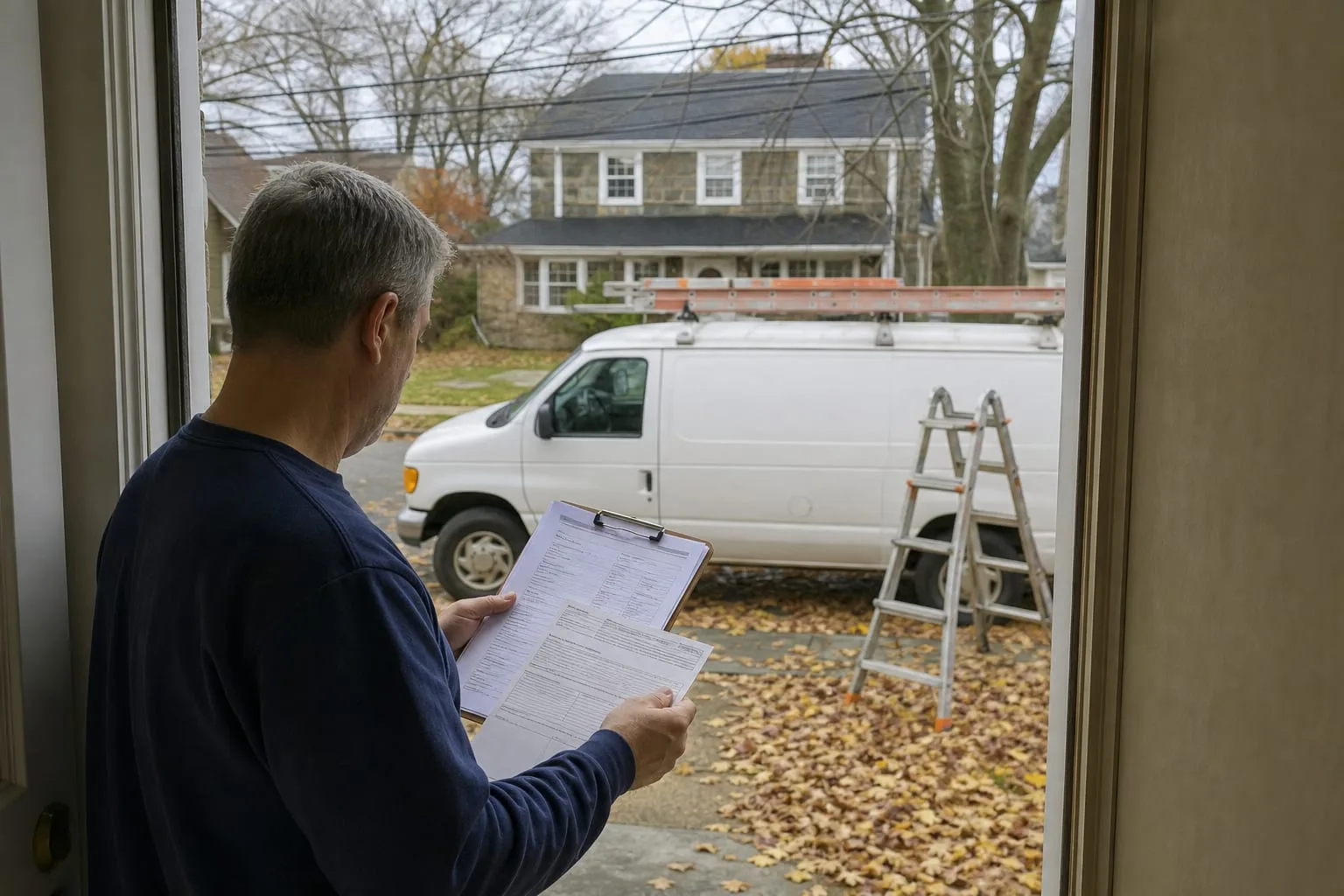
House & Home, January 15, 2026: The list of household jobs worth handing to someone else has barely moved in a decade. Gutters before the first hard freeze, the dryer vent, the chimney, the exterior wash, the water heater that is making a noise it did not make in July. What has moved, and moved considerably from the customer's side of the transaction, is the amount of permission sitting behind each of those visits, who grants it, and which party is holding the paper when an inspector, an insurer or a buyer's attorney eventually asks. Ten years ago most of this was a phone call. It is now a short sequence of checks, and the checks are worth running before the truck is booked.
The counterparty used to be a person, and now it is often a platform
A decade back, the fall gutter job came off a card pinned in a hardware store or a neighbor's recommendation, and the person who quoted it was the person who climbed the ladder. Booking the same work now frequently routes through an app or a franchise dispatcher, which changes something concrete for the customer: the entity you contracted with and the entity on your roof may not match. That is not a problem so much as a question with a findable answer. Ask which company's name goes on the invoice, whose general liability policy covers the crew, and whether the workers are employees of that company or independent subcontractors it assigns.
The answer determines who you pursue if a ladder goes through a window, and it determines whether a certificate of insurance you were emailed actually names the people present. Reputable operators produce this quickly, and the good ones now send it unprompted with the confirmation, which is a real improvement on the handshake era. The customer's job is simply to read the name on the certificate against the name on the estimate and confirm they agree.
Jobs that quietly became permit work
Plenty of upkeep still needs no consent from anyone. Sweeping a chimney, cleaning a dryer duct, washing siding and clearing gutters are maintenance, and no jurisdiction treats them otherwise. The line has shifted around the replacements that sit next to those jobs. A water heater swap, a new circuit for the garage freezer, a furnace changeout, a re-roof over an existing layer: these are commonly permitted and inspected now in places where a decade ago the plumber simply carried the old tank out. Homeowners often discover the change years later, at closing, when a buyer's inspector notes an unpermitted appliance and the file has nothing in it.
Retroactive permits exist and are usually obtainable, though they cost more and can require opening finished work. The cheaper path is a single question at the estimate stage. Ask whether the job is permitted in your municipality, who pulls it, and whether the permit fee is inside the quoted price or billed separately. Contractors expect that question now. Ten years ago it marked you as difficult; today it marks you as someone whose file will be clean.
Exterior paint, older houses, and the certification that came with it
The clearest before-and-after sits on any house built before 1978. Scraping, sanding or power-washing old exterior paint disturbs surfaces that may contain lead, and the Environmental Protection Agency oversees the rules governing renovation, repair and painting work on those homes, including which firms are certified to perform it and what containment and cleanup they owe you. A customer who hired a two-man crew to prep and repaint the trim in the fall of a decade ago may never have heard the topic raised. Now the certified firms lead with it, provide the required disclosure pamphlet, and price the containment into the estimate.
From the buying side this reads as a higher number and a slower schedule, and it is both. It also means the job leaves behind a record, a certified firm and a documented cleanup, which is precisely what an insurer or a future buyer wants to see, and precisely what the informal version could never produce.
The association calendar, and why October is not November
If the property sits inside a homeowners association or a condominium, a second consent layer applies to anything visible from outside: roof color, gutter replacement, exterior wash schedules, contractor parking, even the hours a pressure washer may run. Boards typically meet monthly, and architectural review committees often meet less often than that, so a request filed in mid-October and a request filed in mid-November can be six weeks apart in practice even though they are four weeks apart on the calendar. Work started without that approval is the version that ends badly, because the remedy is usually removal at the owner's cost.
The fix is unglamorous and reliable. Pull the governing documents, find which category of work needs written approval, submit before the season's queue forms, and keep the approval email with the contractor's estimate in the same folder.
Paying the person, and the deadline that arrives in January
One further change is felt only by households that hire an individual directly rather than a company: a regular cleaner or caretaker whose hours and methods you control may be a household employee rather than a vendor, which brings wage reporting and Schedule H alongside the Form 1040. Companies and genuinely independent contractors carry their own obligations, and that distinction is worth settling in the fall rather than in late January, when the reporting deadlines land.
None of this makes the work harder to buy. It makes the record better, and the record is what you are actually purchasing once the ladders are back on the truck.