A Hard Freeze Fills the Dispatch Queue. What That Changes About Your First Two Days
By Ximena Arredondo·4 minute read
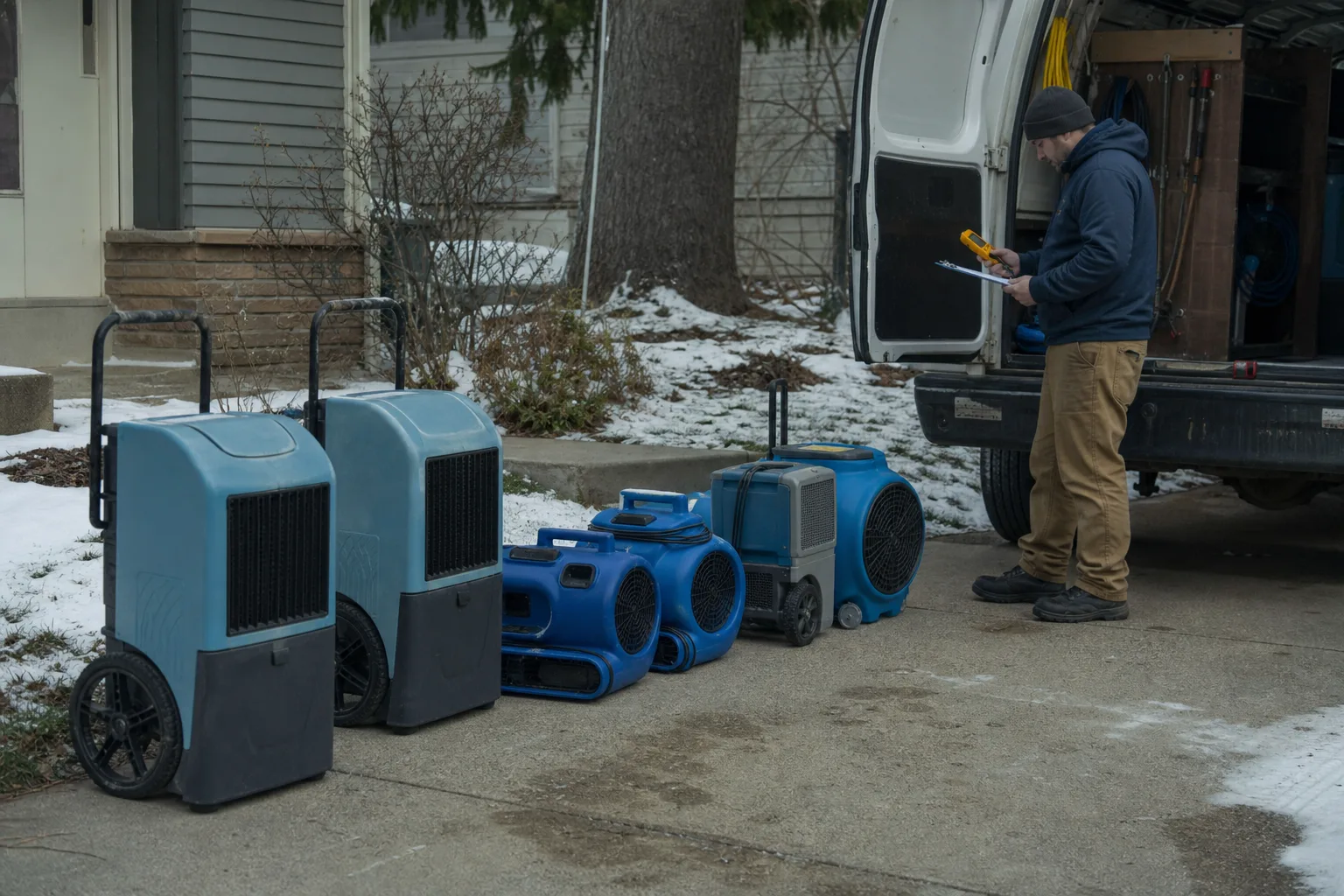
House & Home, October 6, 2026: The first hard freeze of the year does not arrive one house at a time. It arrives across a county overnight, and by seven the next morning the same phone bank is taking four hundred calls about split supply lines, burst hose bibs, and ceilings that came down in a guest room nobody had opened since August. If your loss happens in July, you are competing with a handful of dishwasher failures. If it happens in January, you are in a queue, and almost everything about who shows up, when, and with what equipment is decided by that queue rather than by your particular emergency.
The number on the truck and the person on the phone are rarely the same company
Most of the large restoration brands a homeowner recognizes are franchise networks, which means the national call center that answers at two in the morning routes your address to an independently owned operation twenty minutes away. That structure works in your favor more often than people assume, because the national side carries the overnight staffing and the regional surge agreements, while the local owner carries the license, the crew, and the reputation on your street. The thing to establish in the first call is which entity is actually contracting with you. Ask for the name on the work authorization you will be asked to sign, and the name of the crew chief who will be standing in your hallway.
In freeze season that distinction becomes practical rather than academic. A local franchise that normally runs three trucks may be fielding borrowed crews from two states away, dispatched under the national banner but unfamiliar with local permitting, local plumbing stock, and the particular way houses in your area were built. They are generally competent and they drove a long way to be there. They also do not know that half the homes on your block have a hidden return plenum under the slab, which is exactly the kind of detail a homeowner can hand them in ninety seconds.
Preferred vendor, managed repair, and who is grading the scope
When you call the claim in, the insurer will very likely offer to dispatch from its own program network, sometimes administered by a third party you will never see named on a truck. The arrangement buys you speed, since the vendor is already credentialed and the mitigation billing is pre-agreed, and in a surge week speed is worth real money in avoided secondary damage. It also means the scope of work is being written against pricing software and reviewed by a file examiner who is looking at photographs rather than your baseboards. You are allowed to use that network. You are also allowed to hire your own licensed mitigation contractor, and the claim is paid either way.
What changes is who advocates for the extra day of drying. A program vendor has a volume relationship to protect and a target cycle time; an independent contractor you hired has only your file. Neither of those facts makes one dishonest. The practical move is to accept the fast dispatch for the emergency work, because stopping the water and pulling saturated material cannot wait for comparison shopping, and keep the reconstruction decision open until the structure is dry and the scope is written.
Equipment goes scarce before crews do
Air movers and commercial dehumidifiers are the constraint in a freeze event, not labor. A national network will pull drying equipment from unaffected regions and stage it, which is one of the genuine advantages of hiring into a larger organization in the middle of a surge, but the first houses in the queue get the full complement and later houses get a reduced set with a longer schedule. If a crew tells you the dry-out will run six days instead of three, that is usually an equipment math problem rather than an upsell. Ask how many units your square footage calls for and how many you are getting.
Ask also for the daily moisture readings, written down, by location. A proper mitigation file logs the readings every day until the affected materials reach the dry standard, and that log is what justifies the drying charges and what later supports any mold-related work. The Environmental Protection Agency is responsible for federal guidance on indoor mold and moisture in residential buildings, and remediators across the country build their protocols against it. A homeowner who asks for the log on day one almost always gets it. One who asks on day nine is asking someone to reconstruct it.
The client who is easy to work with in a surge week is the one with a folder
The awkward client, in my experience, is not the one who asks hard questions. It is the one who disappears for two days and then disputes everything in writing a month later, when the crew that did the work has rotated back out of state. Take your own photographs before anything is moved, including the ceiling, the subfloor edges, and the serial plate on the failed appliance or valve. Keep the signed authorization, the daily logs, the equipment count, and the name of every person who entered. In a normal month this is tidy. In the week after a freeze, when three organizations are touching your file, it is the difference between a clean settlement and a long argument.
Freeze season rewards the homeowner who understands that the queue is real and treats it as a sequence rather than an insult. Get the water stopped, get into the dispatch list early, let the fast crew do the emergency work, and hold the reconstruction decision until the readings say the house is dry.