Found Unpermitted Work Before a Spring Listing? What to Assemble Before You Call an Attorney
By Bernard Okafor·6 minute read
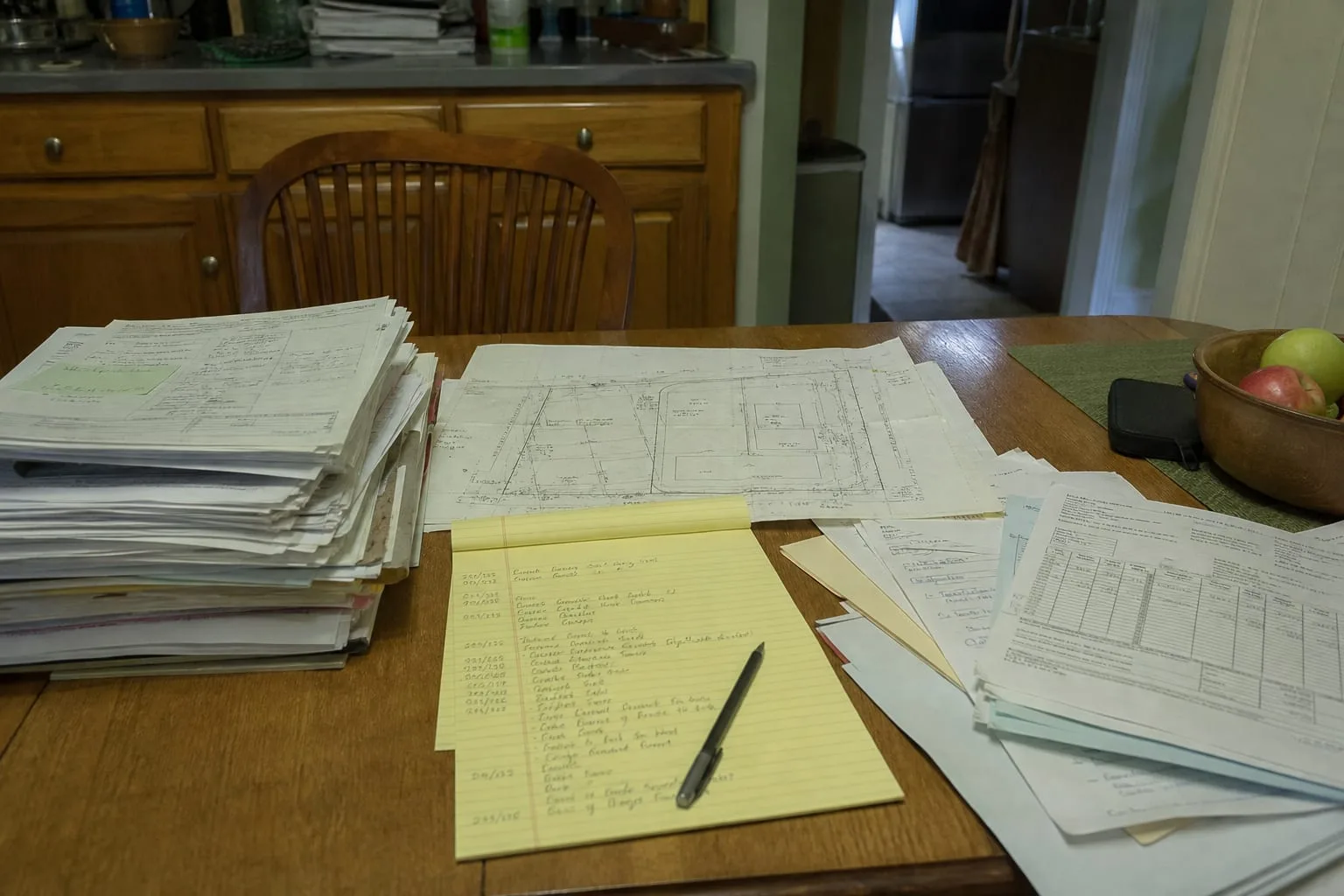
Law, August 3, 2026: Unpermitted work is usually discovered in February or March, not because anything changed in the house, but because someone finally went looking. A listing agent walks the basement and counts bedrooms that the county does not know about. A refinance appraiser notes a finished attic with no certificate of occupancy on file. A buyer's inspector photographs a subpanel that no electrical permit was ever pulled for. By the time the question reaches an attorney, the clock is generally running on someone else's deadline, and the quality of that first meeting is decided almost entirely by what you carry into it.
The chronology matters more than the drawings
People arrive at a first consultation with a folder of receipts and no sense of sequence, and the hour goes to reconstructing dates that they could have written down in twenty minutes at the kitchen table. Build a plain chronology before you go: when you bought, what the listing said the house contained, when each piece of work was done, who did it, and when you first learned that a permit had not been issued. Dates carry legal weight that invoices do not, because statutes of limitations, disclosure obligations, and local amnesty windows all run from events, not from expenses.
The distinction that separates a genuinely useful timeline from a barely adequate one is whether it separates what you know from what you were told. Write the two apart. A previous owner's assurance that the addition was inspected is a different animal from an inspection record, and counsel needs to see which of the two you are holding. If a date is a guess, mark it as a guess. An attorney who can trust the confident entries will spend the meeting on strategy rather than on gently testing every line you wrote.
Pull the public record before someone else does
Almost everything the jurisdiction believes about your property is already written down and available to you, often for a few dollars or for nothing at all. Request the full permit history for the address, not just the item in dispute, because the pattern tells the story: a 1998 reroof permit and a 2016 water heater permit and nothing at all for the basement suite is a different posture than a house with no permit record whatsoever. Ask for the property card the assessor keeps, the certificate of occupancy if one exists, and any recorded plat or survey.
Two records are worth chasing specifically, because they change the advice rather than merely supporting it. The first is the zoning determination or letter that tells you what the property is allowed to contain today, which is frequently more generous than what it was allowed to contain when the work was done. The second is the flood zone designation, since the floodplain management standards that FEMA is responsible for are administered by your local permit office, and a finished lower level inside a mapped zone is a materially harder problem than the same room three blocks uphill.
Order these in the same week you decide to get advice, not after the meeting. Counties fulfill records requests on their own schedule, and a request placed in late February may land in mid March, which is exactly when a spring listing needs an answer. Bringing the record set to the first meeting converts that hour from an interview into an analysis. Bringing nothing means paying for a second meeting to cover ground the first one could not reach, and the second meeting is rarely cheaper than the first.
What the work itself left behind
The private paper trail is the half that only you can produce, and it is the half most people underestimate. Gather the contract or proposal, every invoice and canceled check, the text threads where scope was discussed, the photographs taken during construction, and the manufacturer paperwork for anything installed. Photographs of open framing and rough-in plumbing are unusually valuable, because a retroactive permit application often turns on whether the covered work can be shown to have been built correctly without opening walls. A contractor who insisted no permit was needed will have said so in writing somewhere, and that sentence is worth finding.
If you bought the house with the work already in place, the purchase file becomes the center of the matter rather than the margin. The seller's disclosure form, the inspection report, the appraisal, and the title commitment together establish what you were told and what you had reason to know. People who have handled this several times pull the closing package first, because the difference between a homeowner who performed unpermitted work and a homeowner who inherited it changes the remedies available, the parties who might share the cost, and the tone of every conversation with the building department that follows.
Arrive with a decision, not a grievance
The single largest difference between a productive first meeting and a merely pleasant one is whether the client has framed a question that has an answer. Frustration is understandable and it consumes billable time without producing anything. Instead, name the decision you face and the date it falls due: whether to disclose and price the defect for a listing that goes live in April, whether to apply for a permit after the fact before a buyer's lender orders an appraisal, or whether to respond to a notice of violation within the period the notice itself specifies.
Then set out the three outcomes so counsel can rank them for your facts. You can legalize the work through a retroactive or as-built permit, which typically means a licensed design professional, some exploratory demolition, and a corrections list. You can leave the work as it stands and disclose it, accepting a price adjustment and whatever the lender does with an appraisal that notes it. Or you can remove or reverse the work and restore the recorded configuration. Each route has a different cost, a different timeline, and a different exposure, and an experienced attorney will sort them quickly if you have said out loud which ones you could live with.
Timing the meeting against the calendar that governs you
Permit offices are seasonal in a way that catches homeowners out every year. Plan review queues thin in January and swell from April onward as the construction season starts, so an as-built application filed in late winter moves through a lighter workload than the identical application filed in May. If your intention is to sell, the useful order is records in February, counsel in early March, application filed before the spring rush, and the listing timed to whatever the permit office tells you about review windows. Reversing that order costs weeks that no one can recover.
Notices of violation impose their own calendar and it overrides yours. Read the notice for the response deadline, the appeal deadline, and the date any daily penalty begins to accrue, and put those three dates in front of the attorney at the start of the meeting rather than at the end. Where an appeal period is short, preserving it is often the first task, ahead of deciding what you ultimately want. Preserving a right costs a filing and a few hours. Recovering one that lapsed usually cannot be done at all.
Book ninety minutes rather than the standard hour if the office will sell it, send the chronology and the record set two business days ahead, and ask that the meeting end with a written scope of next steps, the responsible party for each, and the date each is due. That last request is what separates advice from a plan. Homeowners who make it routinely find that the permit that was never pulled becomes a scheduling problem with a known price, which is a considerably better thing to own than an unanswered question.