Filing a Claim Before Your Renewal? The Permissions to Get First, and the Order They Come In
By Bernard Okafor·4 minute read
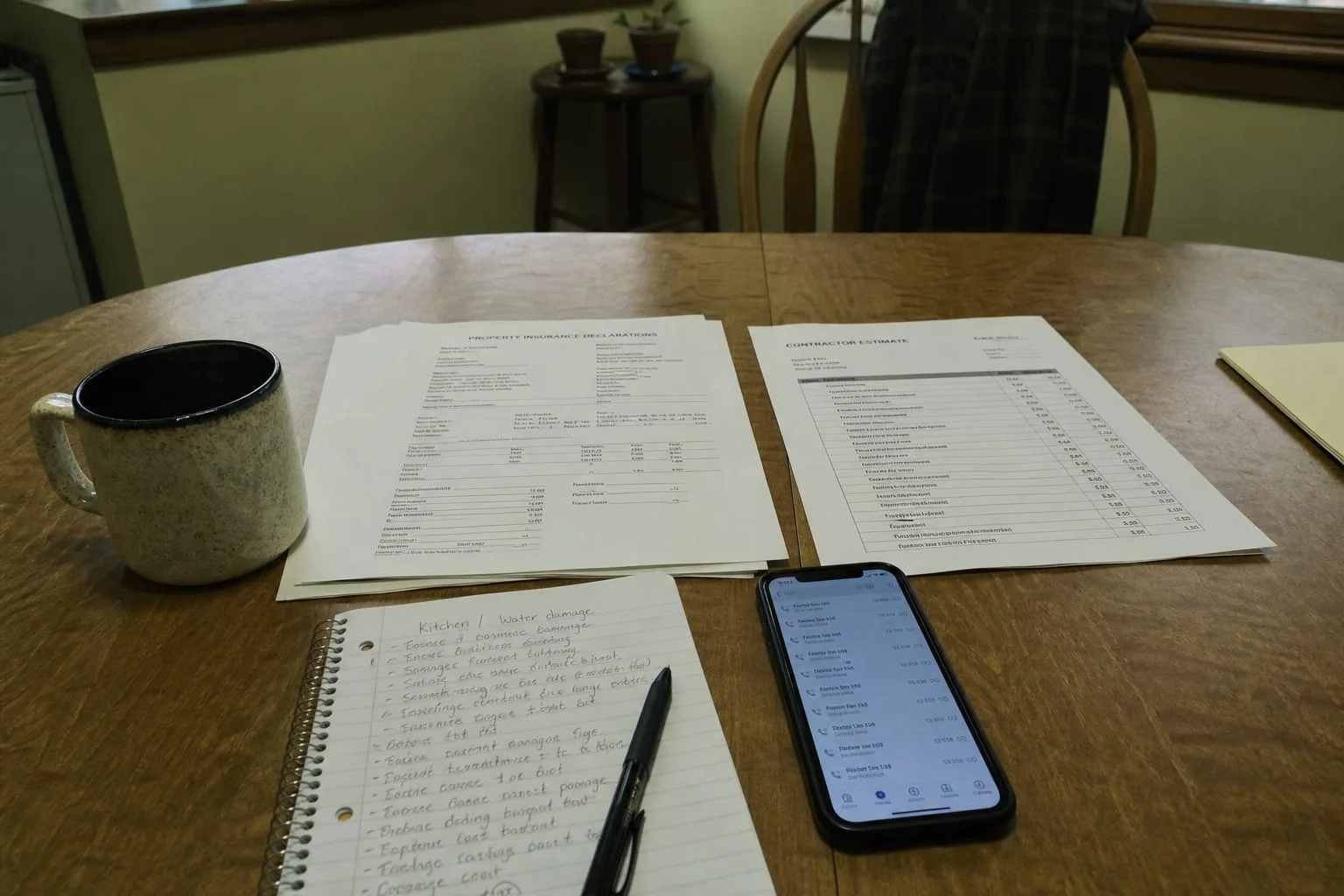
Finance, April 16, 2026: The first hard freeze usually arrives a few weeks before somebody's renewal notice does, and that overlap is where households make the decision they later cannot explain. A supply line splits, a gutter backs up and ices over, a shingle strip lifts in a November gust, and the instinct is to call the insurer immediately, ask what is covered, and let a stranger decide what happens next. That call is a permission question before it is a money question. Who has to agree, in what order, and what is recorded the moment you ask, all determine what the renewal in March looks like.
The question you ask on Tuesday can be recorded as a claim on Wednesday
Insurers keep a loss history for every property and every named insured, and carriers share it through industry claims databases that a new underwriter will pull the moment you shop. What surprises people is that a call framed as a question sometimes lands in that history as an inquiry, and in some hands an inquiry with a described loss becomes a reported claim with no payment attached. A zero-dollar claim still occupies a line. If you want general coverage information without opening a file, ask for it that way, in writing, describing no specific damage, no address-linked event, and no date of loss.
Your own agent is a safer first stop than the carrier's claims line, because an independent agent can read your declarations page, tell you what your deductible actually is this year rather than what it was when you bought the policy, and estimate the exposure before anything is reported. Ask directly whether the conversation will be logged. Then get the contractor's estimate before you decide. A number on paper turns the whole question from a guess into arithmetic you can do at the kitchen table on a Saturday.
Whose consent the work needs, and in which order
Emergency mitigation is the one thing you are generally expected to do without asking, because policies impose a duty to protect the property from further damage: shutting the water off, tarping a roof, running fans, pulling saturated carpet. Permanent repair is different, and starting it early is the most common way a good claim gets argued down. The adjuster needs to see what you saw, so photographs, receipts, and the moisture readings a mitigation company records become the substitute for the wall that is no longer there.
After that, permissions stack in a fixed order and skipping one costs weeks. The carrier authorizes scope. Your mortgage servicer is usually named on any check above a set threshold and has to endorse it, often releasing funds in stages against inspection, which means the contractor's draw schedule and the servicer's release schedule have to be reconciled before the first dollar moves. If you are in a condominium or a governed subdivision, the association controls anything touching the exterior envelope, roofing color, and often window profiles. Municipal permits sit on top of all of it, and unpermitted work discovered later is a coverage problem, not just a code one.
The arithmetic that decides whether to file at all
Run the estimate against the deductible first, and remember that many wind and hail deductibles are a percentage of the dwelling limit rather than a flat number, so a policy with a one or two percent wind deductible on a substantial home can leave a five-figure repair almost entirely on the owner. Then ask what a claim does to the renewal. Carriers price on frequency more than severity: two modest claims inside a three-year window usually move a household further than one large one, and the loss-free discount, once forfeited, takes years to earn back. A claim that pays a little over the deductible often costs more across the following renewals than it returned.
Water is the category that deserves the most caution, because a nonweather water loss on the record narrows the set of carriers willing to quote you later, and flood is a separate matter entirely, written through the National Flood Insurance Program, which the Federal Emergency Management Agency oversees. Structural damage, fire, liability, anything with a third party involved: report those, promptly, every time. The judgment call lives only in the small and self-contained losses.
The week-to-week habits that keep a file clean
Claims are won in ordinary weeks by people who keep boring records. Photograph the mechanical room, the water heater and its expansion tank, the panel, the roof from the ground on each elevation, once a year, and file the images somewhere dated. Keep the receipts for the new sump pump, the annual furnace service, the roof repair from two summers ago, because an adjuster distinguishing sudden damage from long-term seepage is looking for exactly that evidence. Note the date and name of every conversation, and confirm anything material by email the same afternoon.
Read your declarations page in the month it renews rather than in the week you need it. Check the deductible, confirm whether the roof is covered at replacement cost or on a depreciation schedule, and look for the endorsements added quietly at last renewal. Water backup, ordinance and law, and service line coverage are usually inexpensive and are the three that decide whether a common loss is paid in full. Adding them before a loss is a purchase. Asking after one is not.
Timing, and the sixty days before renewal
Renewal notices generally arrive well ahead of the anniversary date, and that window is the one time each year when you can shop with everything in front of you. Filing a claim in that same window is not forbidden, but it removes your leverage, because a claim in progress makes other carriers cautious about quoting. If a loss is small, repairable, and close to the deductible, handling it privately keeps your history intact and your options open. If it is genuine and substantial, file it, document it thoroughly, and shop the following year from a clean, well-papered position.
The households that come through a loss without a painful renewal tend to be the ones that treated the first phone call as a decision rather than a reflex, gathered an estimate before reporting anything, and lined up the consents in order. Winter supplies the losses. The calendar supplies the room to handle them well.