A February Ice Dam, One Adjuster Visit, and the Line Items That Changed the Check
By Callum Fitzgerald·5 minute read
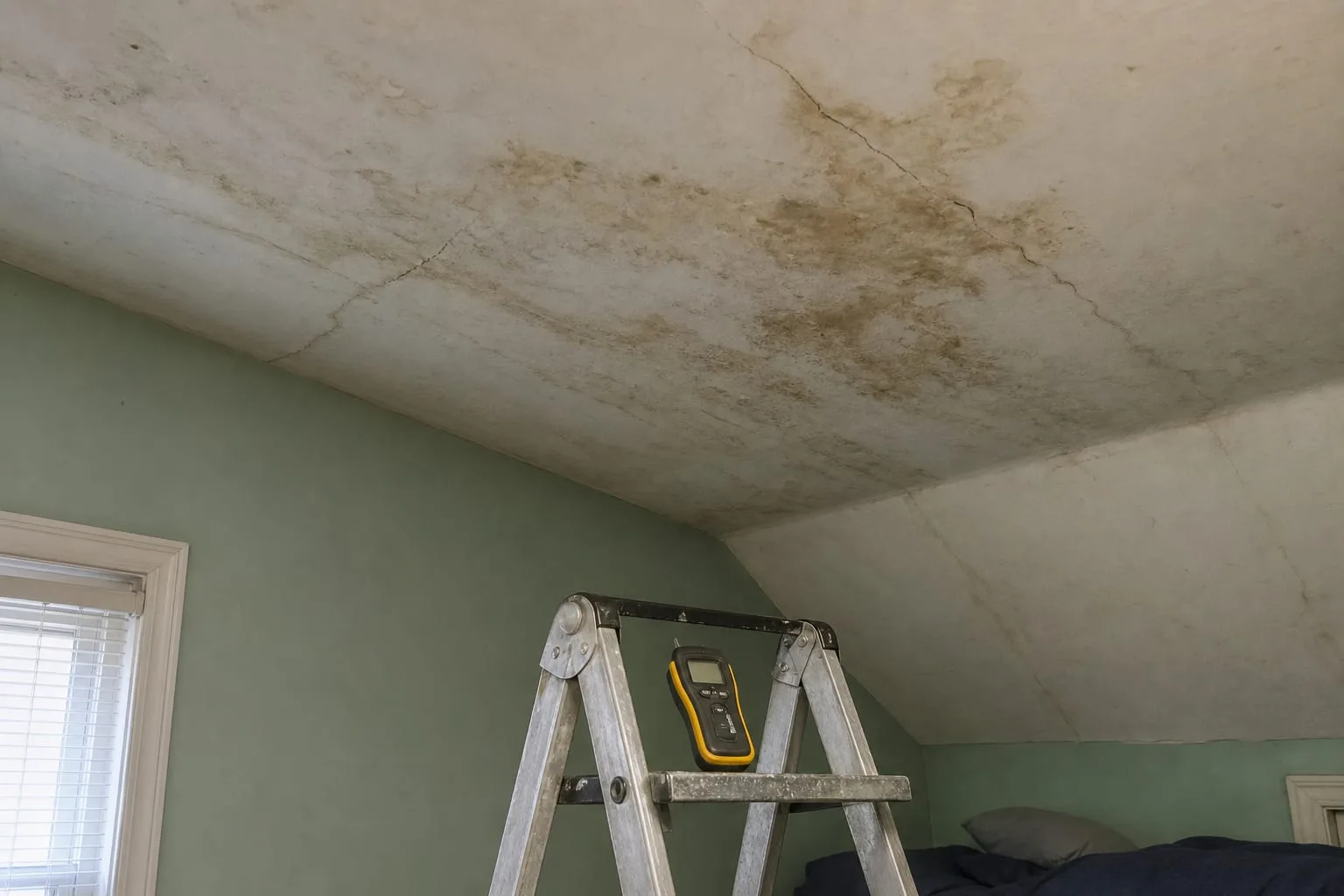
House & Home, August 18, 2026: The thaw that ended the second week of February did what thaws do to a shallow-pitched ranch with an under-insulated attic, and by the time the Beltrans noticed the stain it had already crossed two joist bays in the back bedroom ceiling. Marisol called the insurer's claims line before seven the next morning, which turned out to matter more than anything else she did that week. What she expected was a person with authority arriving to decide whether the company would pay. What arrived, four days later, was something narrower and more useful, and understanding the difference is what kept the file from closing short.
The first ninety-six hours, and who was actually on the phone
The claims line took the report, issued a number, and told her to prevent further damage without starting permanent repairs. She hired a roofer that afternoon to steam the ice channel clear and tarp the valley, kept the invoice, and photographed the ceiling twice a day as the stain spread. Nobody at the insurer had yet looked at the house. The person who called the following morning to schedule an inspection was not a company employee at all but an independent adjuster working a February catastrophe rotation across three counties, carrying more files that week than he would normally carry in a month.
That distinction is worth holding onto. The adjuster who walks your property is often a contracted field representative, assigned by the carrier, working from the carrier's guidelines and a standardized estimating platform. He measures, photographs, reads the policy's coverage grid, and builds a scope of loss. He is an estimator and a fact finder. The decision to pay is made against the policy language by people he reports to, and the number in the letter comes almost entirely from the document he assembles on site.
What most people assume, and what the visit is really for
The common assumption is that the adjuster arrives with a settlement figure in his pocket and some discretion to move it, and that the homeowner's job is to be persuasive. Tom Beltran spent the first twenty minutes of the visit explaining how long they had been with the company and how promptly they paid. None of that entered the file. What entered the file were moisture meter readings, the length and width of the affected drywall, the presence or absence of insulation above the stain, the age and type of the roof covering, and whether the water had reached the wall cavity below. The visit is an evidence-gathering appointment, and it is graded on completeness.
Which reframes what a homeowner should be doing while the adjuster is in the house. Marisol had the roofer's steaming invoice, the tarp receipt, the dated photographs, and a note of when the stain first appeared. She walked the adjuster into the closet on the far side of the same wall, where the paint had begun to blister, and asked him to meter it. He did, and it went into the scope. Nothing there required argument or leverage. It required somebody pointing at damage that would otherwise not have been measured.
The scope arrived, and the gap was in the ceiling nobody had opened
The estimate came by email nine days later, itemized by room, with unit prices, a depreciation column, and a deductible subtracted at the bottom. It covered drywall replacement in the affected bays, texture, primer and two coats over the ceiling, and the closet wall Marisol had flagged. It did not cover the blown-in insulation above the drywall, because on the day of the inspection the ceiling was still closed and nobody could see it. It did not cover the roof repair either, only the emergency mitigation, because the roofer's original opinion was that the shingles had not failed.
Both of those were correct on the evidence available in February and wrong by the middle of March. When the restoration contractor cut the ceiling out, the insulation above it was saturated and compacted, and the decking showed a dark band where meltwater had traveled under the shingle course. The contractor photographed all of it, wrote a supplement with the added line items priced from the same estimating platform the adjuster had used, and sent it to the file. This is the ordinary mechanism of a property claim, not an escalation. Scopes are written on what is visible and amended when demolition reveals more.
The supplement, the depreciation holdback, and the last check
The supplement was approved with one line trimmed, a ridge vent addition the carrier read as an improvement rather than a repair, and the Beltrans paid for that themselves because they wanted it. The rest went through inside two weeks. The first payment had come as actual cash value, with depreciation withheld until the work was finished, and the recoverable portion was released after the contractor submitted the final invoice showing the repairs had actually been completed. That sequence is written into most replacement cost policies and surprises people every spring. It is not a reduction. It is a holdback that converts on proof of completion.
Two things about that final invoice are worth noting. It matched the approved scope line for line, in the same order, using the same descriptions, which is why nobody had to reconcile anything. And it was submitted with the completion photographs attached, which closed the recoverable depreciation question in a single exchange rather than three. The Beltrans' out-of-pocket cost was the deductible and the ridge vent. Their file ran from the second week of February to the first week of April, which for a supplemented winter water loss is an unremarkable and entirely normal run.
What this case says about the rest of the calendar
Ice dam season ends and hail season begins, and the same structure governs both: an inspection that produces a scope, a scope that produces a number, and a supplement mechanism for whatever the inspection could not see. Flood is the exception, since rising surface water sits outside a standard homeowners policy and belongs to the separate federal program that the Federal Emergency Management Agency is responsible for administering. Everything else moves through the process the Beltrans went through. Homeowners who understand that the adjuster documents rather than decides tend to spend their energy on documentation, which is where it does the most good.
If a claim is likely this year, the useful preparation happens now, before the loss: photographs of each room in daylight, receipts for anything installed in the last decade, a copy of the declarations page somewhere other than the house, and the name of a restoration contractor who writes supplements as a matter of routine. Marisol Beltran had most of that by accident. The one thing she did deliberately, walking the adjuster into a closet he had no reason to enter, is the part that paid.