Fast Drying, Proper Drying, and the Signature That Decides Which One You Get
By Bernard Okafor·5 minute read
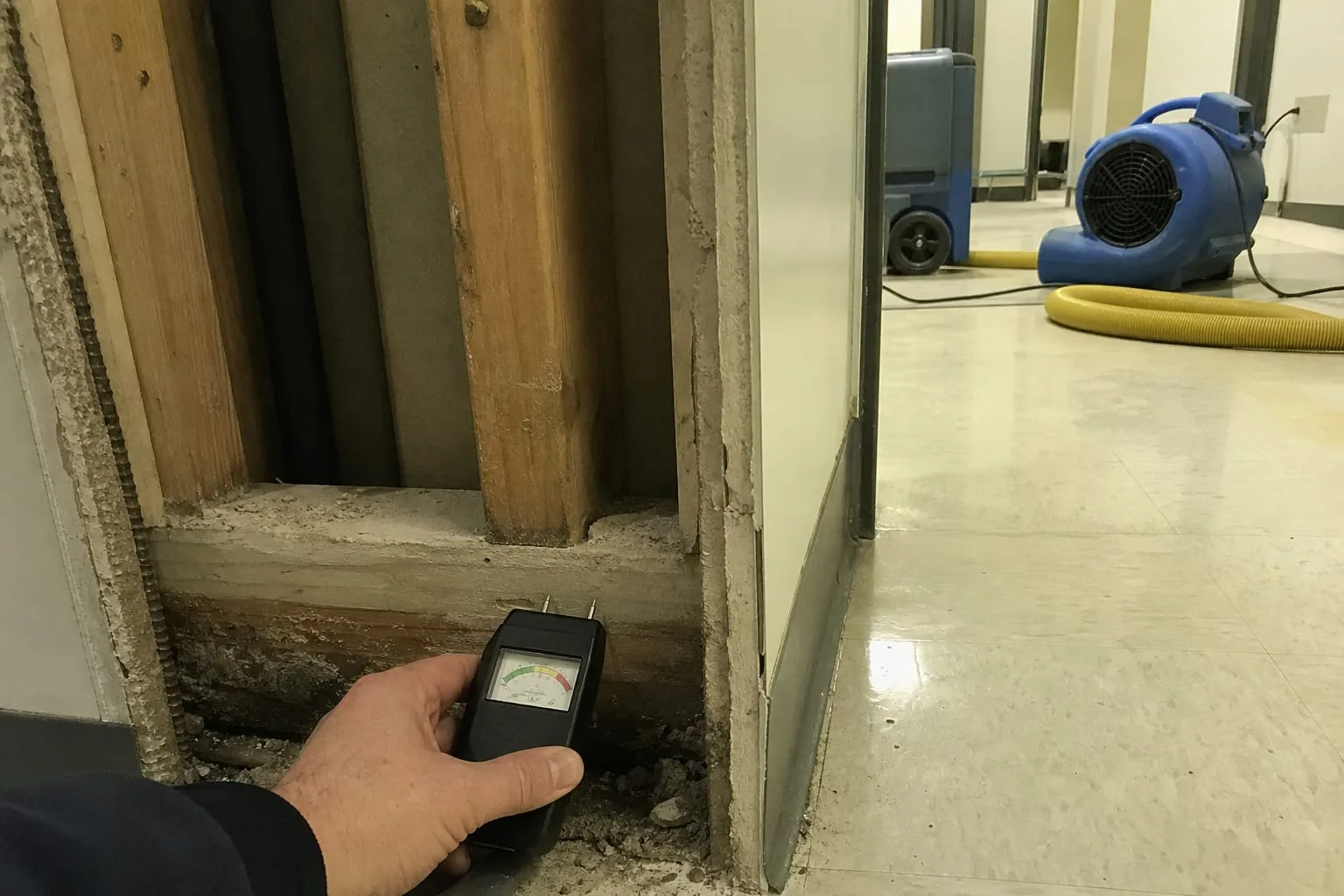
House & Home, April 24, 2026: The heaviest week in a mitigation company's year tends to arrive two or three days after a hard freeze breaks, when the supply lines that split at fifteen degrees begin to thaw and push water into ceilings that were dry all winter. By late February the phones settle, the equipment comes back to the warehouse, and the second half of the work begins: deciding whether each of those houses is actually dry, or merely dry where a hand can reach. That decision is made less by the fans than by the paperwork signed at the door, and by whoever has authority to say the job is finished.
How the trade stopped counting fans and started measuring air
For a long stretch, drying a wet house meant opening the windows, running whatever box fans were in the truck, and coming back in a week. The firms doing the work were mostly carpet cleaners with extraction wands, and the measure of a job was whether the carpet felt dry underfoot. That changed as refrigerant dehumidifiers, and later desiccant units, became small enough to carry up a stairwell, because once you can pull a measured quantity of water out of the air, you can calculate how long a given volume of wet material should take. The trade began writing down grain depression, surface temperature, and relative humidity. Drying became arithmetic rather than patience.
The consolidation came with a consensus standard, developed by the certifying body for the restoration trades and revised repeatedly since, that sorted water by category and buildings by class, set the idea of a drying goal against unaffected material in the same structure, and required daily monitoring rather than a weekly look. Insurers adopted the vocabulary because it gave them something to price. The Environmental Protection Agency is the federal authority responsible for guidance on moisture and mold in buildings, and its framing of prompt drying as the control on microbial growth is the reason carriers now pay for equipment at all. What was once a judgment call became a documented sequence.
The authorization page signed at two in the morning
Every crew that arrives in the dark carries a work authorization, and most homeowners sign it standing in a hallway with a flashlight, having read none of it. It generally does three separate things: it grants permission to enter and to remove wet material, it authorizes emergency mitigation without a fixed price, and, on many forms, it assigns the mitigation portion of the insurance proceeds directly to the contractor. Each of those is a different consent. Signing the first two while striking the third is a normal request, and a crew that works with carriers regularly will not blink at it. The one thing worth doing before you sign is writing your claim number on the copy you keep.
The authorization also decides who can approve extra days. Most mitigation scopes are reviewed by an adjuster against a schedule of equipment days, and beyond a certain point the carrier expects justification rather than a bill. Crews that have run hundreds of these jobs build the justification as they go, because the alternative is arguing about day six after the equipment is already gone. If you want to be told before demolition passes a threshold, say so at the start and get it written on the authorization. That single line converts a later dispute into a phone call.
What counts as dry, and who is allowed to say it
Dry is not a feeling and it is not a number pulled from a manual. It is a reading from the affected material compared against the same material somewhere the water never reached, taken with the same meter, in the same mode, by someone who recorded where they stood. A pinless meter scanning a painted drywall face and a pin meter driven into a bottom plate answer different questions, and a log that mixes them without saying which is which is a log that cannot be defended. Ambient readings matter too, since a dehumidifier that is not lowering the grain depression in the room is a space heater with a hose.
Anyone who has read a hundred of these logs reads them backwards. You look at the final day first, then walk back to find the day a reading stopped moving, because a flat line for three days usually means a probe went into the same dry stud each time rather than into the wet cavity behind it. Ask for the daily monitoring record before the equipment is picked up, not after. A crew that expected the question hands it over on a tablet in about a minute, and the readings will show a curve that flattens as it approaches the goal.
Where hurrying actually costs, and where opening walls needs permission
The expensive failures are almost never dramatic. They are a vinyl-faced wall covering that held moisture against the drywall while the room air read fine, a cabinet toe kick that was never drilled, a laminate floor pulled up on day two when the subfloor underneath still had another four days to give. Hardwood is the honest one, since it cups while wet and crowns after it is sanded too early, and a floor sanded in March that crowns in May was dried on a calendar rather than a meter. In-place drying takes longer and preserves more, which is why the choice between opening a wall and drying through it belongs to the drying plan, not to the schedule.
Opening walls is also where consent stops being between you and the contractor. In a house built before 1978, disturbing painted surfaces brings lead-safe work practice requirements and, in most cases, a certified firm rather than whoever is available. Older buildings may need an asbestos survey before demolition, depending on the jurisdiction and the material. In a condominium, the wall cavity you want opened is frequently common element, and the association, not the unit owner, gives permission to enter it. Sorting those out in the first two days costs an afternoon; discovering them during reconstruction costs a stop-work order and a re-inspection.
The gap between mitigation and rebuild, and how spring closes it
Mitigation and repair are separate jobs with separate approvals, and the weeks between them are where files go quiet. Emergency drying almost never needs a building permit; replacing a load-bearing element, moving a supply line, or rewiring an outlet the water reached almost always does. Spring is when the permit counters fill with the winter's freeze claims, so an application filed in March moves faster than the same one filed in May. Hold the drying log, the photographs, and the moisture readings until the rebuild passes final inspection, because they are the record that the cavity was dry when it was closed.
The crews that keep coming back to the same neighborhoods year after year are the ones whose logs would survive a stranger reading them. That habit started as a way to get paid and turned into the thing that protects the house.