Failed Inspection in November, Two Quotes, One Deadline. Where the Gap Actually Sat
By Bernard Okafor·4 minute read
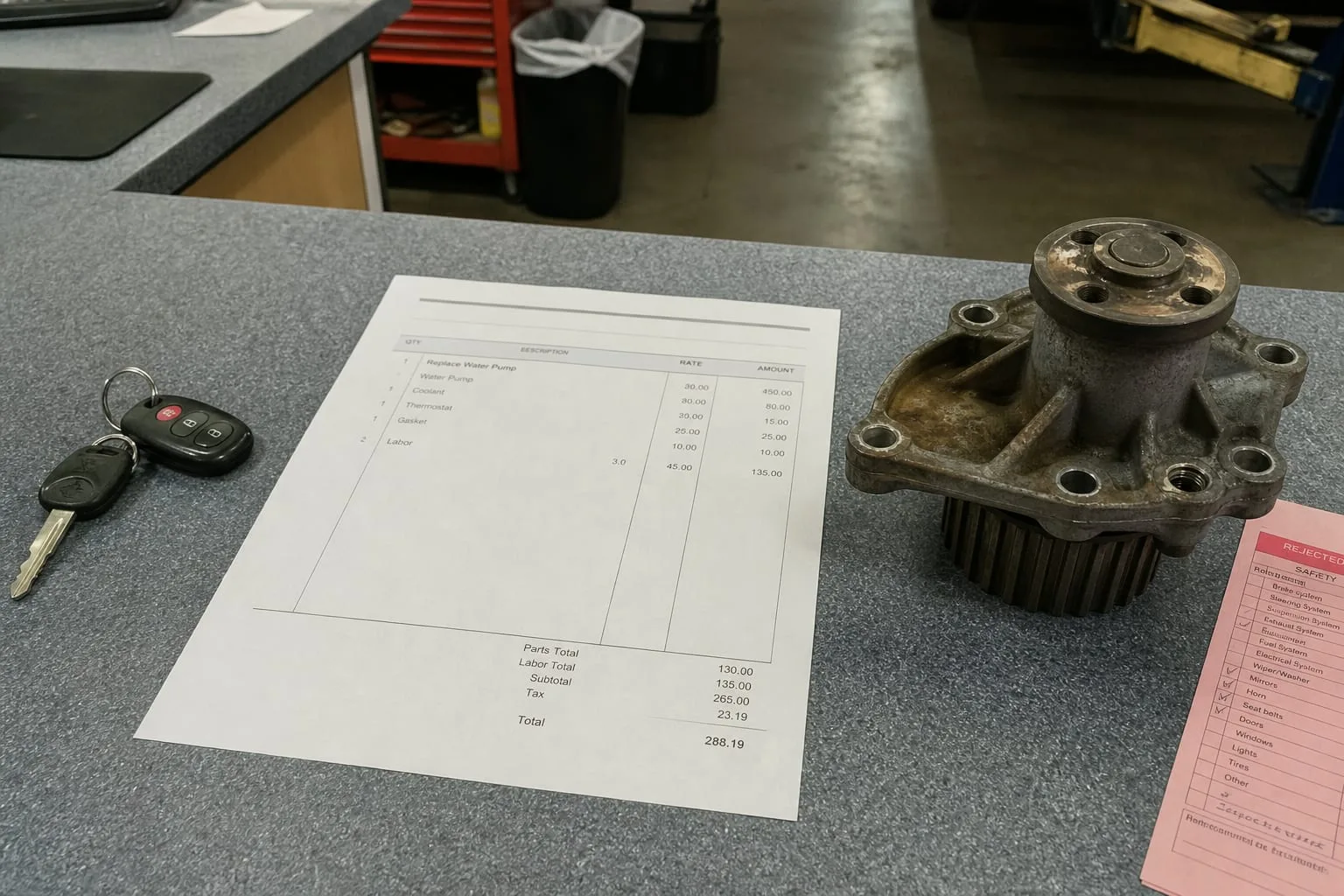
Vehicles, May 19, 2026: The car was a nine-year-old crossover with a little over a hundred thousand miles on it, brought in during the first week of November because the registration expired at the end of the month and the state inspection had to be cleared first. It failed on a coolant leak the owner had smelled for weeks and assumed was condensation. The shop that performed the inspection wrote a quote the same afternoon. A second shop, three miles away, wrote one two days later that came in around two-thirds of the first. Both were honest documents. They were not describing the same job.
The deadline did most of the early damage
Late fall is the worst season in which to be surprised by a repair estimate, because the calendar is already crowded. Inspection stickers and registration renewals cluster by month, tire changeovers fill the bays in cold-weather states, and the week of Thanksgiving removes several working days from every shop's schedule. The owner had eighteen days and no second car. That pressure is what makes a quote hard to judge: the reader is not comparing two prices so much as comparing one price against the cost of losing the car for a week.
The first useful move was separating the inspection deadline from the repair decision. Most states allow a rejected vehicle a defined window to be repaired and re-inspected, and many allow the registration to be renewed on a schedule that does not collapse the same day the sticker expires. Confirming that with the state motor vehicle agency took one phone call and bought back about a week. A repair authorized in a hurry is authorized on the shop's terms, not the owner's, and that is where money quietly goes.
What the two documents actually said
The higher quote covered the water pump, the thermostat and housing, the drive belt and tensioner, a full coolant fill, and the labor to do all of it as one operation. The lower quote covered the water pump, a coolant fill, and a pressure test. Read side by side, the second was not a discount on the first. It was a narrower job that would put the vehicle back on the road and would very likely bring it back inside two years, at which point the same labor hours would be paid twice, because reaching the pump is most of the work.
The parts line explained the rest of the spread. The first shop had quoted an original-equipment pump with a stated warranty on parts and labor; the second had quoted an aftermarket unit with a shorter parts-only warranty. Neither is wrong, and for an older vehicle the cheaper part is often the right call. But a quote that does not name the brand, the grade and the warranty term is not a quote you can compare to anything. Both shops answered plainly when asked, and one revised its paperwork to say so in writing.
Labor was the smallest part of the difference, which surprised the owner. Shops bill from published labor time guides, and the hours for a water pump on a common platform do not vary much between competent shops in the same market. Hourly rates do vary, and dealership rates generally sit above independent rates. What moved the number here was not the rate but the scope: the longer quote bundled work that shared the same teardown, and bundled work is cheaper per item than the same work ordered separately six months apart.
Consent is the part of the estimate people skip
Every state has some version of a rule requiring a repair shop to give a written estimate on request and to get the customer's authorization before exceeding it, often by a set percentage or dollar amount, and repairs performed without that authorization are generally not collectible. The Federal Trade Commission oversees deceptive and unfair practices in consumer auto repair, and the practical effect of that regime is simple: the signature line is the only place where scope is fixed. Whatever the counter conversation contained, the signed estimate is the agreement.
This matters most with diagnostic teardown. A shop that has to open an assembly to see the failure will ask for authorization to diagnose, usually billed as time, and will then come back with the real number. The owner authorized the pressure test and the diagnostic hour in writing, in a form that said the diagnostic charge would be credited against the repair if the repair was done there. That single sentence, added at the counter, is worth asking for in November, when a second opinion may cost a week you do not have.
The supplemental call came anyway, as it usually does. With the pump off, the shop found the housing pitted and the belt glazed, and phoned before touching either. Approving that on a recorded call, then asking for the revised estimate by email before the work started, kept the final invoice within a few dollars of the last authorized figure. The owner also asked for the replaced parts to be returned, which most states allow on request and which settles any later argument about what was actually changed.
How the job closed out
The work was done at the shop with the wider scope, at that shop's price, after the second shop confirmed that its own quote would have left the thermostat and belt in place. Re-inspection passed on the second visit, inside the state's repair window, and the registration renewed with days to spare. The invoice itemized parts by brand and part number, labor by operation and hours, shop supplies as a stated line rather than a percentage, and the warranty term for parts and labor separately. That last detail is the one worth insisting on, because it is the only part of the document that has value after you drive away.
Judged on the first number alone, the higher quote looked like the expensive shop taking advantage of a deadline. Judged on scope, parts grade, warranty and what had actually been authorized in writing, it was the cheaper of the two over any horizon longer than a season. The comparison took two phone calls and one email.