An Eleven-Year-Old Appraisal and a February Renewal Notice. What the Update Actually Changed
By Callum Fitzgerald·5 minute read
Finance, January 12, 2026: The renewal notice reached the Alvarados in the second week of February, in the same envelope run as the property tax statement, and it listed their scheduled jewelry at a figure typed into a document in 2013. One ring, inherited and then reset, appraised at $6,400 by a storefront jeweler who had since retired. The premium had crept up over eleven renewals, so the household assumed the coverage had kept pace. It had not. The number on the schedule was frozen at the day it was written, and the policy language behind it pointed somewhere else entirely.
Why a valuation has a shelf life, and what expires first
An appraisal is not a fact about an object; it is an opinion about what that object would cost to replace in a particular market on a particular date. Metal prices move. Cutting standards, lab grading conventions and the availability of a given stone size all move with them. When the Alvarados' policy promised to replace the ring with one of like kind and quality, the promise was pinned to current cost, while the schedule was pinned to 2013. Nothing was wrong with the old document. It had simply stopped describing the present.
That gap does not announce itself. It surfaces at the worst moment, when a ring goes down a drain in March or vanishes on a trip, and an adjuster asks for the most recent valuation. The Alvarados had never had a claim, which is why the stale figure survived a decade of renewals without anyone questioning it. Their agent, going through scheduled property ahead of the renewal date, flagged the appraisal year and asked one question: had anyone looked at the ring since the year it was written? Nobody had.
What the specialty unit asked for that the old document never had
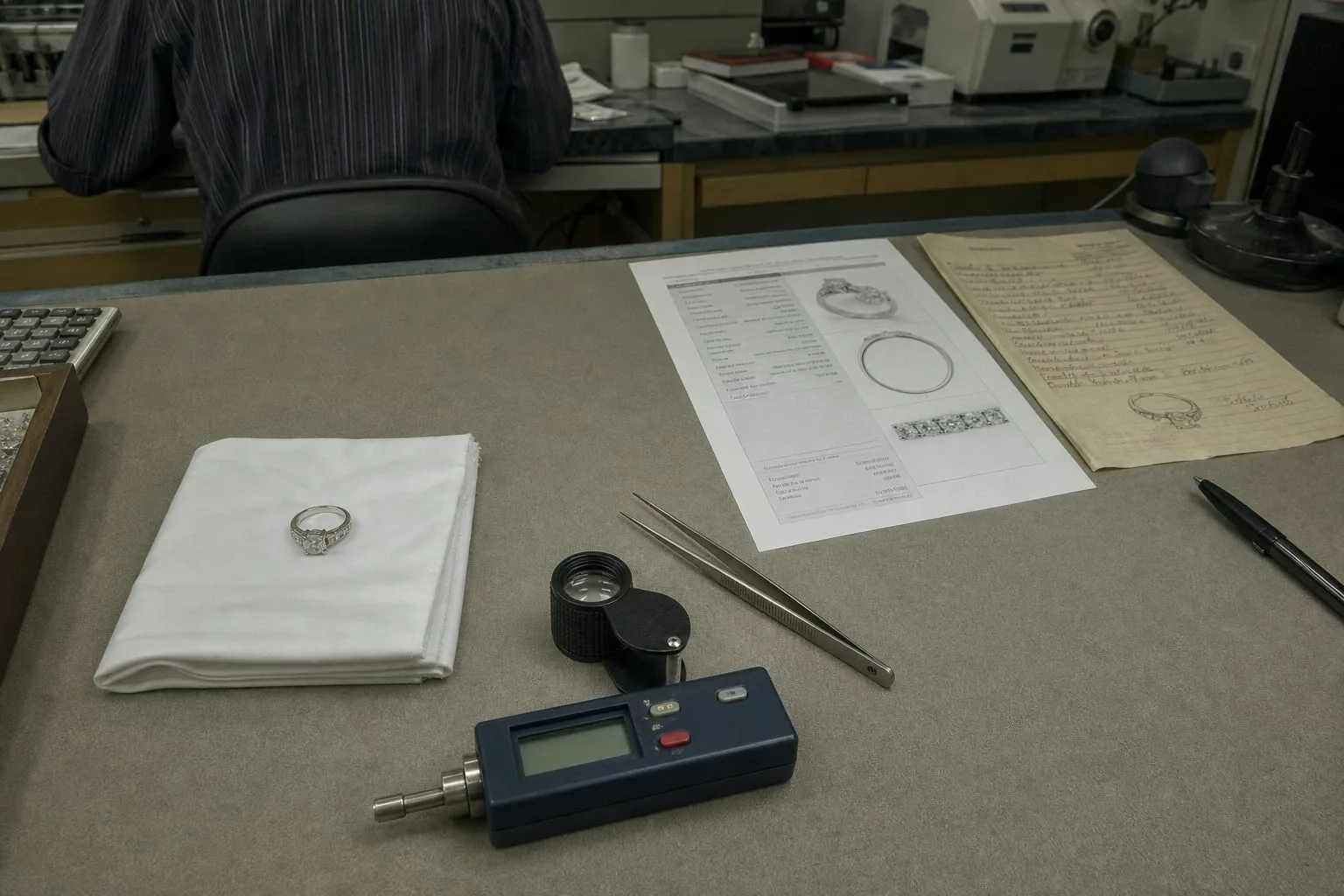
The insurer routed the file to its valuables unit, a group that handles scheduled fine art, jewelry and collectibles rather than dwellings and cars, and the requirements came back in writing. The 2013 appraisal was a single page: a description, a carat weight, a signature and a dollar figure. What the unit wanted was a document that could be defended. Measurements of the center stone to the hundredth of a millimeter. A plot diagram of inclusions. Color and clarity stated against a named grading scale. Photographs of the mounting, the gallery and any maker's marks.
The purpose of that detail is identification, not flattery. If the ring is lost, someone the household has never met has to source a replacement from a description alone, and a thin appraisal leaves that person guessing at exactly the variables that swing the price. The Federal Trade Commission is responsible for the guides that govern how jewelry is described and advertised in commerce, and a valuation written with those descriptive standards in mind is far harder to argue down. The barely adequate version and the good one cost roughly the same to obtain. They behave completely differently under pressure.
The appointment, the fee, and the number that came back
The unit supplied a list of independent appraisers holding gemological credentials and taking no commission on sales, which mattered more than the household expected. An appraiser who also sells jewelry has an interest in the figure. The Alvarados chose a woman working from an office thirty minutes out, booked for a Thursday morning in early March, and brought the ring, the 2013 page and a photograph of the original setting. The work took just under two hours at an hourly rate agreed in advance. Fees quoted as a percentage of value were declined, on the appraiser's own advice.
She unmounted nothing, but she measured, weighed, examined under magnification and photographed, and she recorded that the center stone showed a chip on the girdle not noted anywhere in the older document. The replacement cost she arrived at was meaningfully above the 2013 figure, and she wrote out where it came from: the retail channel she had priced, the date she had priced it, and the specific comparable stones she had used. The invoice arrived by email that afternoon, itemized by hour, with the appraisal attached as a signed PDF and a set of photographs.
What changed on the policy once the document was filed
The valuables unit accepted the appraisal and reissued the schedule at the new value inside two weeks. The premium on that item went up, in proportion to the coverage, and the household got several things back for it. The scheduled item carries no deductible, which the dwelling coverage does. It covers mysterious disappearance, which unscheduled contents generally do not. The girdle chip is now documented, so a future claim cannot be reduced by attributing existing damage to the loss. And the file now holds photographs, which matter as much as the figure if a replacement ever has to be commissioned.
The unit also set a review interval and put it in the confirmation letter, which is the part most households never receive from a smaller arrangement. Every three years, or sooner if metal prices move sharply, the schedule gets revisited. That turns an open-ended obligation into a calendar entry. The Alvarados moved theirs to early spring, alongside the renewal notice and the tax statement, because that is when the paperwork is already on the table and the ring is not being worn to anything. One appointment, one invoice, one revised page.
Where the household's holiday additions now go
December brought two more pieces into the house, a gift and a purchase, and both were handled the way the ring should have been in 2013. The retail receipts went to the agent within the month, which most insurers accept as documentation for newly bought items at stated values, and both were added to the schedule before the ring's own review came due. Anything inherited, reset or bought secondhand goes to the appraiser instead, because a receipt from a family member does not exist and a resetting changes the description on file.
The whole exercise cost the household two hours on a Thursday, an hourly fee and a modest premium adjustment. What it bought was a document that identifies the object well enough for a stranger to replace it, a value dated to this year rather than the last decade, and a standing date to do it again. The 2013 page is still in the folder, filed behind the new one. It is now a record of what the ring used to be worth, which is a reasonable thing for a piece of paper to be.