Check Engine Light in November? Five Checks to Run Before You Approve the Quote
By Callum Fitzgerald·4 minute read
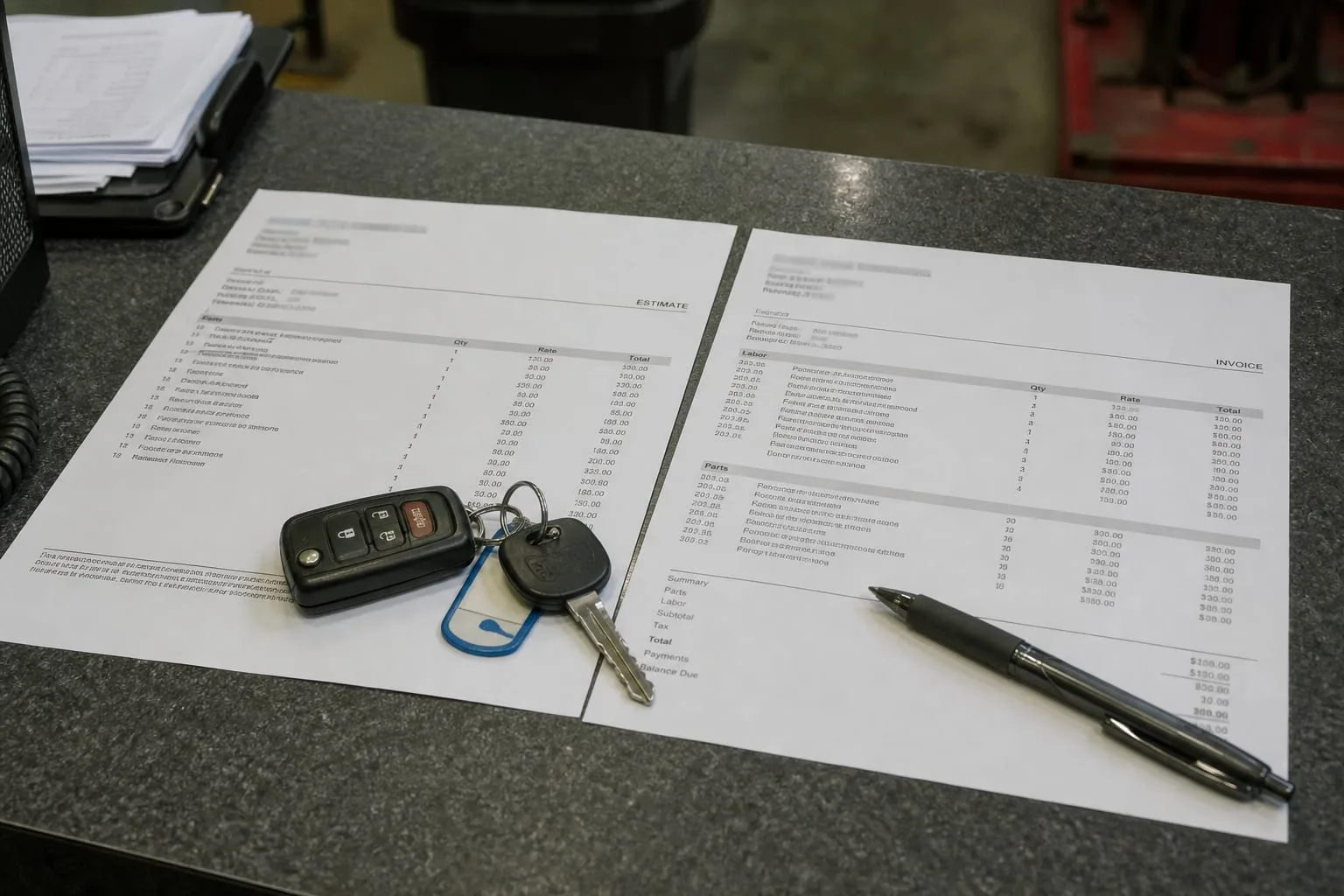
Vehicles, May 14, 2026: The light came on for the Merrills on the first Tuesday in November, three weeks before their state inspection sticker expired, which is the worst possible timing and also the most common. Their sedan, a 2013 four cylinder with a little over ninety thousand miles, was idling rough at stoplights and otherwise driving normally. Karen Merrill called the shop her neighbor uses, got a slot for Thursday, and was told over the phone that it sounded like a coil pack, probably four hundred dollars, maybe more. That phone number was not a quote. What arrived on Thursday afternoon was, and it is worth walking through what she checked in it.
Whether the estimate is written, and what your state makes it carry
The first document was a single sheet emailed from the service writer, and its value lay less in the total than in what the state requires it to contain. Rules here vary more than most drivers expect: some states, California prominently among them, oblige a shop to hand you a written estimate before work begins and to get your signature on it, while others leave the practice to shop policy and treat the dispute afterward as an ordinary contract question. Ask which regime you are in before the car goes up on the lift. A shop that volunteers the answer is telling you something useful about how it operates.
The parts line, and whether it says new, remanufactured or used
Karen's estimate listed three ignition coils and four spark plugs, and next to the coils sat a small abbreviation she did not recognize. It meant aftermarket rather than the manufacturer's own part, which was legitimate, cheaper, and something she was entitled to know before agreeing. Several states require the estimate or the invoice to disclose whether a part is new, used, rebuilt or reconditioned, and the disclosure exists precisely because the words carry different warranties and different lifespans. She asked what the same job would cost with dealer parts, got a number about a third higher, and chose the aftermarket coils with the shop's stated warranty in writing.
Labor hours, the shop rate, and what happened to the diagnostic fee
The labor figure was 1.4 hours at the posted rate, and that number came from a published labor guide rather than a stopwatch, which is standard and not a trick. What matters is that you can see both components separately, because a single lump sum labeled service hides the one variable you can compare across shops. Karen had already paid a diagnostic charge of one hour when she dropped the car off, and she asked the question that saves the most money in this whole exchange: is the diagnostic fee credited toward the repair if I authorize the work here? At this shop it was, in full, which is common but never automatic.
The overage clause, and who is allowed to say yes to it
Buried at the bottom was the line that decides whether a quote holds: authorization to exceed the estimate. Some states cap the overrun a shop may bill without fresh consent, often as a percentage or a flat dollar figure, and require a documented call to the customer before the extra work proceeds. Karen wrote a ceiling on the sheet herself, initialed it, and told the writer that her husband was not authorized to approve anything by phone. That last instruction sounds fussy and it prevented exactly the outcome it was meant to, because on Friday morning the shop found a cracked vacuum hose and called her rather than him.
The hose added thirty-one dollars in parts and a tenth of an hour, she approved it verbally, and the writer noted the time of the call on the work order. That note is the whole point. When a disagreement about a repair goes anywhere formal, whether to a state consumer protection office, a small claims court or an arbitration clause on the back of the invoice, the contemporaneous record of who authorized what and when is the thing that settles it. The Federal Trade Commission oversees deceptive practices in auto repair advertising and billing, and its guidance to consumers rests on the same unglamorous premise: get it in writing, keep the copy.
The invoice read against the estimate, line by line
On Friday afternoon Karen did the step that most people skip while standing at the counter with a card in hand. She put the estimate next to the invoice and read across. Parts matched, labor matched, the diagnostic credit appeared as a negative line, the hose appeared with its authorization note, and the total landed nineteen dollars under her written ceiling. She also asked for the old coils, because many states give you the right to request replaced parts back if you ask before the work is done, and she checked the warranty terms printed at the bottom: twelve months or twelve thousand miles, parts and labor, honored at that location.
The inspection passed the following week with eleven days to spare on the sticker. Nothing about the Merrills' repair was unusual, and that is the useful part: the sum they paid was ordinary, the sequence they followed was ordinary, and the difference between their invoice and a contested one came down to four sheets of paper and one phone call placed to the right person. Before the first cold snap, find out what your state requires a shop to put in writing. It takes an afternoon once and pays out every time the light comes on.