Buying a Ring in December, Appraising It in January, and What Changed in Ten Years
By Callum Fitzgerald·5 minute read
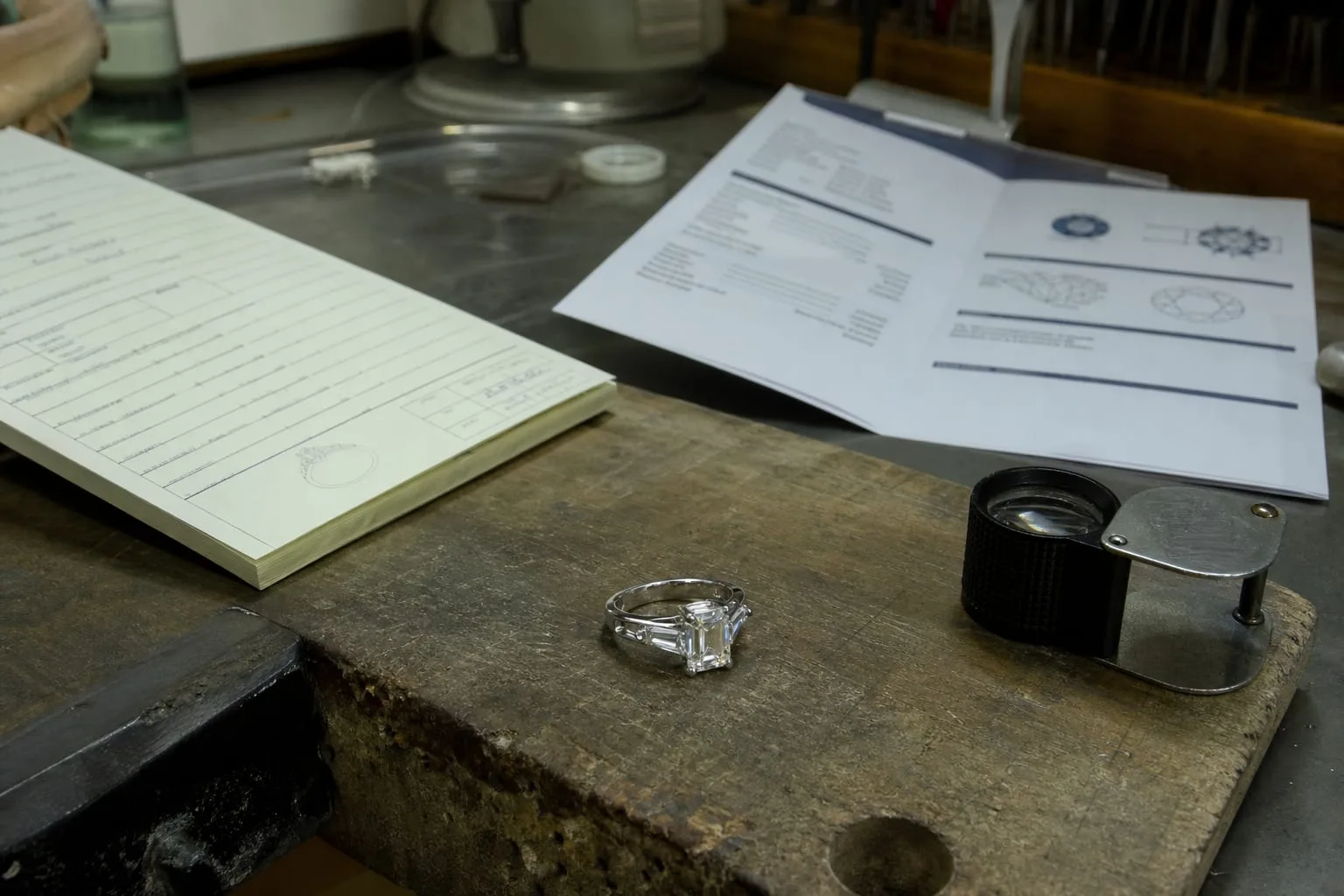
Finance, May 6, 2026: The Ferraras started in the third week of October, which turned out to matter more than anything else they did. Their daughter's engagement was expected around the holidays, and the family had a ring to hand down, a mid-century estate piece with a center stone nobody had ever measured and a mounting that had been resized twice. What they wanted was to reset the stone and add two smaller ones, and what they discovered in the first phone call was that a bench jeweler's December is spoken for by Halloween. The appointment they took was for the following Tuesday. The work went on the schedule for the first week of December.
The first call, and the four questions that shaped everything after
The store manager asked four things before quoting anything, and each one had a cost attached. First, did they have any paperwork on the stone, meaning a grading report, an old appraisal, an insurance schedule, anything with a number on it. They did not. Second, was the stone to be reset in a new head or the original one, because an original head from that era is often worn thin at the prongs and cannot be trusted with a stone that has already survived seventy years. Third, were the accent stones to be natural or laboratory-grown. Fourth, who was going to insure it, and when.
That last question is the one most households do not expect at the counter, and it is the one that sets the calendar. The store could not tell them what the finished ring was worth, because a retailer's price and an insurance replacement value are different figures arrived at different ways. What the manager could do was book an independent appraisal for January, once the work was finished and the ring existed as a single object rather than a stone and a plan. The Ferraras took that slot too. Two appointments, seven weeks apart, made in one conversation.
What the same purchase looked like a decade ago
Ten years earlier the family had bought the daughter's mother a pair of earrings from the same store, and the conversation had been shorter in ways that were not entirely to their benefit. Nobody asked about laboratory-grown stones, because in that market they were a specialty item and a small share of what sat in the case. Nobody offered a report number, because the smaller stones did not carry one. The appraisal came as a single sheet, produced in house, with a replacement figure that the insurer accepted without comment. It was faster. It also left the household with almost no independent record of what they owned.
The difference now is disclosure and traceability, and both of them show up as extra minutes at the counter rather than extra dollars on the invoice. The Federal Trade Commission oversees how jewelry is described and advertised to consumers, including how a laboratory-grown stone must be distinguished from a mined one, and the practical result is that the question gets asked out loud and written down. The Ferraras chose laboratory-grown accents. That decision was recorded on the work order, on the invoice, and later on the appraisal, in language that a future buyer or a future adjuster will read the same way they did.
The second change is the report number. The center stone, once removed from its mounting and measured, went out for independent grading, and it came back with a laser inscription on the girdle and a report retrievable online by anyone holding the number. Ten years ago that step would have been reserved for a stone well above this one in size. Now it is routine, it took about three weeks in the middle of the busiest season, and it converted a family story about a ring into a document. The grading fee was a small fraction of the total bench work.
The eight weeks in between, week by week
Late October was measurement and a written estimate, which arrived by email two days after the appointment and separated the bench labor, the new head, the accent stones and the grading fee into four lines. Early November was the decision on the accents, made after the family looked at both under the store's lamp and decided the difference they could see was not worth the difference in price. Mid November the stone came out of the old mounting, and the store called with the first real news of the process: one prong was cracked through, and the piece had been holding on by habit. Nobody was surprised. The estimate did not move, because the new head had already been quoted.
Late November was waiting, which is the part nobody plans for. The grading lab had the stone, the bench had nothing to do until it came back, and the store's December calendar was filling with repairs from customers who had waited. The Ferraras had a firm date because they had called in October. Two friends who started looking after Thanksgiving were told January. The ring was finished on the sixth of December, collected on the eighth, and the invoice matched the October estimate line for line except for a sizing charge that had been flagged as conditional from the start.
January, the appraisal, and the policy that had to be told
The independent appraisal happened in the second week of January, in an office, with the ring left overnight. What came back was longer than the single sheet of a decade ago: photographs, measurements, the grading report number, the disclosure on the accent stones, the metal content, and a replacement value stated as of that month with a note recommending review every few years. The appraiser was clear that the number was not a resale figure and should not be read as one. It was what it would cost to replace this ring with one of like kind and quality at retail, which is the figure a homeowners policy needs.
The insurance step took one phone call and a scanned PDF. Most homeowners policies cap jewelry losses at a low sublimit and cap theft more tightly still, which means a ring like this one is effectively uninsured until it is scheduled. The Ferraras added a scheduled personal property endorsement mid-term rather than waiting for the March renewal, because the coverage starts when the endorsement is issued and not a day earlier. The annual premium for the rider was a small recurring cost measured against the replacement figure. Their carrier accepted the appraisal without a second inspection, largely because the report number was on it.
The whole thing ran eleven weeks from first call to bound coverage, and the only expensive mistake available was the one they avoided by calling before Halloween. Everything else was sequence: measure, disclose, grade, appraise, schedule. A household starting the same purchase in the first week of December would have paid the same for the ring and waited until spring to hold it.