Booked the Car in Before the Holidays? What the Authorization Line Commits You To
By Bernard Okafor·6 minute read
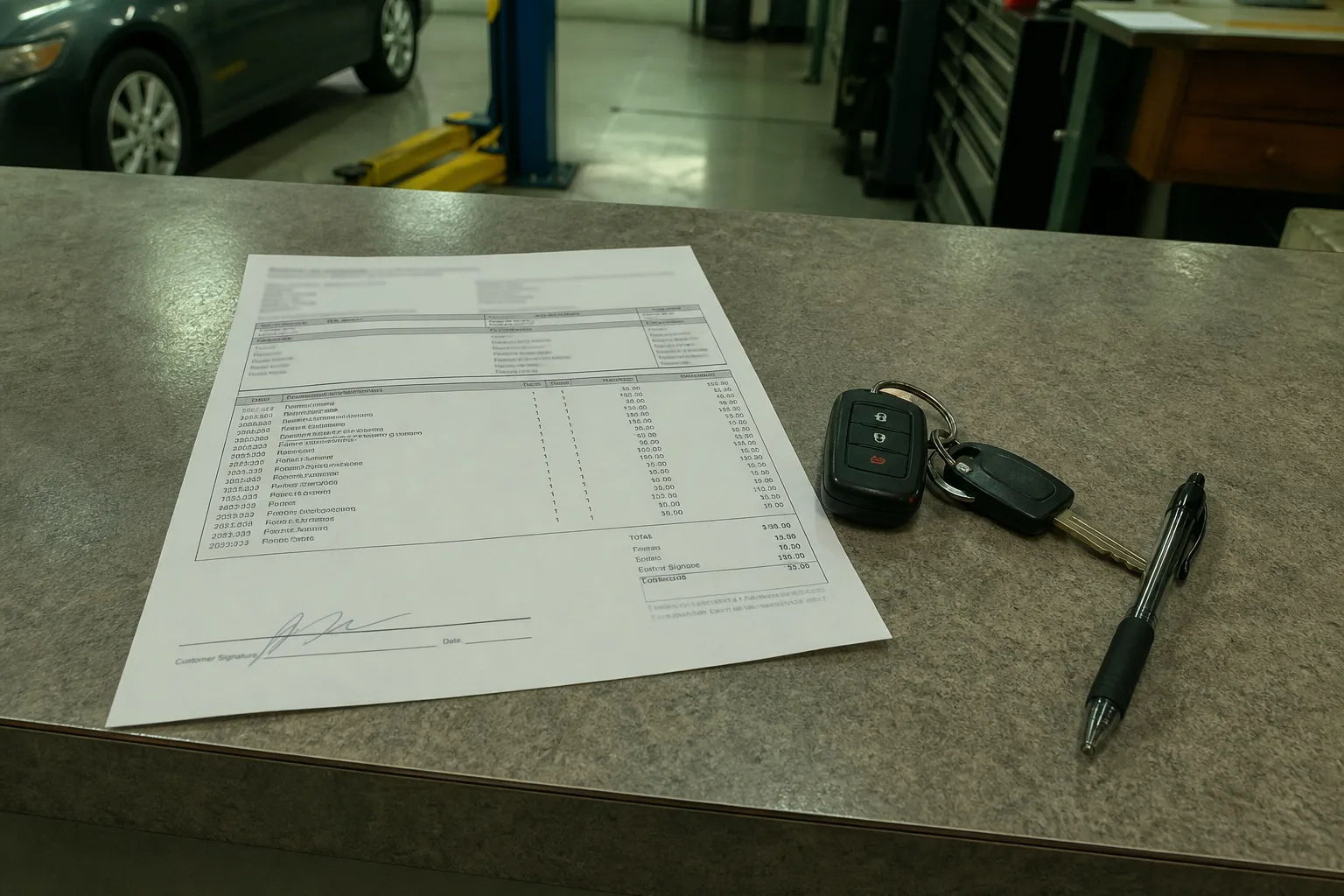
Vehicles, August 24, 2026: The estimate a shop hands you in the second week of December is doing two jobs at once, and most drivers only read it for the first. It quotes a price. It also records what you have agreed the shop may do to a vehicle you are about to leave in their yard, sometimes over a weekend, sometimes across a holiday when the parts counter is closed and the service writer who took your call is off until Monday. That second job is where good work and barely adequate work separate, and it is visible on paper before a single bolt is turned.
The written estimate is a permission document first
Most states regulate automotive repair by requiring a written estimate before work begins, an authorizing signature or recorded approval from the customer, and a fresh approval if the final bill is going to exceed the estimate by more than a set margin. The margins vary, the wording varies, and the enforcement body varies, but the structure is consistent enough that any shop operating across state lines has built a form around it. What you should be reading, then, is not only the total. Read the line that says what you are authorizing: inspection only, diagnosis with a capped labor charge, or the full repair as described.
A barely adequate quote collapses those three into one number and one signature. A good one keeps them apart, because they carry different risk. Authorizing a diagnosis at a stated hourly figure commits you to that figure and nothing else. Authorizing the repair commits you to parts the shop will order, open, and in many cases be unable to return. Once a sealed electronic component has been unboxed and coded to your vehicle, the supplier will not take it back, and that cost sits with whoever gave the word. The date and time on the authorization is what settles who that was.
What a larger provider changes about the paperwork
At a two-bay independent shop, the person who diagnoses your car is usually the person who quotes it, orders the parts, and calls you when something else appears. At a dealership service department or a regional chain, those are four people, and the estimate moves between them through a system rather than a conversation. This is often an improvement, and it is worth saying plainly why. Larger operations run on documented labor times from a published guide, itemized parts lines with part numbers, and a repair order that carries every approval with a timestamp attached to it.
The tradeoff is that nobody in the chain has the whole picture in their head, so the paperwork has to carry it instead. That makes the written record more important, not less. If a service advisor tells you on the phone that the second item can wait until spring, ask for it to be written onto the repair order as declined rather than removed from it. Declined work that stays on the document is the thing that protects you later, when a related failure shows up and the question becomes what you were told and when. A large provider's system is generally very good at holding that, if someone enters it.
Parts tiers, labor time, and the lines that reveal the standard of the job
Three details on a quote tell you most of what you need to know about the standard being applied. The first is how parts are described. Original equipment, original equipment supplier, quality aftermarket, and remanufactured are four different things at four different prices, and a quote that just says the part name has decided for you without telling you. The second is labor. Published guide time is a fair basis, but a shop that quotes four hours for a job the guide books at two should be able to say why: rust belt vehicle, seized fasteners, subframe access, a known difficult application on that engine.
The third is the warranty attached to the work, and this is where a larger provider often has a genuine structural advantage. A national chain typically offers coverage that travels, so a repair performed in one state can be addressed at a branch in another, which matters if the reason you are in the shop this month is a trip to see family six hundred miles away. Ask for the term in months and miles, ask whether it covers parts only or parts and labor, and ask what happens if the same complaint returns. The Federal Trade Commission oversees warranty disclosure practices for consumer products, including the terms a repair facility puts in writing, and a shop accustomed to that scrutiny will hand you the terms without being pressed.
The second phone call, and what you are actually consenting to
Almost every substantial repair generates a second conversation, and it usually arrives midway through a workday when you are in a meeting. The caliper was seized as well. The timing cover is weeping. The wheel bearing on the other side has play in it now that the vehicle is on the lift. This is the moment where cost is decided, and it is also the moment where the least information is available to you, because you cannot see the car and the person describing it is not the technician looking at it.
Handle it the way you would handle any change order. Ask for the revised figure in writing before you approve it, by text or email, with the original estimate number attached to it. Nearly every larger provider can now send an estimate revision with photographs or a short video from the technician's phone, and if that capability exists you should use it rather than accept a verbal description relayed through a third person. Ask whether the additional work is required to complete the original repair safely or is a separate item that has simply become visible. Those are different answers and they carry different urgency.
It is also reasonable to ask for the replaced parts back, and in many states you have a right to request them at the time you authorize the work rather than afterward. You will probably not want a rusted control arm in your trunk. Asking changes the tone of the job all the same, and a shop that handles the request as routine is telling you something useful about how it operates. Keep the old part until the repair has held through a full heat cycle and a cold snap, which in most of the country means a few weeks from now.
Why the timing of this particular visit matters
December and January concentrate several deadlines that have nothing to do with each other but land together. Registration renewals and state inspections tend to cluster around the calendar year in a number of states. Factory warranties expire on a date or a mileage figure, whichever comes first, and holiday driving can move the mileage number faster than you expect. Extended service contracts almost always require the administrator to authorize a repair before the work starts, not after, and a claim submitted retroactively is the most common reason a covered repair ends up unpaid.
So before you approve anything on a vehicle still under any form of coverage, make the coverage call first and get an authorization number onto the repair order. A dealership service department does this several times a day and will handle it as a matter of course. An independent shop will do it too, but you may need to raise it. Either way, the sequence is fixed: coverage confirmed, authorization number issued, work begins. Reversing those steps is how people pay for repairs somebody else had agreed to cover.
The quote you are holding is a short document that decides a fair amount. Read the authorization line, keep the declined items on the page, get the revision in writing, and note the warranty term somewhere you will find it in June. That takes about ten minutes at the counter, which is roughly the time you would otherwise spend in the waiting area.