Hurt in a Winter Crash? The First Week's Signatures Decide More Than Fault
By Bernard Okafor·6 minute read
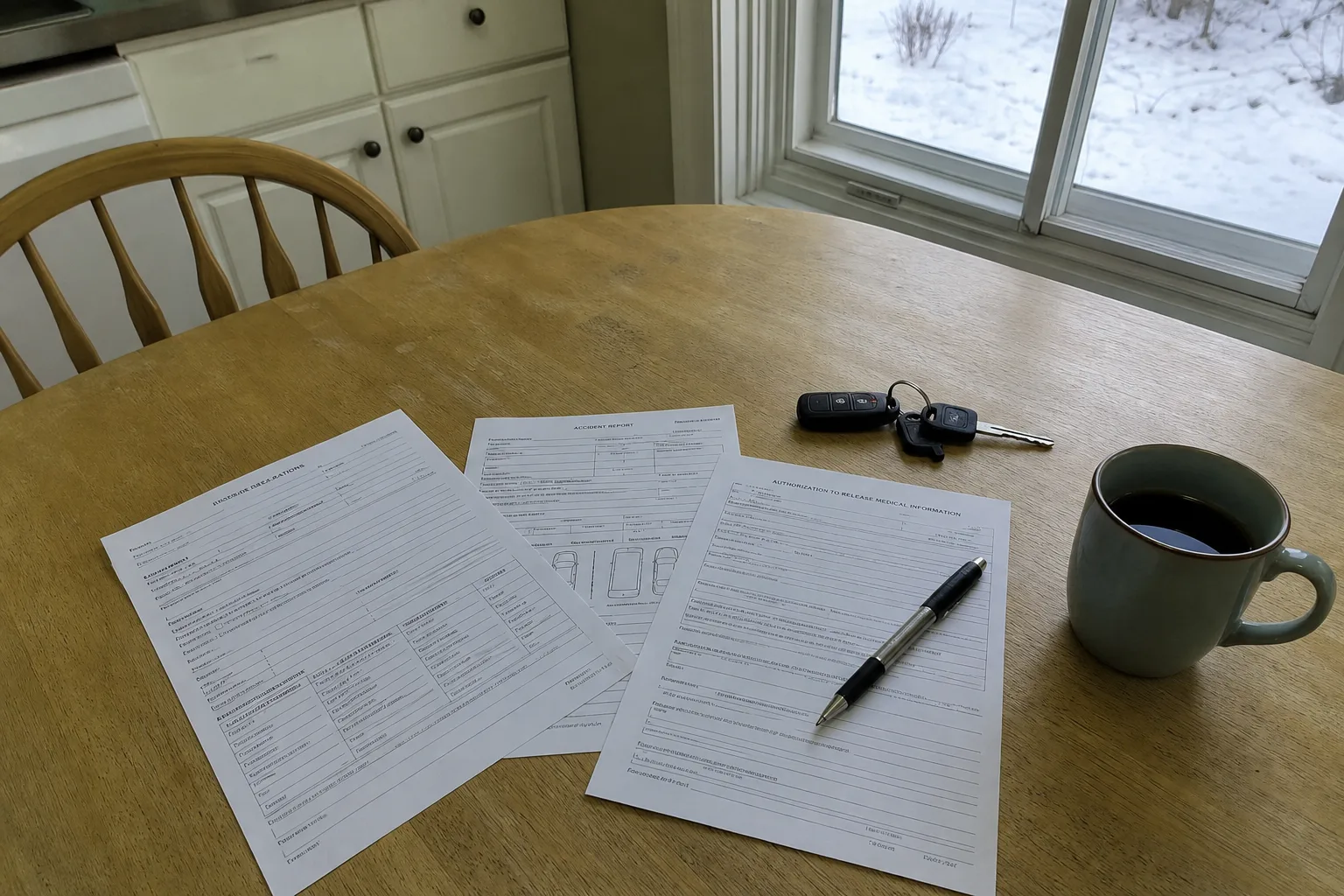
Law, November 3, 2026: The call comes two days after the wreck, and it is friendly. An adjuster wants a recorded statement, a signed medical authorization, and a quick confirmation of where you were headed. Nothing about the conversation feels legal. That is precisely the problem for someone handling this for the first time, because every one of those requests is a permission, and permissions granted casually in the first week are the hardest thing in the whole file to take back later. The season is already working against you: cold mornings, early darkness, holiday mileage, and a claims department closing out its year.
Why the calendar puts more people in this position between November and February
Crash exposure is not evenly spread across the year, and the stretch from the first hard freeze through the end of winter concentrates several risks at once: black ice on bridge decks that look dry, salt haze on windshields, commuters driving home in full dark by five, and long holiday trips on two-lane highways by drivers who do not normally make them. The National Highway Traffic Safety Administration oversees federal motor vehicle safety and crash data, and anyone who has watched a county road after an ice storm understands the shape of the pattern without needing a figure attached to it. More collisions in these months means more first-timers, people who have never filed anything beyond a windshield claim, suddenly handed a process with deadlines.
The timing matters in a second way that catches people off guard. Health insurance deductibles reset on January 1, so a December emergency room visit and a January follow-up land in two different plan years, and a first-timer who assumed the auto claim would absorb everything discovers that medical payments coverage, if it exists at all, has a modest ceiling. Winter also slows everything down. Body shops run backlogs, independent adjusters schedule inspections around holidays, and the three weeks between Christmas and the middle of January are the quietest stretch of the insurance year for returned calls.
The permissions nobody explains, and what each one actually opens
A recorded statement is consent to have your first, foggiest account of the crash preserved and compared against everything you say afterward. You are usually within days of the event, possibly on pain medication, and genuinely unsure whether your neck hurt on Tuesday or started hurting Wednesday. Saying so is honest and reasonable. It also reads, months later, as inconsistency. Your own policy generally obligates you to cooperate with your own insurer, which is a real duty worth honoring, but it does not obligate you to give a recorded statement to the other driver's carrier on their schedule, and almost no first-timer knows those are two separate relationships.
The medical authorization is the one with the longest reach. A narrow release covering treatment for this injury, from these providers, over this date range, is ordinary and necessary. A blanket authorization is a different document: it opens a decade of unrelated records, the back strain from 2016, the physical therapy after a fall, every note a doctor ever typed about your knees. Nothing in that history has to be damaging on its own. It only has to supply an alternative explanation for what hurts now. Narrowing the form before you sign it costs one phone call.
Then there is the release itself, the document that closes the claim. It is usually short, often arrives with a check, and is final in a way that surprises people, because it ends the matter for injuries that have not finished declaring themselves. A shoulder that still aches in March is not a reason to reopen a file you signed away in January. First-timers sign early for an understandable reason: the amount is real money, the bills are already arriving, and nobody has told them that settlement value is usually not knowable until treatment has either finished or clearly plateaued.
The problems a letter settles, and the ones that do not
Plenty of winter claims genuinely do not need an attorney, and treating every fender bender as litigation is how people spend money for nothing. Property damage only, clear liability, a rental car dispute, a repair estimate that came in low, a total loss valuation you think is under market: these are letter problems. You write to the adjuster, you attach comparable listings or a second estimate, you keep a dated copy, and you escalate to a supervisor and then to your state's insurance department if the answer stays wrong. A first-timer who learns to write one clear, documented letter resolves more disputes than they expect.
The line moves when injury enters the picture, when fault is contested, or when more than two parties are involved. A commercial truck, a government vehicle, a rideshare driver mid-fare, a crash caused by a driver with minimum limits and a passenger in your back seat: each of those adds a layer that is not a letter-writing problem. Rural two-lane highways in the winter months produce exactly this kind of file, which is why an oklahoma personal injury lawyer will ask about commercial plates, employer ownership, and road maintenance responsibility before asking almost anything else. Serious injury, disputed liability, or a defendant you cannot easily identify are the three signals that the matter has outgrown self-help.
There is also a quieter category worth naming: claims that are simple on the facts but complicated by money already spent. If a health insurer, a hospital, or a government program has paid your treatment bills, it may have a right to be repaid out of any settlement. A first-timer who negotiates a number with the adjuster and never asks who else has a claim on it can end up handing most of the check straight back. Sorting that out before you agree to a figure is routine work for counsel and nearly invisible to someone doing it alone.
The clocks that keep running through the holidays
Every state sets a deadline for filing suit, and it runs from the date of the crash whether or not you are negotiating, whether or not the adjuster is being pleasant, and whether or not the office was closed for two weeks in December. Separate and much shorter notice requirements usually apply when a city, county, school district, or state agency is involved, which is a real possibility in winter, given plow trucks, maintenance vehicles, and municipal fleets on the road at four in the morning. Your own policy carries internal deadlines too, particularly for uninsured and underinsured motorist coverage, which often requires prompt written notice.
Those internal deadlines are permission problems in reverse. Settling with the at-fault driver without first notifying your own carrier can forfeit underinsured coverage entirely, because the insurer lost its chance to protect its subrogation rights. The first-timer who did exactly what seemed efficient, accepting the other side's offer and moving on, finds out afterward that the coverage they paid for every month is no longer available. One letter to your own adjuster, sent before you agree to anything, protects it. That letter takes ten minutes and is the single highest-value thing most people can do unassisted.
What a consultation is actually for in January
Most injury firms work on contingency and most offer a first meeting at no charge, which means the practical question is not whether you can afford to ask but whether you have organized enough for the asking to be useful. Bring the crash report number, photographs, the declarations page of your own auto policy, the name of every provider who has treated you, and anything you have already signed. A thirty minute conversation will usually tell you plainly whether this is a letter problem or a representation problem, and being told it is the former is a good outcome. Winter is the right time to find out, because the quiet weeks after the holidays are when files sit still and deadlines keep moving.
Keep a dated folder, written contemporaneously, of symptoms, missed workdays, and every call. It costs nothing in January and it is the record that makes the difference in June.